

© Omar Sobhani / ReutersAfghan security forces after the second blast in Kabul.
The first attack was carried out by a suicide bomber riding a motorcycle, according to multiple reports. In the aftermath of the attack, journalists rushed to the scene. They then fell victim to a second suicide bomber who appeared to deliberately target the press, the interior ministry spokesman, Najib Danesh, told Reuters.
The attacker presented media credentials to the police and joined a group of journalists standing near the first blast site before detonating the second explosive. Nine were killed and several others were injured. Veteran AFP photographer Shah Marai and Radio Azadi journalist Maharam Durani were among the those killed.
Warning graphic image
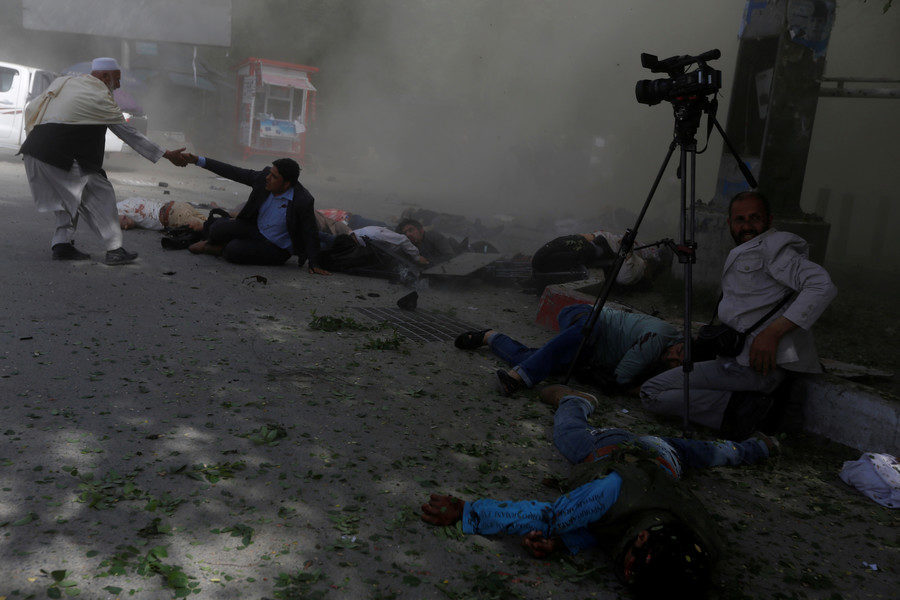
© Omar Sobhani / ReutersJournalists after the second blast in Kabul.
Another journalist, Ahmad Shah, who worked for the BBC, was killed in Khost in eastern Afghanistan, bringing the number of journalists killed to 10 people, in the deadliest day for the media in Afghanistan since the US invasion in 2001. There is no indication of any link between the attacks in Kabul and the attack in Khost.
"These attacks caused untold human suffering to Afghan families," the top UN official in Afghanistan, Tadamichi Yamamoto, said in a statement. "I am furthermore outraged by the attack which appears to have deliberately targeted journalists," he added.

Reader Comments
to our Newsletter