
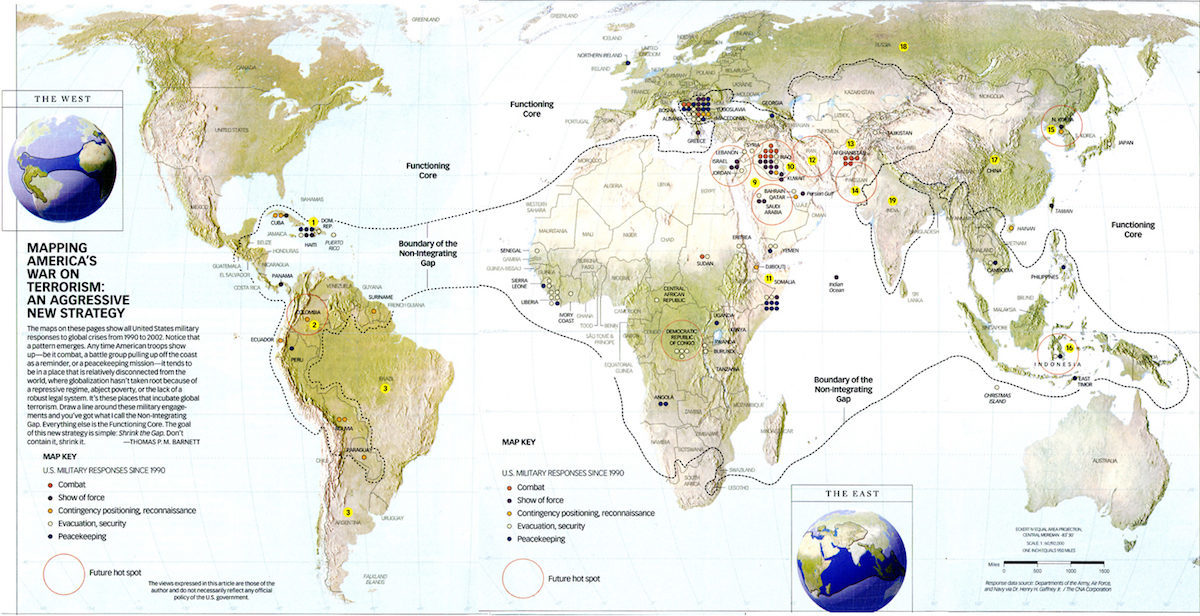
According to the US chief of Staff, Thailand is part of the zone to be destroyed (map published by Thomas P. M. Barnett in 2003).
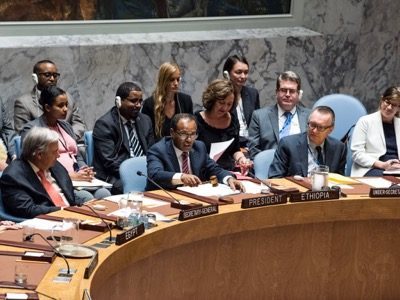
On 28 September at the Security Council, Jeffrey Feltman, the number 2 of the UNO, takes part in the debates, next to Secretary General António Guterres. After having personally supervised the aggression against Syria, he now intends to organiser the attack on Burma. Ex-US civil servant, Feltman was the assistant to Hillary Clinton.
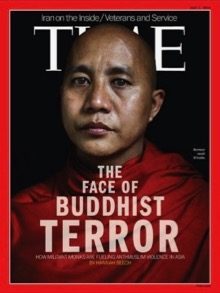
Since 2013, the Western medias have been taking care to present Buddhism as a sectarian movement. The photo shows the monk Ashin Wirathu, condemned in 2003 to 25 years of imprisonment because of his anti-Muslim preaching. He benefited from the general amnesty in 2012. It is not difficult to find fanatics in any religion.
During the meeting of the UN Security Council on 28 September, the US ambassador and several of her allies accused Myanmar's coalition government of « genocide » [2]. This loaded word - which, in European law, designates the massacre of a great number of people, but in US law applies to a method of killing, even if the criminal kills only one person - is enough for Washington to justify a war, with or without the backing of the Security Council, as we saw in Yugoslavia [3]. The meeting of the Security Council was held at the request of the Organisation of Islamic Cooperation (OIC).
In order to make the facts correspond to their narrative, the United States, the United Kingdom and France, which had celebrated Aung San Suu Kyi and the Buddhist monks for their non-violent resistance to the dictatorship of the State Law and Order Restoration Council (SLORC) during the « Saffron revolution » in 2007 [4], simply redefined the Burmese army, Nobel Peace Prize-winner Aung San Suu Kyi [5], and all the Buddhists in the country [6] as "the bad guys".
Burma has not known civil peace since the days of foreign domination, first British and then Japanese [7]. It has become easier to destabilise since the SLORC junta agreed to share power with the National League for Democracy (NLD), and together are trying to resolve the country's many conflicts in a peaceful way.
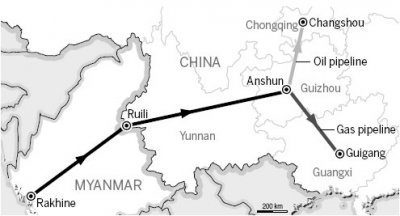
Indispensable to the Chinese economy, the Yunnan pipe-lines reach the Pacific coast in the Arakan/Rakhine province.
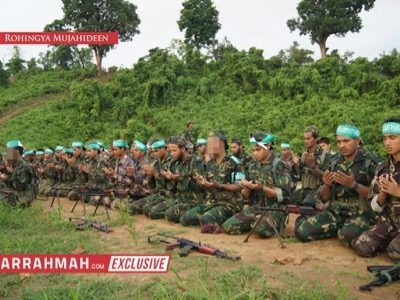
Perfectly equipped, the Faith Movement, or Arakan Rohingya Salvation Army, is trained by the British in Saudi Arabia and Bangladesh. Before the beginning of current events, it numbered at least 5,000 soldiers.
According to a report by the Bengali intelligence services, before the current crisis, the Faith Movement had been working for a year with a spin-off group of the Bengali Jamat-ul-Mujahideen around the slogan « Bengali Jihad in Baghdad ». This tiny group pays allegiance to the Caliph of Daesh, Abou Bakr al-Baghdadi, and has gathered in the same coalition the Indian Mujahideen, Al-Jihad, Al-Ouma, the Students' Islamic Movement of India (SIMI), the Lashkar-e-Toiba (LeT) and the Pakistani Harkat-ul Jihad-al Islami (HuJI). The group is financed by the foundation Revival of Islamic Heritage Society (RIHS) in Kuwait. When, less than a year and a half ago, in March 2016, the SLORC accepted to share power with Aung San Suu Kyi's party, the United States attempted to use the Nobel Peace Prize-winner against Chinese interests. Knowing that it would be difficult to manipulate the daughter of the father of Burmese independence, the communist Aung San, they encouraged the Faith Movement - « ...you never know ... ».
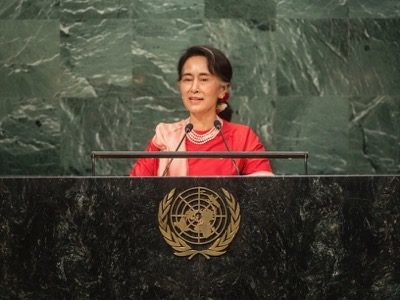
In September 2016, Aung San Suu Kyi came to explain her efforts in favour of the Rohingyas before the General Assembly of the United Nations. Like her father Aung San, who believed for a moment that he might receive Japanese aid to free his country from British colonisation, the Nobel Peace Prize-winner naïvely imagined that she had the sympathy of the Anglo-Saxons to solve Myanmar’s internal problems.
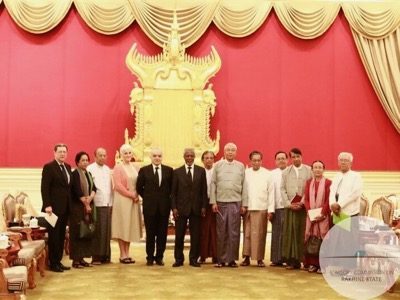
Resolute, Aung San Suu Kyi pursued the implementation of an advisory committee tasked with analysing the Rohingya question, and ending the discrimination under which they suffered. This committee was composed of six Burmans and three foreigners - Dutch ambassador Laetitia van den Assum, Lebanese ex-Minister Ghassan Salame (in reality representing France), and ex-UN Secretary General Kofi Annan, acting as President of the committee.
The same day, the Saudi and US Secret Services gave the signal for the riposte - the Faith Movement, renamed by the British the « Arakan Rohingya Salvation Army » and divided into commandos, attacked army barracks and police stations, causing 71 deaths. For a week, Burmese troops waged an anti-terrorist operation against the jihadists. 400 members of their families fled to Bangladesh.

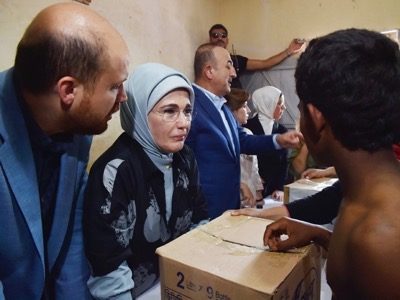
The President of the Organisation of Islamic Cooperation, Recep Tayyip Erdoğan, opens the world-wide media campaign to save the Rohingyas (Istanbul, 1 September 2017).
However, the jihadists have done nothing to defend the Rohingyas, but have systematically intervened to sabotage the attempts to improve their living conditions and end the discriminations under which they suffer.
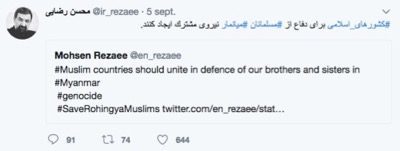
General Mohsen Rezaei was the commander of the Revolutionary Guard which fought alongside NATO and Saudi Arabia during the war in Bosnia-Herzegovina against Serbia.
While the Burmese army had ceased all activity against the terrorists, Rohingya villages were burned, and the Rakhine population of Arakan lynched Muslims, who in their eyes were all accomplices of the terrorists. According to the Rohingyas, it was the Burmese army who burned the villages, while according to the Burmese army, it was the jihadists. Progressively, all the Rohingyas from the North of Arakan took to the road seeking refuge in Bangladesh - but, curiously enough, not the Rohingyas from the South of the State.
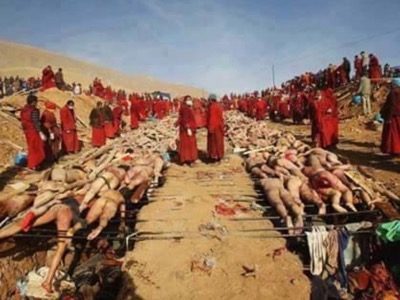
The campaign of communitary mobilisation in the Muslim countries relies on some particularly shocking visuals. This photograph was published by the Turkish government. It is supposed to show the Muslim victims of Buddhist monks in Burma. It is in fact an old photo of a funeral ceremony for the victims of an earthquake in China.
On 11 September, the serving President of the Islamic Conference Organisation (ICO), Recep Tayyip Erdoğan, spoke before the Organisation's scientific committee meeting at Astana (Kazakhstan) - which is not competent in the matter - « to save the Rohingyas ».
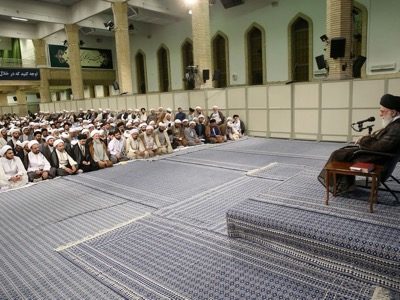
For Ayatollah Ali Khamenei, the military engagement of his country alongside NATO and Saudi Arabia in Burma would be a catastrophe. Particularly since Iran has a thousand-year history of cooperation with China.
In Teheran, President Sheikh Hassan Rohani immediately called on the regular army to participate in the conflict which was being prepared. On 17 September, the Chiefs of Staff of the Iranian and Pakistani armies made contact in order to unite their forces in the crisis [16]. This is the first military initiative, but it concerns the Iranian army (which is already working with its Turkish and Pakistani counterparts to defend Qatar) and not the Revolutionary Guards (who are fighting alongside the Syrians against the jihadists). Iran is also providing massive aid to the refugees.
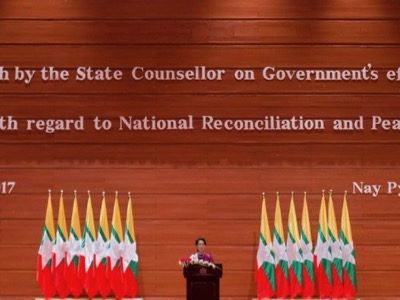
Aung San Suu Kyi calls on international public opinion to take into account the efforts of Myanmar to resolve the question of the Rohingyas and denounce jihadist terrorism. She will be no more understood than was Mouamar Kadhafi when he denounced the attack on his country by Al-Qaïda (Naypyidaw, 19 September 2017).
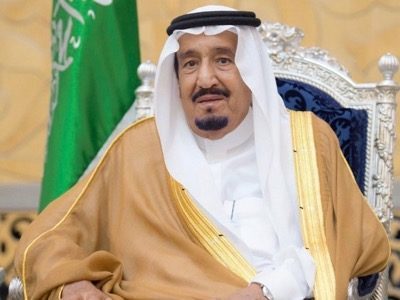
Saudi Arabia has been protecting and supervising the Arakan Rohingya Salvation Army since 2013. King Salman has given 15 million dollars to Rohingya refugees in Bangladesh, where the training camps of the jihadist group are situated.
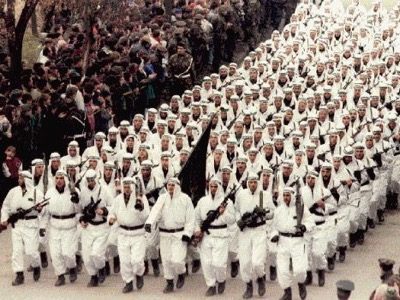
In 1995, in Zenica, Oussama Ben Laden paraded the Arab League before President Alija Izetbegović. These combatants are ex-Mujahideens who fought the Soviets in Afghanistan. They later adopted the name of Al-Qaïda. During the war, the Russian Secret Services penetrated the barracks of the Arab Legion and found that all their documents were written in English, and not Arabic.
This total about-face in the Middle East has already seen a precedent - namely the wars in Yugoslavia. In Bosnia-Herzegovina (1992-95) and in Kosovo (1998-99), the Muslim countries and NATO fought side by side against the Orthodox Christians linked with Russia.
In Bosnia-Herzegovina, President Alija Izetbegović worked with US representative Richard Perle, who advised him on the diplomatic level and directed the Bosnian delegation during the Dayton Agreements. He also benefited, on the media level, from the advice of French representative Bernard-Henri Levy, according to Levy himself - and this has never been denied. Finally, on the military level, he relied on the advice of Saudi representative Oussama Ben Laden, who organised the Arab League on his behalf and received a Bosnian diplomatic passport. During the conflict, supported in secret by NATO, Izetbegović publicly received the support of Turkey, Iran and Saudi Arabia [21].
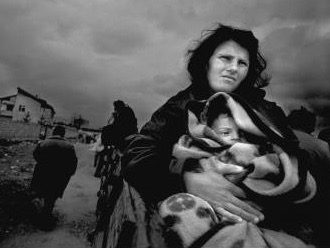
Western public opinion accepted without question the violation of the United Nations Charter in Kosovo after having watched, powerless, the exodus of thousands of civilians.
The dirty work currently in preparation will extend the theatre of operations towards the East. The Pentagon is unable to impose an alliance between Turkey, Iran and Saudi Arabia, but in fact, does not need one. In Yugoslavia, these three states were coordinated by NATO when they were not in direct contact.
However, the fact of fighting side by side in Burma will force them to find arrangements in Iraq, Syria and Yemen - perhaps even in Libya. Considering the devastation of the Middle East, and the tenacious resistance of the populations there, the Pentagon can leave the region to lick its wounds for a decade without fear of seeing the emergence of the slightest opposition to its policies.
The day after the Security Council meeting which laid the foundations for the future war against Burma, the State Secretariat informed President Barzani that the United States would not support the independence of an Iraqi Kurdistan. Of course, the Pentagon can not mobilise Turkey and Iran in South-East Asia while betraying them at their frontier. Consequently Massoud Barzani, who had engaged himself unequivocally for the referendum on independence, will soon have to retire from political life. Particularly since the display of Israëli flags at Erbil, massively relayed by the Arab, Persian and Turkish TV channels, has alienated every one of his neighbours.
If the Pentagon's scenario continues to play out as we may anticipate, the war against Syria should soon end due to the lack of combatants, who will have gone overseas to serve the « American Empire » in a new theatre of operations.
Translation: Pete Kimberley
Sources
- Source : The Pentagon's New Map, Thomas P. M. Barnett, Putnam Publishing Group, 2004. Analysis : "The US military project for the world", by Thierry Meyssan, Translation Pete Kimberley, Voltaire Network, 22 August 2017.
- « Myanmar : le Secrétaire général demande "une action rapide" pour mettre fin au "cauchemar" des Rohingya dans l'État de Rakhine », Compte-rendu du Conseil de sécurité, Onu, 28 septembre 2017. Référence : CS/13012.
- The United Kingdom and the United States have already drawn up the act of accusation against Myanmar, even before the current events: Countdown to Annihilation : Genocide in Myanmar, Penny Green, Thomas MacManus & Alicia de La Cour Venning, Queen Mary University of London, 2016. Persecution of the Rohingya Muslims ; Is Genocide Occurring in Myanmar's Rakhine State ; a Legal Analysis, Allard Lowenstein, Yale University, 2016.
- « Birmanie : la sollicitude intéressée des États-Unis », par Thierry Meyssan, Abiad & Aswad (Syrie), Réseau Voltaire, 5 novembre 2007.
- The Burma Spring: Aung San Suu Kyi and the New Struggle for the Soul of a Nation, Rena Pederson, Foreword by Laura Bush, Pegasus, 2015.
- Neither Saffron Nor Revolution: A Commentated and Documented Chronology of the Monks' Demonstrations in Myanmar in 2007 and Their Background, Hans-Bernd Zöllner, Humboldt-University, 2009.
- Burma/Myanmar: What Everyone Needs to Know, David Steinberg, Oxford University Press, 2013.
- To be specific, there were Bengali immigrants in Burma before British domination, but the vast majority of Rohingyas are descendants of the workers displaced by the colonising power. (Author's note).
- "Myanmar's Rohingya insurgency has links to Saudi, Pakistan", Simon Lewis, Reuters, December 16, 2016.
- "Speech by Aung San Suu Kyi at 71st UN General Assembly", by Aung San Suu Kyi, Voltaire Network, 21 September 2016.
- Towards a peaceful, fair and prosperous future for the people of Rakhine, Advisory Commission on Rakhine State, August 2017.
- "We won't Leave Rohingya Muslims Alone", Presidency of the Republic of Turkey, September 1, 2017.
- "Rezaei urges Muslim states to defend Rohingya Muslims", Mehr Agency, September 6, 2017.
- "Bangladesh offers Myanmar army aid against Rohingya rebels", AFP, August 29, 2017.
- « Myanmar : le Guide critique les défenseurs des droits de l'homme », Leader.ir, 12 septembre 2017.
- "Iranian, Pakistani Top Military Commanders Stress Need for Ending Myanmar Muslims' Plights", Fars News, September 17, 2017.
- "Aung San Suu Kyi speech on National Reconciliation and Peace", by Aung San Suu Kyi, Voltaire Network, 19 September 2017.
- «OIC Contact Group on Rohingya calls for UN Resolution on Myanmar», Organisation of Islamic Cooperation, September 19, 2017.
- « Le Serviteur des Deux Saintes Mosquées accorde un don de 15 millions de dollars aux réfugiés Rohingyas », Saudi Press Agency, September 19, 2017.
- The Rohingyas : Inside Myanmar's Hidden Genocide, Azeem Ibrahim, Hurst, 2016.
- Comment le Djihad est arrivé en Europe, Jürgen Elsässer, préface de Jean-Pierre Chevènement, éditions Xenia, 2006.
- « L'UÇK, une armée kosovare sous encadrement allemand », par Thierry Meyssan, Notes d'information du Réseau Voltaire, 15 avril 1999.

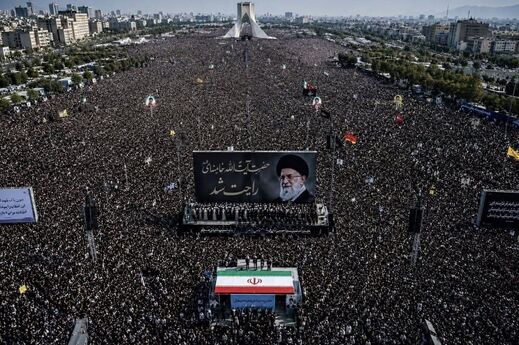
There are "no victims" ("the victims are false"), "no one knows" who burning houses: "According to the Rohingyas, it was the Burmese army who burned the villages, while according to the Burmese army, it was the jihadists." This sentence is repeated several times through several articles.
Serbia continues to be showed as a victim, not mentioning Serbian aggression against Slovenia, Croatia, Bosnia and Herzegovina and Serbian terrorism against civilians.
Below the description of the image stands: "war in Bosnia-Herzegovina against Serbia".
Someone is trying to rewrite history, in the eyes of the ignorants. Because that sentence gives the impression that Bosnia launched a war against Serbia, not that a well-armed Serbia attacked Bosnia, which almost did not have a weapon. At the end of the war, in the negotiations, under the leadership of the United States, Serbs were given half of Bosnia, even though they accounted for 30% of the population.
The milestone in the war was when the Serbs were allowed to make a massacre in Srebrenica, which the US used to intervene. Bosnia received help from Muslim countries to protect the population from persecution and murder of Serbian terrorists / fascists who re-embraced the Chetnik movement (fascist, Serbian Radical Movement, a co-workers of the Nazis in WW2). The Chetniks are very similar to the Salafis: wearing long beard, slaughtering civilians with knifes, raping women and girls, celebrate violence and killing through songs. They had the support from Serbian church. Crimes are encouraged, not punished, because of the ideology to increase the Serb territory without the Croats and the Bosniaks.
And when these authors compared Myanmar with what happened in the former Yugoslavia, then I wonder whether these authors are hiding the truth of Myanmar also, do they want to cover up the crimes of government? If Buddhists behave like Serbs before, then that is not a good situation. Simple, politics is given priority over objective truth.
It seems that there is ethnic cleansing in the Myanmar against mostly innocent population, using a smaller number of Muslim militants as an excuse.
And a plethora of journalists want to create the situation "I do not see the evil" fearing that the US will take advantage of the situation and that the karma will be billed.