
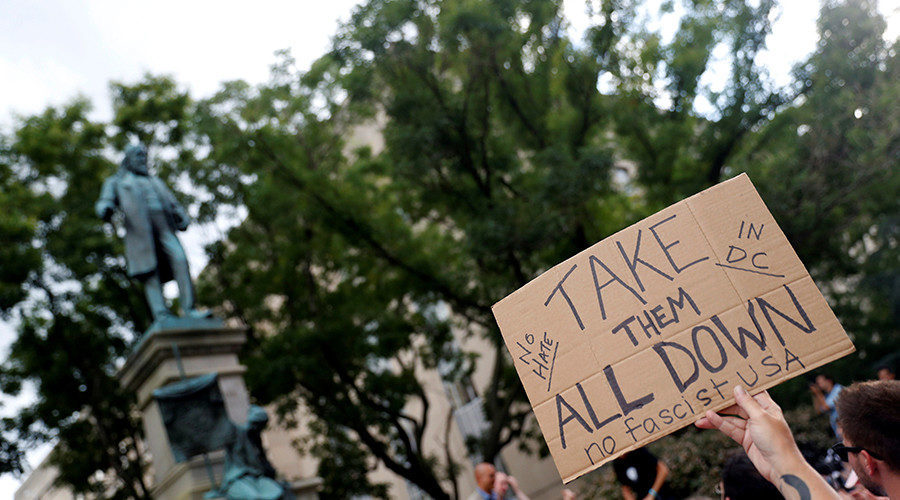
© Aaron Bernstein / Reuters
Toppling monuments is a tradition honored by centuries, even millennia. It has often been connected to cultural or religious strife, like the infamous 2001 destruction of Buddha statues in the Bamyan valley of Afghanistan by the Taliban, or acts of vandalism by Islamic State (IS, formerly ISIS/ISIL) in Palmyra, Syria and other places.
But more often, monuments of the past were targeted for being images of a disfavored ruler or a fallen government. Pharaoh Thutmose III tried to undermine the legacy of his predecessor, Hatshepsut, sometimes simply by erasing her name from her figures.
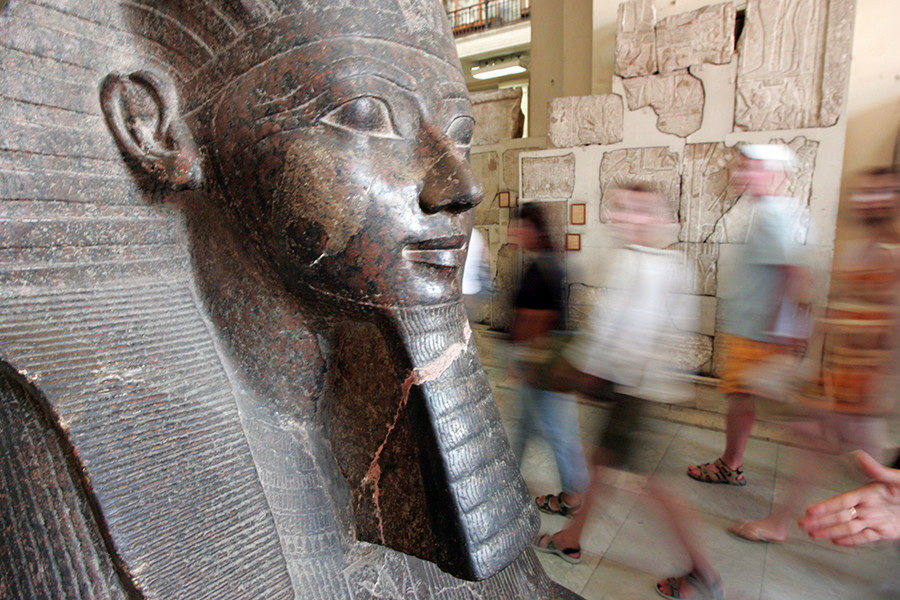
© Khaled Desouki / AFPQueen Hatshepsut, ancient Egypt's most famous female pharaoh, at the Egyptian Museum in Cairo.
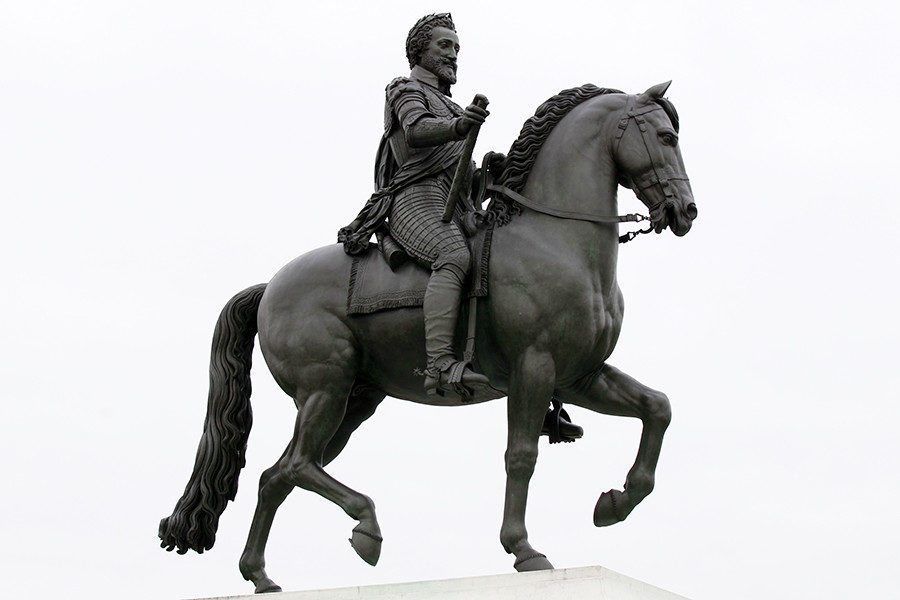
© Jacky Naegelen / ReutersThe equestrian statue of King Henri IV of France.
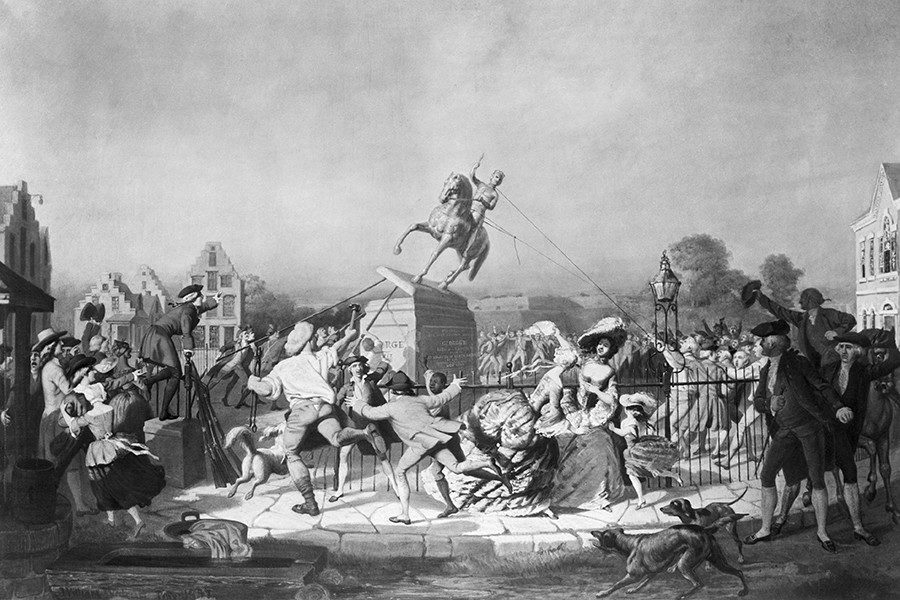
© Bettmann / Getty ImagesTearing down the Statue of George III in New York City. Revolutionary War.
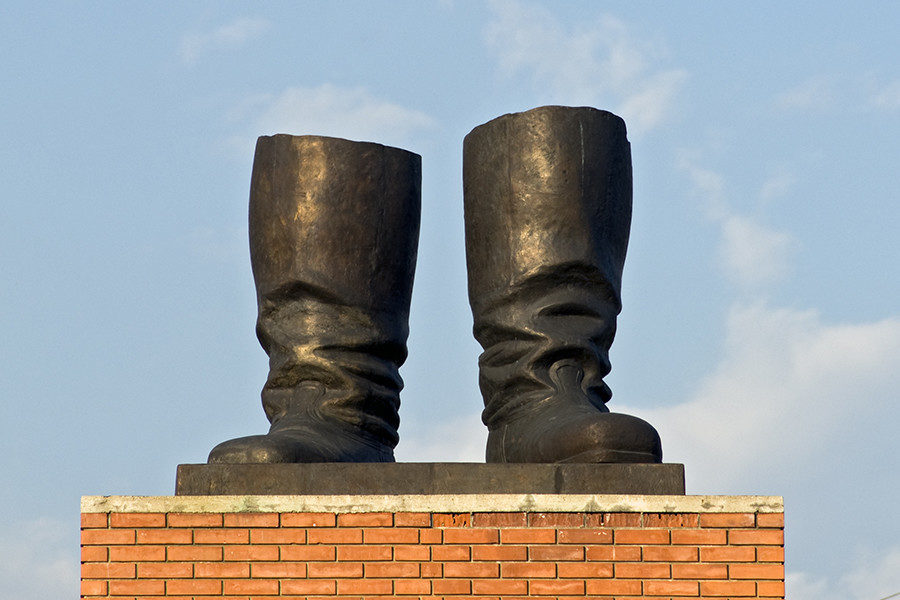
© Akos Eleod / Getty ImagesBronze Boots Statue on Stalins Grandstand at Memento Park, Szoborpark in Budapest, Hungary.
The reality on the ground was slightly different, according to Peter Maass, who was one of dozens of Western journalists who witnessed the statue's demise. He says the event was subtly instigated by US troops, while Iraqis in the square were few in number and probably less enthusiastic than news reports at the time led people to believe. Perhaps given the media spin over the toppling of the statue, it serves as a fitting symbol of the war.
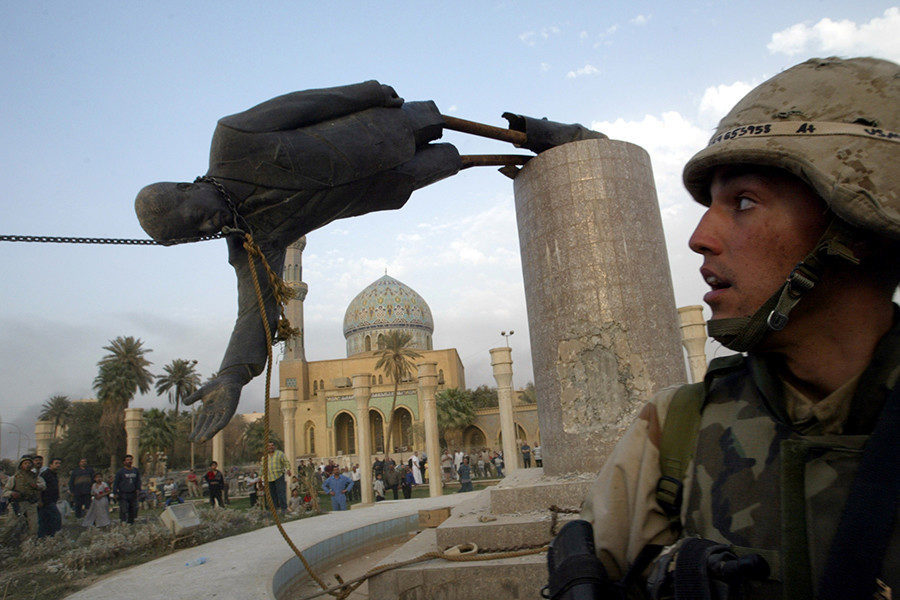
© Goran Tomasevic / ReutersA U.S. soldier watches as a statue of Iraq's President Saddam Hussein falls in central Baghdad, Iraq April 9, 2003.
Amplified by social media, the message for some has become: are you with us, or with Trump and all the bigots, racists, and killers he stands with? Or, alternatively: are you with us, or with the snowflakes, fake news peddlers and all the others trying to smear our past, our values, and our president?
The fact that the violence started over the planned removal of a statue of General Robert E. Lee was secondary, but it managed to trigger some monumental (pun intended) aftershocks - like the tearing down of other Confederate monuments by angry crowds and the torching of a Lincoln bust in Chicago.
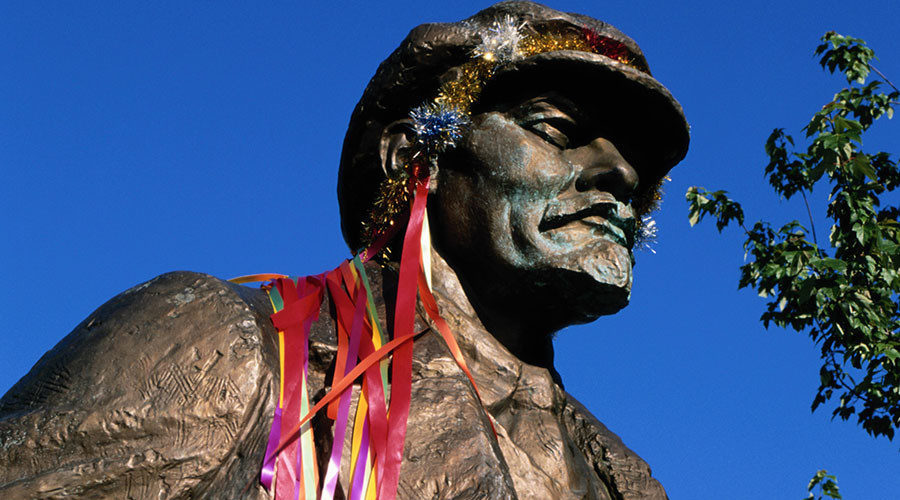
One unexpected (potential) victim of the emotional tsunami is Bolshevik leader Lenin. A statue of Lenin in Seattle was targeted by both right-wing protesters, and city Mayor Ed Murray. For both sides, the monument to the communist leader is just a prop for arguing respectively for and against the preservation of the Confederate memorial at Lake View Cemetery, and neither is apparently willing to buy the Lenin figure from the owner to bring it down.
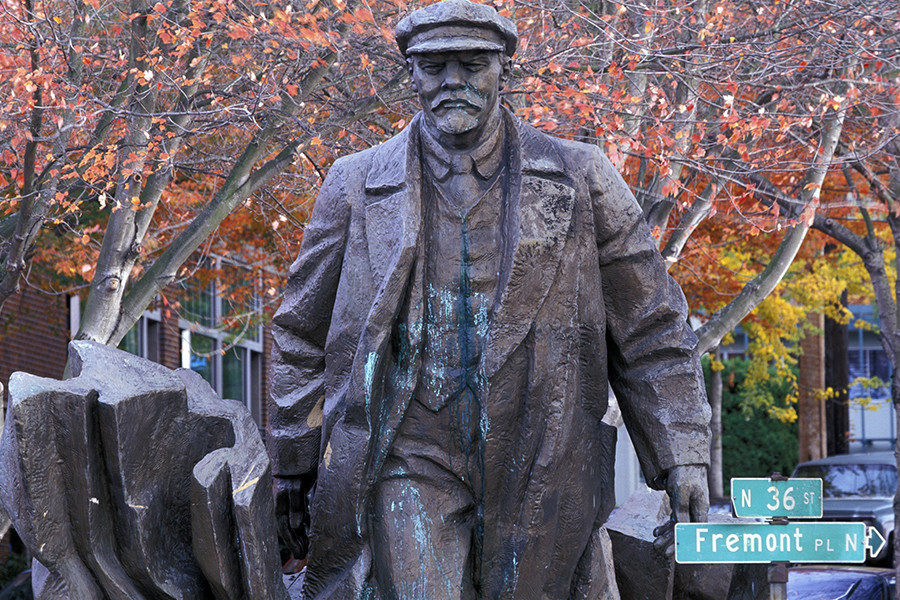
© Danita Delimont / Global Look PressLenin statue in the Fremont neighborhood. USA, Washington State, Seattle.
© Alex L. Fradkin / Getty Images
Some were not happy with this "Leninfall," either due to sentimental feelings, or because the municipalities were expected to foot the bill for it. So, in some villages and towns, Lenin monuments were rededicated to acceptable historic figures like Pylyp Orlyk, an aide to controversial Ukrainian Hetman Ivan Mazepa.
Or even Darth Vader! A Lenin statue in Odessa was remade in the image of the Star Wars villain by a local politician who dresses as Darth Vader and even goes by that name.
A different fate was reserved for statues of another leader, who used to be as prominently displayed in his home country as Lenin was in the USSR. Saparmurat Niyazov - or as he preferred to be called, Turkmenbashi, the father of all Turkmens - was quite fond of praise. The president-for-life of Turkmenistan had an estimated 14,000 statues and busts of himself erected over the two decades of his rule.
The grandest one was placed atop the Arch of Neutrality, an almost 100-meter-high symbol of Turkmenistan's policy of non-alignment. With its arms stretched up to the sky, the glittering Turkmenbashi rotated to always face the sun (a popular joke was that it was the sun that went across the sky to see the statue's face).
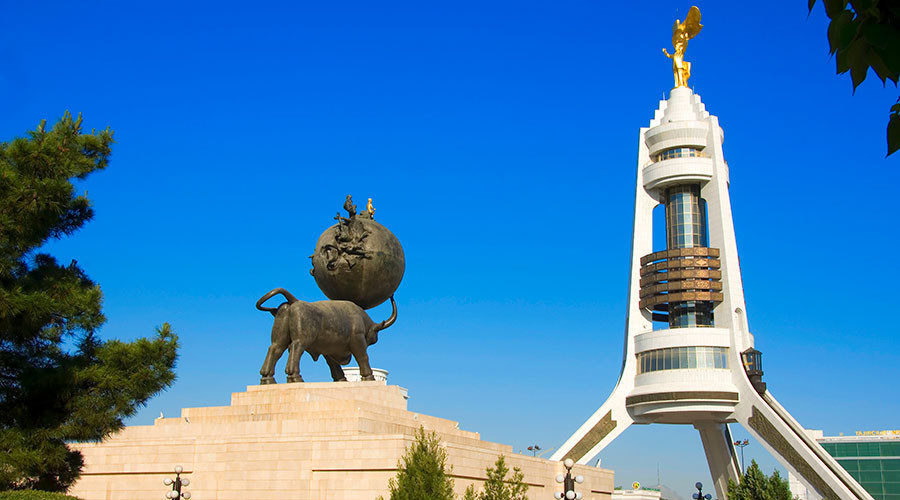
© Therin-Weise / Global Look PressArch of neutrality


They've got devils, demons, Lucifers, dragons, monsters and god-only-knows-what-else in churches and cathedrals all over the planet. Here's a very famous one that sits on the top of Notre Dame, you poorly educated, pea-brained, who-hit-you-with-the-ugly-stick, devil's spawn dumb-ass.....[Link]