
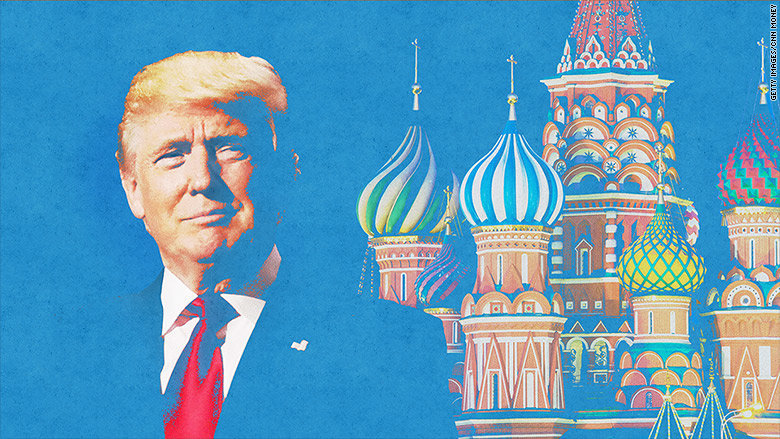
So much of the current frothing over Donald Trump's alleged "secret" alliance with Vladimir Putin resonates for a simple reason: the Cold War. Conflict with the old Soviet empire defined American foreign and defense policy for a half century and still colors our nation's perceptions of events in today's more fragmented - but increasingly resurgent — post-Soviet world.
The twin issues of whether Russia "meddled" in the 2016 election — which seems likely — and second, whether that meddling actually tilted the outcome — which seems dubious — are distracting us from the very real issue of what kind of relationship our two countries want to establish over the next two decades.
Comment: There's zero evidence that Russia "meddled" in the US election.
Trump or no Trump, the rationale for a closer strategic alliance with Russia is compelling - so compelling that the Obama administration itself has been moving willy-nilly in that same direction for months.
The ostensible or proximate rationale is the war against ISIS and Syria's war against the insurgents seeking to overthrow it. Russia wants Assad, its longtime ally, stabilized, and in theory, is willing to assist us - and itself — with ISIS - if we are willing to withdraw, or at least modulate, our past support for the rebels.
But the issue is far larger, in fact. China, once our geo-political ally has emerged as a global superpower and diplomatic rival and its military is quietly surging in strength, threatening our allies in the Pacific, including Japan.
Comment: China is not threatening anyone, it's the other way around. For more information see:
John Pilger: The Coming War on China
And Russia is also flirting with an alliance of its own with China, with expanding commercial ties and cooperative agreements. All of this is potentially disastrous for America.
So, of course, we are talking about warmer ties with Putin, and deciding how far we can go in that direction without appearing to leave the Syrian opposition utterly defenseless.
Comment: Right, we wouldn't want to leave any moderate head-choppers feeling defenseless now, would we?
Trump, in that decidedly non-wonkish way that is his trademark — actually represents the triumph of clear thinking about American choices in much of the world. We can cling to the fantasy of remaking countries in our own image through self-defeating nation-building exercises, as we have in Iraq and to a certain extent Libya, when we toppled dictators we deemed objectionable, or we can start acting from our real national interests, and let other government, however unsavory, do the same.
In the days before neo-conservatism captured the hearts and minds of the US national security establishment, American policy makers, especially Republicans, argued for a more traditional "realist" or "balance-of-power" approach to war, intervention, and diplomacy.
Comment: Really? When?? And if they did argue for these ideals, when were they actually implemented?
Not fighting every humanitarian battle doesn't mean abandoning questions of moral principle or giving up on pressuring regimes into doing the right thing by their own people - above all, for their own sake.
Comment: What planet is this guy living on? The only battles the US fights are the ones that, from its perspective, serve its own geopolitical goals for dominance. The author would not be able to name even one "humanitarian battle" waged by the US for the last 70 years - because there haven't been any.
However, it may well mean, at a minimum, abandoning reckless and adventurist fantasies like establishing a "no-fly" zone over Syria that could well start a major war. Let's be clear: for better or worse, our country has a long history of letting perfectly legitimate resistance movements wither on the vine, if need be. Just ask the Kurds who have lived through more flip flops in American national security thinking than just about anyone - and they have managed to survive.
Trump is right: regional stability is a worthy goal in and of itself and some hard-line repressive regimes we do not especially approve of may provide that stability. However much it makes us feel good in the short term, it does no real good to run around the world trying to topple states, in the process creating power vacuums that produce political chaos, aid and abet our enemies, and lead to less peace and security for all.
Comment: It does make sense, however, if the US's aim is to make trillions of dollars producing and using arms - and creating enough chaos and carnage that would enable it to take economic advantage of a country's instability.
So what price are we willing to pay to forge a new strategic alliance with Russia? Will we consent to the Russian annexation of the Crimea and its desire for a secure "zone of influence," much as we did with the Soviet Union during the Cold War?
Comment: Oy, this guy really needs to do some homework. Russia did not "annex" Crimea. The Crimeans voted to be a part of the Russian Federation.
Perhaps — but within limits. With stronger ties to Putin, we will have more leverage and can set the terms of our alliance, which is preferable to Russia thumbing its nose at the world, and largely getting away with it. Russia under Putin has made great economic strides and Putin, unquestionably, is immensely popular with his people. It is utter fantasy to think that we can deal with him as a bully and threaten to undermine Russian interests through direct or indirect confrontation.
So, froth on Trump critics. If Russia did "meddle" in the 2016 election, and as a result, it managed to expose the lies and chicanery of the Democrats and the Clinton campaign — in their own words — was that really such a bad thing?
In any event, post-election "sour grapes" is no substitute for the hard-nosed strategic thinking our nation now needs - and the incoming administration is rightly demanding — to address the real threats posed by China, ISIS and our increasingly centripetal and disintegrating world.
Comment: Nice try, Stewart. Next time though include more factual information please.



Reader Comments