
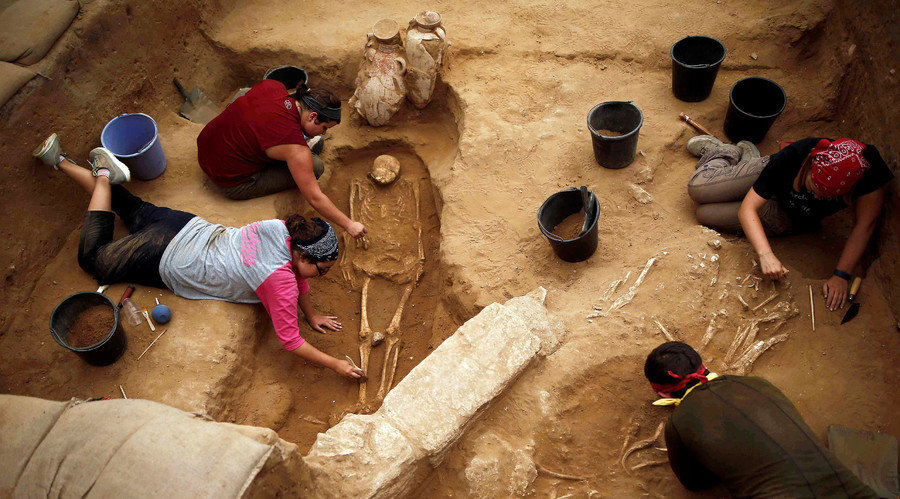
© Amir Cohen/ReutersAmerican archaeology students unearth a skeletons and clay jars during excavation works at the first-ever Philistine cemetery at Ashkelon National Park in southern Israel.
"After decades of studying what Philistines left behind, we have finally come face to face with the people themselves," Daniel M. Master, professor of archaeology at Wheaton College and one of the leaders of the excavation, told AP. "With this discovery we are close to unlocking the secrets of their origins," he added.
The Philistines left behind a lot of pottery, but little biological trace of them had been discovered, however. In 2013, archaeologists found what is said to be the first Philistine cemetery ever unearthed, containing the remains of over 200 people.
The discovery by the Leon Levy Expedition, a team of archaeologists from Harvard University, Boston College, Wheaton College in Illinois and Troy University in Alabama, was made public on Sunday following a 30-year excavation. The team is currently busy performing DNA tests on bone samples, dating back to between the 11th and the 8th centuries B.C., AP reported.
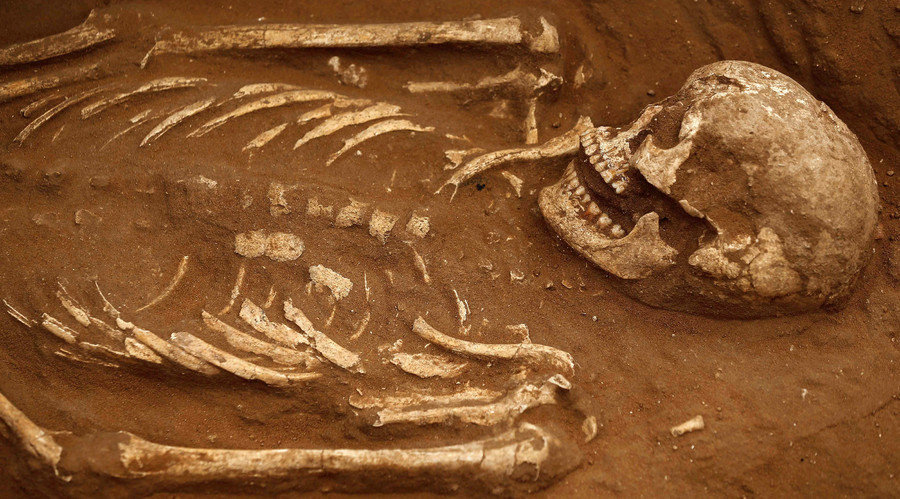
© Amir Cohen/ReutersA skeleton is seen as it is unearthed during excavation works at the first-ever Philistine cemetery at Ashkelon National Park in southern Israel.
The ultra-Orthodox have previously staged protests at excavations where human remains were found over fears that if the remains happen to be Jewish, disturbing them would violate a religious ban. "We had to bite our tongues for a long time," Master said.
"Ninety-nine percent of the chapters and articles written about Philistine burial customs should be revised or ignored now that we have the first and only Philistine cemetery found just outside the city walls of Tel, one of the five primary cities of the Philistines," Lawrence Stager, Dorot Professor of the Archaeology of Israel at Harvard University, told Tazpit News Agency.
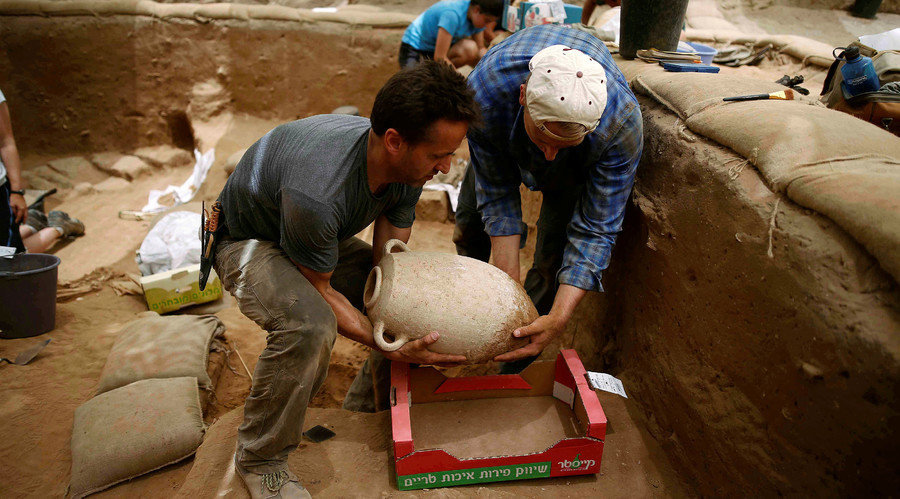
© Amir CohenAmerican archaeology students carry a clay jar after unearthing it during excavation works at the first-ever Philistine cemetery at Ashkelon National Park in southern Israel.
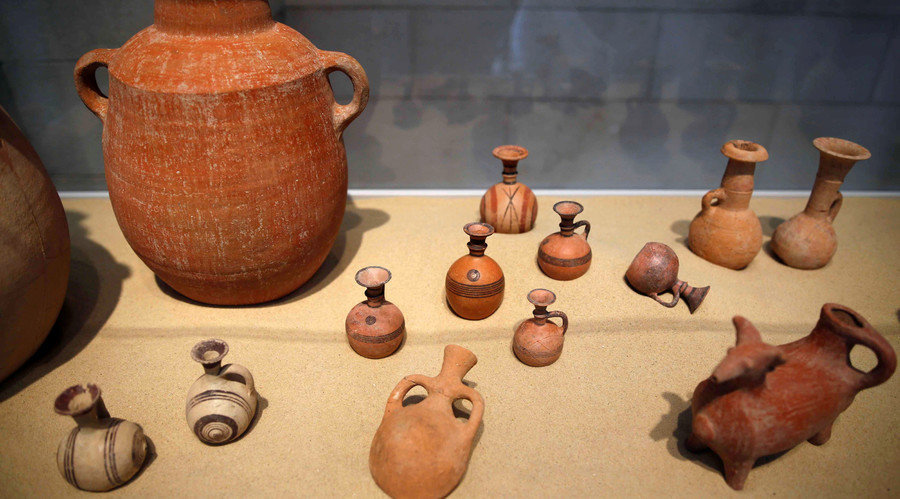
© Amir Cohen/RuetersClay items unearthed during excavations at the first-ever Philistine cemetery in Ashkelon National Park, are displayed at an exhibition in the Rockefeller Museum in Jerusalem.



Reader Comments
to our Newsletter