
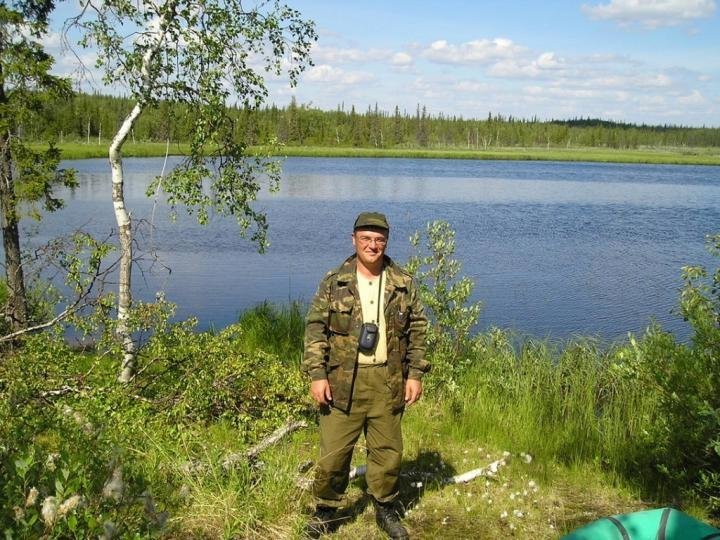
© TSUThis is Danil Vorobiev, doctor of biological sciences and director of biological institute near the lake.
The technology is based on flotation method, said Danil Vorobiev one of the authors of this development, doctor of biological sciences and director of Biological institute. - In place of oil accumulation we perform pneumatic and mechanical action and as a result oil sticks to the section of the two phases - liquid and air - and rises to the surface.
The technology, developed by TSU, best suited for lakes with thick sediments: stony, clay or sandy bottom. This method allows cleaning both sediments and water and there are no any restrictions on the depth of the pond.
This method does not require using any chemicals. Also this method can be used in winter when vegetative processes in a lake "freeze" and interference with the underwater world is minimal.
In the spring and summer fish and aquatic organisms actively reproduce, therefore it is better to conduct any cleaning work during the cold time of the year, - the TSU scientist says. - It is necessary to take into account the fact that many Russian contaminated lakes are in remote places, we can get there and take out the oil from the bottom only by winter road. For such reservoirs the under-ice cleaning method is the only option.
In cold weather, we move the perforated hose down to the bottom in order to direct the pressurized stream of air to accumulations of oil. As a result, oil rises to the surface and goes via the guide channels laid on the surface to an oil collector. A mobile hangar is installed above the oil collector where heat guns create a favourable temperature for pumping oil. This allows working on cleaning water from oil in any weather, even at -50°C.
In addition, the TSU Institute of Biology received a patent for this invention.


Reader Comments
I hate it when I get lakes in my oil. I'm so glad they discovered a solution.