
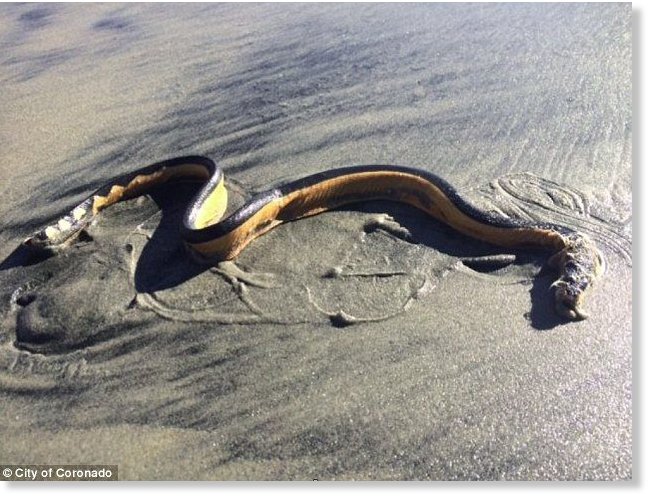
The Pelamis platura snake was found in Dog Beach, Coronado, miles away from its usual tropical habitat
The Pelamis platura snake, which is usually found in the tropical waters off the western coast of Mexico, was last spotted in California in the 1980s.
The sea snakes require a minimum of about 60 degrees Fahrenheit to survive and are believed to be moving north due to the unusually warm temperatures caused by El Nino.
The snake found at Dog Beach in Coronado on Tuesday measured 20 inches long and died shortly after it was placed in a bucket by a lifeguard.
In October, one yellow-bellied snake was found in Silver Strand State Beach, in Ventura County.
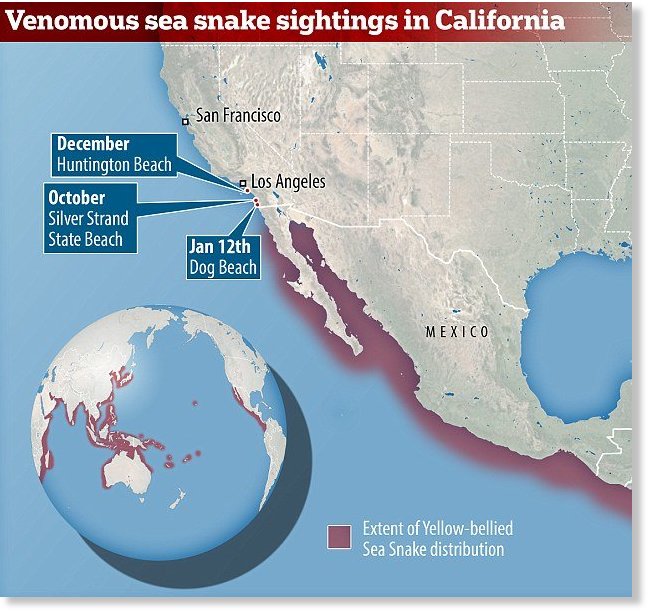
The Pelamis platura is the most widely distributed sea snake species
Greg Pauly, a curator at the Natural History Museum of Los Angeles, told the OC Register last month: 'One in a year is incredible. Two in a year is just mind-blowing. I'm just completely shocked.'
Both of the animals died from what scientists assume was dehydration, as the yellow-bellied snakes are not meant to survive on land.
Pauly reassured people that a couple of appearances does not make an 'invasion'.
While the Pelamis platura use highly potent venom to catch fish, no one has ever died from the snake's bite.
Visitors to these popular Southern California beaches are advised to stay away from the snake and document any sightings for officials to locate.
The species is a descendant of Australian tiger snakes, and usually found off the coasts of warm tropical waters such as Africa, Asia, Australia, Central America and Mexico.
The Pelamis platura is the most widely distributed sea snake species. They are usually black on top and yellow or brown underneath, and may have a series of spots and markings on their flat tails.



Comment: See also: Incredibly venomous yellow-bellied sea snake spotted in California for the first time in 30 years
Second rare yellow bellied sea snake washes up on California beach in 2 months