
© ODD ANDERSEN/Getty Images
A spokesman for Peter Dreier from the southeastern town of Landshut confirmed to Reuters that 31 refugees were making the 550 kilometer trip to the capital and were likely to arrive in the afternoon.
A video on the online site of German newspaper Die Welt showed police officers shepherding dozens of men and women with bags onto a bus in a sunny country road lined with trees and chalets.
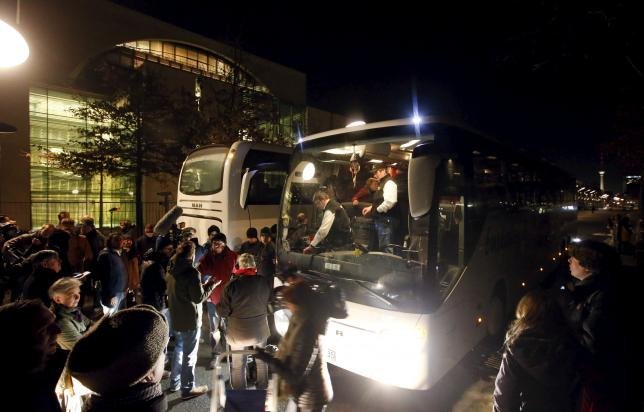
© Reuters/Fabrizio BenschA bus (R) with refugees from the Bavarian town of Landshut is pictured after its arrival to the Chancellery building in Berlin, Germany, January 14, 2016.
"If Germany is taking in 1 million refugees, mathematically that means 1,800 will come to my district. I will take them and if there are any more, I will send them to your office," Die Welt quoted Dreier as saying.
© Reuters/Fabrizio Bensch
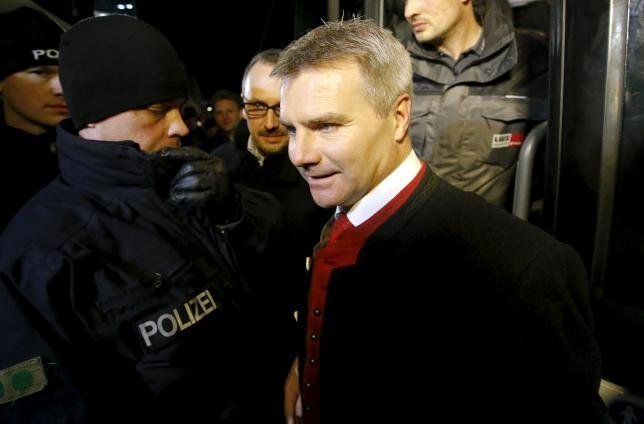
Politician Peter Dreier from the southeastern town of Landshut leaves a bus outside the Chancellery in Berlin, Germany, January 14, 2016.
Politician Peter Dreier from the southeastern town of Landshut leaves a bus outside the Chancellery in Berlin, Germany, January 14, 2016.
Merkel is under increasing pressure to stem the flow of migrants coming to Germany, many from war zones in the Middle East or Africa. Some 1.1 million people arrived last year and several thousand continue to stream in every day.
Local authorities are stretched both financially and logistically to house and look after refugees and there has been a backlash by right-wing groups who have warned of the problems of integration.
Mass sexual assaults on women in Cologne at New Year by gangs of young men described by police as being of Arab or North African in appearance, have deepened worries.
The frustration in Bavaria, the main entry point for most migrants coming to Germany, is especially strong with Merkel's conservative allies, the Christian Social Union (CSU), repeatedly calling on her to introduce a formal cap on migrant numbers. She has resisted such a cap, arguing that it would be impossible to enforce.



Reader Comments