
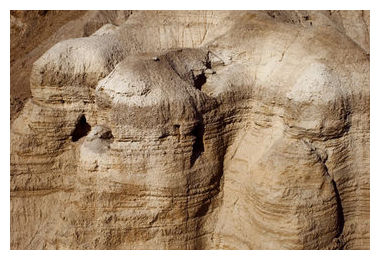
© Dejan Gileski/ShutterstockIn 1947 a Bedouin shepherd unearthed the first of nearly 900 texts that would come to be known as the Dead Sea Scrolls. They were found in a series of 11 caves near Qumran, Israel (shown here).
The newfound scrolls, which date back to about 2,000 years ago, were hidden inside three leather tefillin cases, also known as phylacteries, traditionally carried by observant Jewish men, Italian news agency Ansa Mediterranean reported. These cases were first pulled out of the caves in the 1950s, but their contents apparently were not examined until now.
Starting in the 1940s, the remains of more than 900 manuscripts were found in 11 caves near the site of Qumran in the West Bank. This collection of Hebrew Bible texts, which came to be known as the Dead Sea Scrolls, included copies of Genesis, Exodus, Isaiah, Kings and Deuteronomy.
"'It's not every day that you get the chance to discover new manuscripts," archaeologist Yonatan Adler told Ansa Mediterranean. "It's very exciting."
The nine new documents have not been fully examined yet and it's not yet clear what's written in the text. Adler announced his findings at an international conference on Qumran and the Dead Sea Region at Lugano, Switzerland.







The Nag Hammadi Library, a collection of thirteen ancient codices containing over fifty texts, was discovered in upper Egypt in 1945. This immensely important discovery includes a large number of primary "Gnostic Gospels" -- texts once thought to have been entirely destroyed during the early Christian struggle to define "orthodoxy" -- scriptures such as the Gospel of Thomas, the Gospel of Philip, and the Gospel of Truth.
[Link]