
Their situation has been made far worse because other banks have been closing ranks and refusing to take their business.
More than 40 embassies, consulates and High Commissions have been affected. Even the Vatican has been given its marching orders.
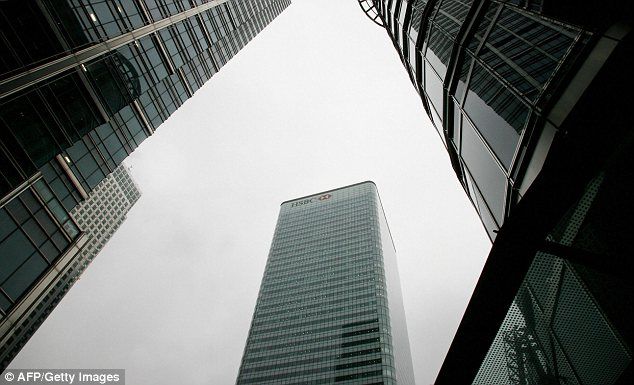
Havoc: HSBC's decision to sack embassies as customers has caused chaos also because other banks refused to take their business
One diplomatic source said he believed HSBC feared being exposed to embassies after it was fined $2billion (£1.32billion) by US authorities last year.
It was blamed for alleged money-laundering activities said to have been conducted through its Latin American operations by drug cartels. HSBC admitted at the time that it had failed to effectively counter money laundering.
Comment: Hmm, so here HSBC is passing the buck on to the source of that money-laundering: states' embassies!
Bernard Silver, head of the Consular Corps, which represents consuls in the UK, said: 'HSBC's decision has created havoc. Embassies and consulates desperately need a bank, not just to take in money for visas and passports, but to pay staff wages, rent bills, even the congestion charge.'
Embassies also have to pay for ambassadorial accommodation and sometimes even school fees for diplomats' children. None of these bills can be settled without a valid British bank account.
John Belavu, minister at the Papua New Guinea High Commission, said: 'We've been banking with HSBC for 22 years and for them to throw us off in this way was a bombshell.'
Lawrence Landau, honorary consul of Benin, said: 'We have been trying everyone, but all the UK banks are clamming up.'
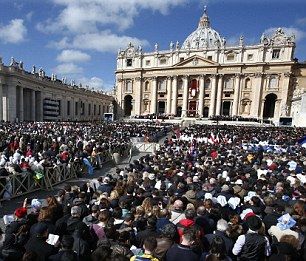
Marching orders: The Vatican's representative office in Britain has been told by HSBC to find another bank
Marching orders: The Vatican's representative office in Britain has been told by HSBC to find another bank.
Banking sources said diplomatic missions are considered to be 'politically exposed', which means they are at risk of money laundering activities.
HSBC, however, claims its decision is part of an assessment of all business customers to see if they satisfy five criteria - 'international connectivity, economic development, profitability, cost efficiency and liquidity'.
One diplomat said: 'We don't even know what these criteria mean.'
HSBC would not explain the requirements to The Mail on Sunday and merely said: 'HSBC has been applying a rolling programme of "five filter" assessments to all its businesses since May 2011, and our services for embassies are no exception.'
The Foreign & Commonwealth Office said it was in contact with HSBC and had provided a number of diplomatic missions with letters of introduction 'to help in opening a new bank account'.
The debacle comes as HSBC prepares to unveil its half-year profits tomorrow. The group is expected to report that it made $14.6billion (£9.6billion) in profits for the first six months of the year. It made $12.7billion in the same period last year.





mind you, they don't ask giovanni who runs the cleaning service down the street to close his account. or carlos who owns the antique shop. no, they ask the political representatives and church officials ahahhahaa! and the criteria are among other profitability and cost efficiency !! oh man, could it be possibly any clearer who the real crooks are?!