
"It was found embedded on the sea bottom in Pleistocene alluvional deposits," the Superintendency of Maritime Cultural Heritage of Sicily said in a statement.
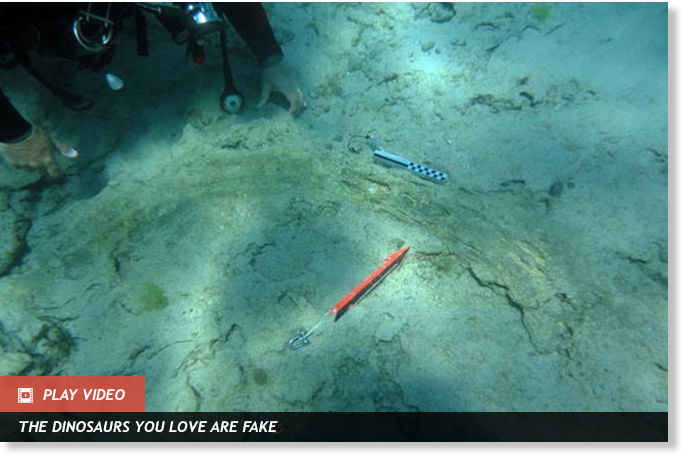
© Soprintendenza del Mare della Regione SicilianaFossiized elephant tusk embedded on the seafloor off the Sicilian coast.
"The tusk' size confirms the previous finding and points to the same extinct species," Sebastiano Tusa, Sicily's superintendent of the Sea Office, said.
Tusa, who dived to the site with Giampaolo Mirabile, Gaetano Lino and Alessandro Urbano, also noticed what appeared like elephant footprints near the tusk.
"It's clear now that the elephant's disarticulated remains are spread in a limited area, embedded in a pebble conglomerate which is the result of alluvional deposits," Tusa said.
Not far from the fossil find, the archaeologist also discovered numerous lumps of flint. Since the flints lay at a depth of about 13 feet, it is possible they represents the remains of a ship and its cargo.
But there might be a more likely explanation.
"Flint was used in the manufacture of tools since the most remote prehistory, mostly in Paleolithic and Neolithic times," Tusa said.
"Most likely, that site now covered by water was once a prehistoric settlement. It was later destroyed by the (rising) sea level," Tusa said.



Isn't there said to be entire islands above the Arctic Circle made from these and so many millions of carcasses? Is this another case of see the exception but not the rule and all that it might point to? such as trouble ahead?
Ok, song time; "I knew you were trouble when you walked in... trouble, trouble, trouble."