
The sinking brine is so cold that it causes the seawater to freeze around it.
BBC film crews recorded the brinicle for the first time ever as it sunk to the bottom of the sea in Antarctica.

© BBCThe icicle of death: The brinicle can be seen extending towards the seabed. Slowly it grows bigger over time as more water freezes around it
The remarkable underwater footage was filmed for Frozen Planet on BBC One using timelapse technology.
The 'icicle of death' grew so rapidly towards the seabed that teams could see it advancing before their eyes. Brine falls to the surface as it is a lot more dense than seawater.
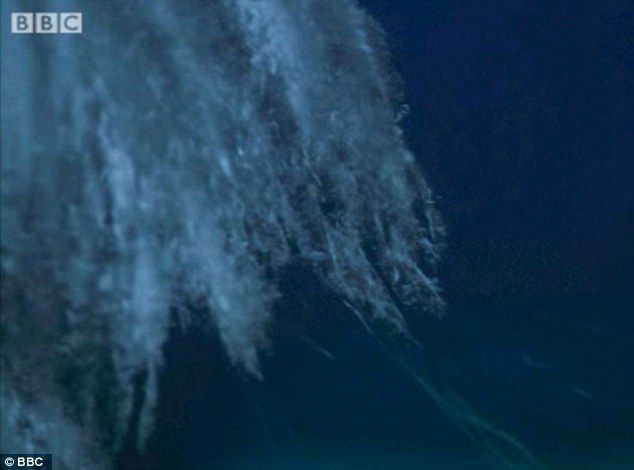
© BBCRemarkable broadcast moment: The ice begins to expand outwards. The brine is a lot more dense than seawater so sinks to the bottom. It is also a lot colder - causing the freezing
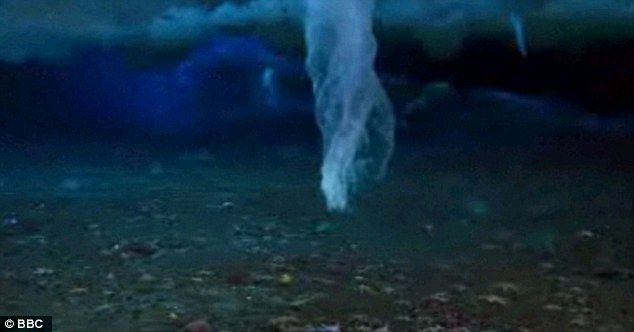
© BBCTouchdown: The brinicle reaches the ocean floor. Starfish can be seen. Often the brinicles break up before they become so large
They are usually found in the Antarctic when saline water is introduced to the ocean.
The remarkable footage was filmed underwater in temperatures of -2C by BBC cameramen Hugh Miller and Doug Anderson at Little Razorback Island, near Antarctica's Ross Archipelago.
Mr Miller said the sinking brine grew rapidly before their eyes.
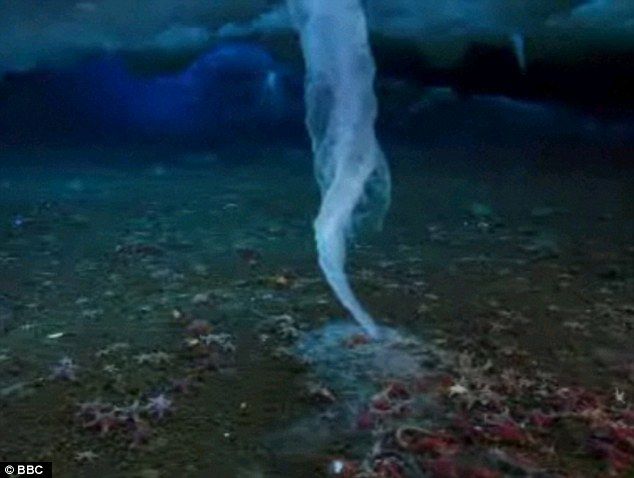
© BBCKiller: The ice floods outwards across the ocean surface rapidly, destroying everything in its wake
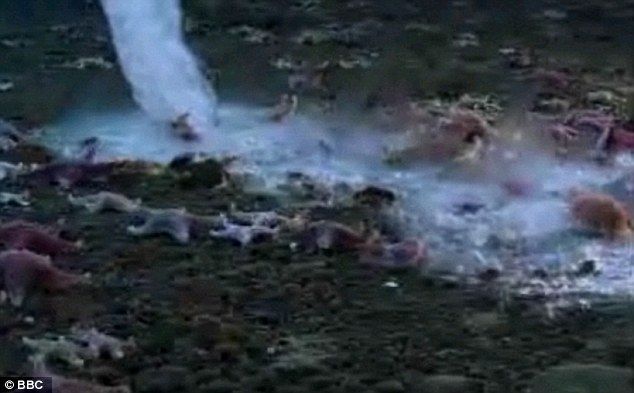
© BBCDestruction: The starfish are frozen by the ice as it expands outwards
'The one we'd seen a week before was getting longer in front of our eyes... the whole thing only took five, six hours.
'I do remember it being a struggle. All the kit is very heavy because it has to sit on the sea bed and not move for long periods of time.'
Although the existence of brinicles has been known since the 1960s, it is the first time it has been caught on camera.
Frozen Planet was screened at 9pm on Wednesday November 23 on BBC One and is available on iPlayer.
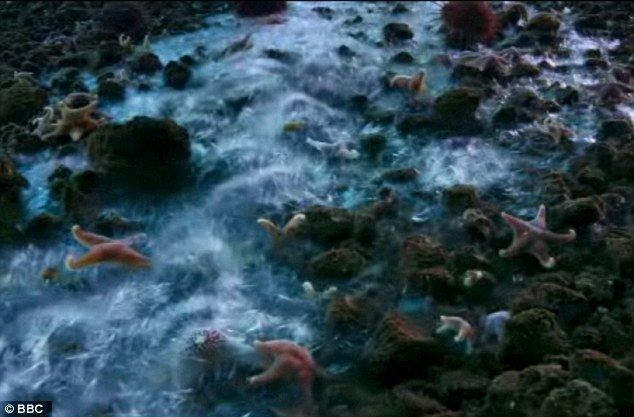
© BBCBroadcasting feat: Although the existence of brinicles has long been known it is the first time they have ever been caught on camera
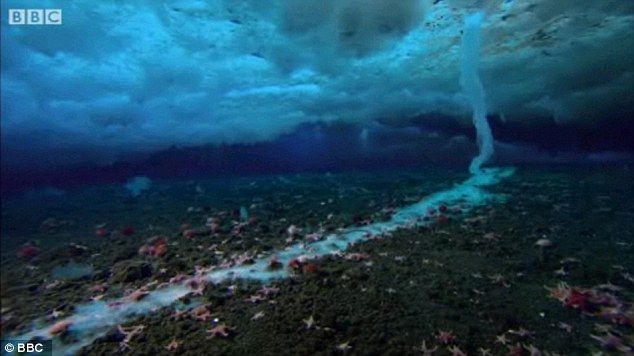
© BBCSeabed spread: When the seawater freezes as it comes into contact with the brinicle it is a lot more spongelike than normal ice





Reminds me of that scene in 'Day After Tomorrow' when that helicopter/s fell due to the fuel line freezing from the sudden temperature drop as the upper atmosphere 'hit the deck'... then one of the crew opens the door and turned to ice... Hmm, not salt though, so we don't have to worry about biblical analogies right?