
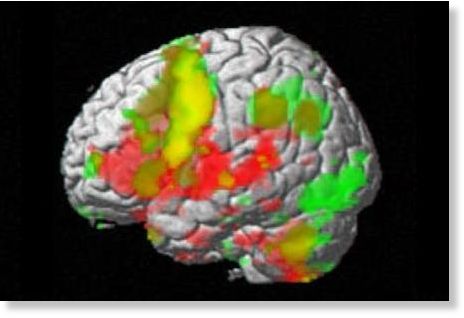
© unknownFunctional Brain MRI
In healthy people the circuit that connects the brain's superior frontal gyrus, insula and putamen regions usually controls the feeling of hatred. A new study, however, say the wiring may weaken when a person is suffering from depression.
Researchers in the UK and China used fMRI scans for comparing brain functions of 15 people with untreated depression, 24 people whose depression had not responded to multiple antidepressants and 37 healthy controls.
Findings showed that depressed people had weakened connections between the superior and inferior orbitofrontal cortex (OFC) on the left side of the brain, but stronger connections on the right side of the brain, researchers wrote in the journal Molecular Psychiatry.
Although, some may think that weaker hatred brain connections may lead to calmer and more peaceful feelings, the study suggests that brain changes in depressed patients may actually contribute to their feelings of self-loathing.
"The results are clear but at first sight are puzzling as we know that depression is often characterized by intense self loathing and there is no obvious indication that depressives are less prone to hate others," said lead researcher Jianfeng Feng of the University of Warwick.
"One possibility is that the uncoupling of this hate circuit could be associated with impaired ability to control and learn from social or other situations which provoke feelings of hate toward self or others," he added.
Other experts, however, suggest that the hate circuit identified in 2008 by Semir Zeki of the University College London, is associated with other feelings such as love and not just hate.
The new study also found weaker connections in a circuit known for the presence of mirror neurons, which trigger similar and appropriate response when one sees an action done by someone else.
This function may help understanding and feelings of connectedness, but its weakness in depressed patients may make them feel more isolated and unable to relate to friends and loved ones.



Reader Comments
to our Newsletter