
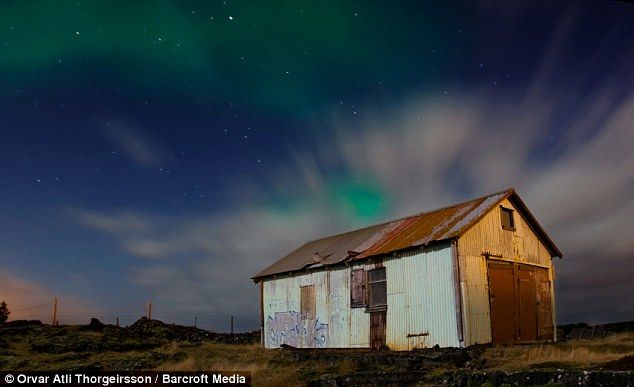
2007: This shot of the lights above a building in Iceland shows an impressive but quite dim display.
It is nature's most mesmerising lights show and it's about to get a whole lot better. Experts predict the northern lights will shine at the brightest levels seen for 50 years in 2012. Since 2007 the aurora borealis has been growing in intensity and will peak during the year after next, according to NASA scientists.
However, if the 2012 aurora are as big as expected, it could cause disruption to mobile phones, GPS and even the national grid. The event will be caused by the Solar Maximum - a period when the sun's magnetic field on the solar equator rotates at a slightly faster pace than at the solar poles. The solar cycle takes an average of around 11 years to go from one solar maximum to the next - varying between 9 to 14 years for any given solar cycle.
The last Solar Maximum was in 2000 and NASA scientists have predicted that the next one in 2012 will be the greatest since 1958, where the aurora stunned the people of Mexico by making an appearance on three occasions. In 2012 scientists have stated that the 'Northern' lights should at least be visible as far south as Rome. Icelandic photographer Orvar Thorgiersson, from Reyjavik, is in the middle of a project to document the growing intensity of the phenomena.
Regularly braving sub-zero temperatures for the last four years, the 35-year-old's photographs show how in 2007 the aurora is a much weaker emerald green against the Icelandic backdrop. By 2008 its rays have become tinged with colour, bright scarlet and orange glows have appeared as reflected against the serenity of the nearby lake.
The ghostly coloured particle streams billow with silent grace as they hit the magnetic field of the Earth - protecting life on the planet from the potentially lethal solar wind. Orvar said: '2012 will be the best, brightest and most dramatic opportunity to view the aurora in a long time.
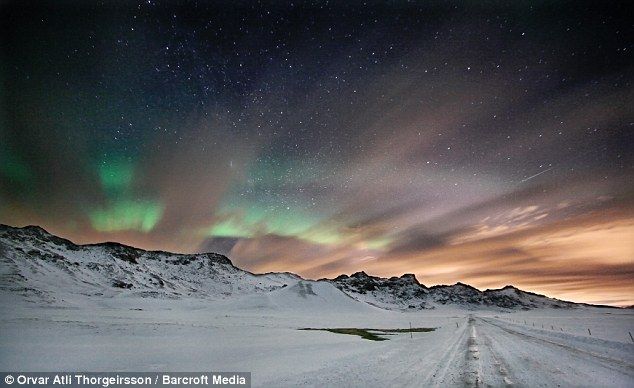
© Orvar Atli Thorgeirsson/Barcrott Media2008: The aurora borealis above Kleifarvatn, Iceland, is slightly brighter.
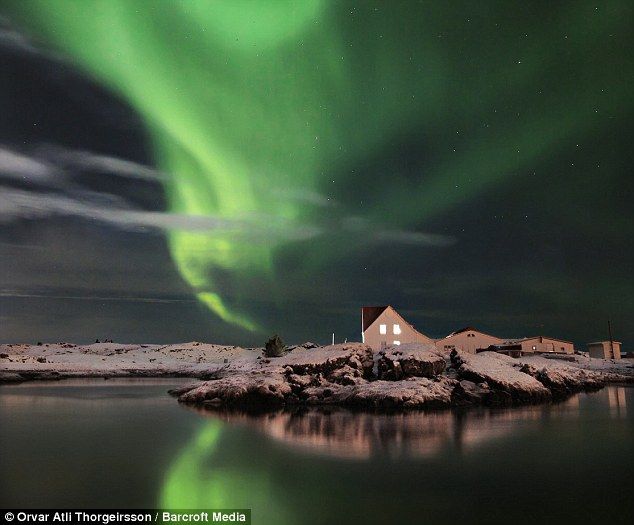
© Orvar Atli Thorgeirsson/Barcrott Media2009: An eerie looking-green glow covers a frozen lake and home in Iceland.
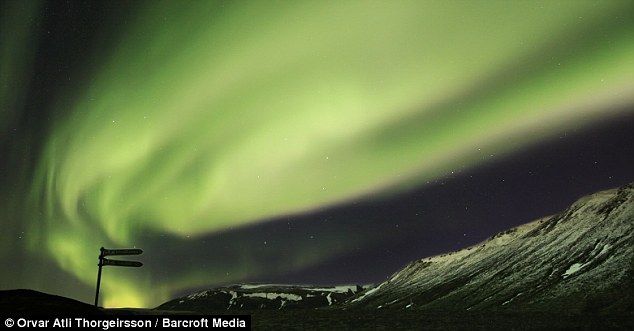
© Orvar Atli Thorgeirsson/Barcrott Media2009: The lights above a signpost appear to be reaching their zenith but there's more to come.
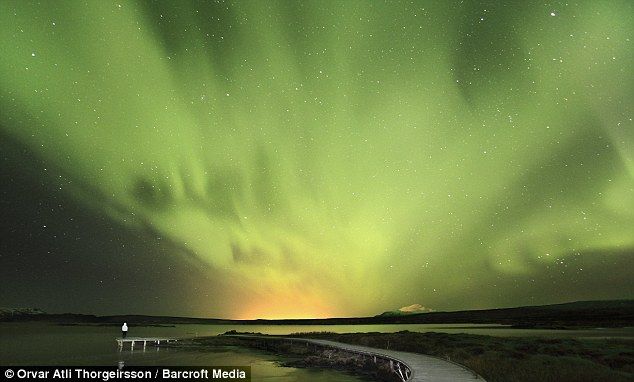
© Orvar Atli Thorgeirsson/Barcrott Media2010: This year the northern lights have produced some stunning scenes.


Reader Comments
to our Newsletter