
© Cluborlov.blogspot.com
At the moment, the Ebola virus is ravaging three countries - Liberia, Guinea and Sierra Leone - where it is doubling every few weeks, but singular cases and clusters of them are cropping up in dense population centers across the world. An entirely separate Ebola outbreak in the Congo appears to be contained, but illustrates an important point: even if the current outbreak (to which some are already referring as a pandemic) is brought under control, continuing deforestation and natural habitat destruction in the areas where the fruit bats that carry the virus live make future outbreaks quite likely.
Ebola's mortality rate can be as high as 70%, but seems closer to 50% for the current major outbreak. This is significantly worse than the Bubonic plague, which
killed off a third of Europe's population. Previous Ebola outbreaks occurred in rural, isolated locales, where they quickly burned themselves out by infecting everyone within a certain radius, then running out of new victims. But the current outbreak has spread to large population centers with highly mobile populations, and the chances of such a spontaneous end to this outbreak seem to be pretty much nil.
Ebola has an incubation period of some three weeks during which patients remain asymptomatic and, specialists assure us, noninfectious. However, it is known that some patients remain asymptomatic throughout, in spite of having a strong inflammatory response, and can infect others. Nevertheless, we are told that those who do not present symptoms of Ebola - such as high fever, nausea, fatigue, bloody stool, bloody vomit, nose bleeds and other signs of hemorrhage - cannot infect others. We are also told that Ebola can only be spread through direct contact with the bodily fluids of an infected individual, but it is known that among pigs and monkeys Ebola can be spread through the air, and the possibility of catching it via a cough, a sneeze, a handrail or a toilet seat is impossible to discount entirely. It is notable that many of the medical staff who became infected did so in
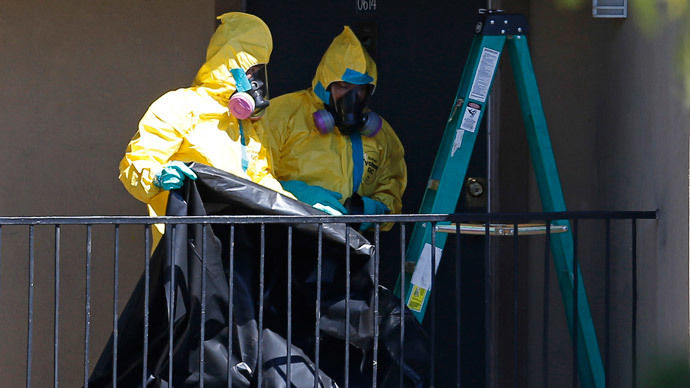
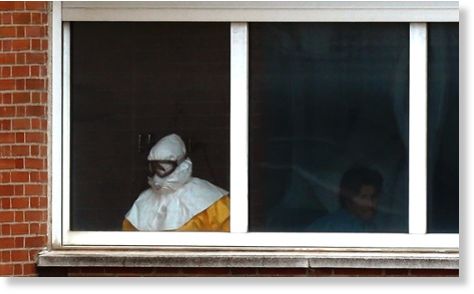
spite of wearing protective gear - face masks, gloves, goggles and body suits. In short, nothing will guarantee your survival short of donning a space suit or relocating to a space station.

















Comment: The CDC is lying to public, sticking with the official narrative by insisting that its existing protocols are adequate for containing the disease. A number of researchers who have not been in direct contact with Ebola patients, have also contracted the virus, thus bringing into question the official meme. It is becoming obvious that most governments and hospitals are not prepared to handle Ebola. At this point, the best people can do is to take responsibility for their own health and well being - there are several protocols that will help to improve immunity and could save many lives:
Are you prepping your diet?
The Ketogenic Diet - An Overview
Vitamin C - A cure for Ebola
Tobacco has medicinal properties and could make the a huge difference in viruses like Ebola:
Scientists stumble across the obvious treatment for Ebola: tobacco
Comets, plagues, tobacco and the origin of life on earth