Health & WellnessS


Life Preserver

Cancer as a metabolic disease: Why having a fat-burning metabolism reduces your risk

cancer metabolic disease
Each year during the anniversary week of Mercola.com, we recognize a Game Changer; someone whose work stands as a great service to humanity by making a significant contribution to improving people's health.

This year, we present the Game Changer Award to Thomas Seyfried, Ph.D.,1 a professor of biology at Boston College and a leading expert and researcher in the field of cancer metabolism and nutritional ketosis.

His book, "Cancer as a Metabolic Disease" is an important contribution to the field of how cancer starts and can be treated. Seyfried's work is also heavily featured in Travis Christofferson's excellent book, "Tripping Over the Truth: The Metabolic Theory of Cancer."

Each day, some 1,600 people die from cancer in the United States alone. Worldwide, we're looking at a death toll of about 21,000 people daily. So many of these deaths are unnecessary — they're preventable and treatable.

Seyfried is one of the pioneers in the application of nutritional ketosis for cancer; a therapy that stems from the work of Dr. Otto Warburg, who was undoubtedly one of the most brilliant biochemists of the 20th century. He received the Nobel Prize in Physiology or Medicine in 1931 for the discovery of metabolism of malignant cells.

Warburg also held a doctorate in chemistry and was personal friends with Albert Einstein and many of the most prominent scientists of his time. His life's mission was to find a cure for cancer, and he actually did. Unfortunately, few were able to appreciate the importance of his findings.

Seyfried has followed in Warburg's scientific footsteps, and is conducting important research to advance this science. He has in fact exceeded Warburg's initial supposition, shedding important light on the metabolic underpinnings of cancer.

Cancer as a Metabolic Disease


The traditionally held view or dogma is that cancer is agenetic disease, but what Warburg discovered is that cancer is really caused by a defect in the cellular energy metabolism of the cell, primarily related to the function of the mitochondria, which are the little power stations within each cell.

Comment: Read more about the many health benefits of the ketogenic diet and how to switch to a fat-burning metabolism:


Bug

Once upon a time the US tried to weaponize the Zika mosquito, now they're trying to eradicate it

Zika
© Wikimédias
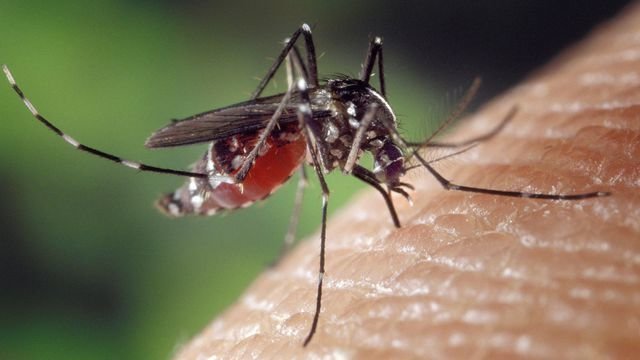
After months of anticipation, the Zika virus has finally arrived to the continental U.S., with 15 non-travel cases being reported in Florida as of August 2. The virus is carried primarily by a species of mosquito called Aedes aegypti.

The Centers for Disease Control (CDC) issued its first-ever warning for within the U.S., urging pregnant women to avoid travel to a Miami neighborhood where the Zika investigation is centered.

CDC and the Florida Health Department recommended an aerial spraying program to cover a 10-square-mile area just north of downtown Miami. The state is spraying a chemical called Naled, which is an organophospate pesticide that causes severe skin and eye irritation; it also contains an inert ingredient called napthaline which is classified by the EPA as a "possible human carcinogen."

When this chemical was recommended to be sprayed in Puerto Rico, protests erupted from residents concerned about their health and the environmental impacts. Organophosphate pesticides also devastate bee populations and other beneficial insects, which affects agriculture as well as ecosystem health.

Info

Futuristic coffee shop, butter and biohacking

Bulletproof coffee shop
© Jefferson Graham
At a futuristic new coffee shop here you can get a cup of joe with a pat of grass-fed butter and a teaspoon of "brain octane oil."

Welcome to California, folks. This is biohacking central.

The Bulletproof Coffee stores will sell you more than just alternative caffeine. The in-store chairs omit an electromagnetic field, the lighting changes by the time of day, and a panel on the floor is specially designed to decharge guests' static electricity.

Comment: This seems to be a great way to introduce people on how to live better but it barely scratches the surface. Also be aware of electromagnetic field dangers: EMF pollution: What you can do to reduce your EMF exposure


Bulb

Gluten sensitivity: Biological mechanism uncovered

bread
© UnknownResearchers have identified a biological explanation for why some people without celiac disease are unable to tolerate gluten.
People with gluten sensitivity - whereby gluten intake triggers symptoms similar to celiac disease, but without the associated intestinal damage - are often told that the condition is "all in the mind." But a new study may turn this perception on its head, after uncovering a biological explanation for gluten sensitivity.

In a study published in the journal Gut, researchers led by Columbia University Medical Center (CUMC) in New York, NY, suggest gluten sensitivity may arise as a result of a weakened intestinal barrier, which triggers an inflammatory immune response when gluten is consumed.

Proteins found in wheat, rye, barley, and triticale all fall under the gluten category. They are present in a variety of foods, primarily breads, cereals, and pasta.

It is estimated that around 1 in 141 Americans have celiac disease- an autoimmune disorder in which the immune system attacks the small intestine in response to gluten intake, causing symptoms such as bloating, constipation, chronic diarrhea, stomach pain, vomiting, and chronic fatigue.

Comment: Further reading:


Pills

Fluoroquinolones: The antibiotics from hell

sick woman
"I was given the antibiotic Levaquin. After 5 pills my body was burning and my right arm and legs were weak," a reader posted after an article about underreported prescription drug dangers. "I discontinued the drug and was told I would be fine. 1 month later my feet started hurting, my knees developed chronic pain and I had stabbing pain in my quads. 13 months later, I have floaters in my vision, tinnitus, flat and deformed feet, rotator cuff damage, knee grinding, hip snapping, tendonitis and I can only walk for a few minutes."

After taking Levaquin, another patient had "multiple areas of tendinitis in triceps, biceps, rotator cuff, hip flexor, feet and lower back," he wrote on the web site askapatient.com. "I had joint swelling and severe pain in my wrists and fingers, generalized fluid retention and edema, joint popping with any movement in feet, ankles, knees and hips." Before taking Levaquin, "I was a sponsored athlete—happy, strong and active. Levaquin has ruined me.

The drug the patients are talking about, the antibiotic Levaquin (levofloxacin), is part of a group of drugs called fluoroquinolones, widely used until recently for urinary tract infections, bronchitis, sinusitis and other infections. Other drugs in the class include Avelox (moxifloxacin), Cipro (ciprofloxacin), Floxin (ofloxacin), Factive (gemifloxacin mesylate) and Noroxin (norfloxacin). Patients' stories about taking Levaquin share striking similarities. Illinois resident Jerzy Tyszkowski who filed a complaint against Johnson & Johnson and Ortho-McNeil-Janssen Pharmaceuticals, Inc. about Levaquin in 2013, says he developed severe orthopedic, gastrointestinal, neurological, visual and renal injuries after taking the drug for only five days.

Comment: Unless you're seeking DNA and mitochondrial damage and damage to immune cells, fluoroquinolones should be avoided at all costs.


SOTT Logo Radio

SOTT Focus: The Health & Wellness Show: Connecting the dots: Health in the news

breastfeeding
© Rachel Levit Ruiz
On this episode of The Health and Wellness Show we did a bit of dot connecting. There have been a lot of interesting stories in the news as of late and we did our best to cover them. In gut news we covered the power of mother's milk, how gut flora can influence food cravings and the rapidly shrinking population of America. Pharmaceutical and vaccine madness continues. Statins, birth control pills and the HPV vaccine continue their reign of destruction. There have been big stories on corruption at the CDC and FDA (what else is new?). And in political health news -- what will a Killary Clinton presidency mean for your medical sovereignty?

Running Time: 01:31:05

Download: MP3


Health

Epigenetics game-changer: Why your genes are not your destiny

felicidad y genes
© pixabay.com
Think diseases run in the family? Think again.

Have you ever worried about "getting" breast cancer because your mom and aunt both had it? What about Bipolar Disorder (yes, psychiatry capitalizes it's diagnoses for extra emphasis!) or Lupus? It has probably felt like you have a ticking time bomb inside you and you just want to know when it's going to go off. When that diagnosis is going to be delivered. Women like Angelina Jolie have engaged willful mutilation in the name of the persistent belief that genes are destiny.

This is simply not true.

"It runs in my family" no longer means what we once believed it to.

You may not know this yet, but the whole game has changed and we are several decades into the most powerful shift in scientific thinking in the past 300 years. Science, when handled with care, is a process, not a destination.

Science fundamentally reflects our native curiosity, our creative impulse, and our sense of wonder. Along the line, however, it began to take on a different flavor. With men like Newton, Darwin, and Descarte at the microphone, a culture of reductionism, force-based perceptions around the nature of reality, and separation of spirit and matter all predicated the culture of ruthless medicine we are steeped in today. We war against nature, our bodies, and each other. There's good and bad. There's the illusion of the objective. We pray at the altar of facts and data.

Syringe

Vaccinate or no pay - Vaccination rates skyrocket in Australia

Nurse with needle
© Sputnik/Igor Zarembo
Vaccination rates in Australia have hit an all-time high after the government introduced a "No Jab, No Pay" program, which withholds up to $15,000 of a parent's income for those who refuse to have their children immunized.

The campaign launched on January 1, and has resulted in 5,738 children being vaccinated for the first time, and another 148,000 receiving booster shots, Science Alert reported.

Citizens can still "conscientiously object" to vaccinating their children for religious or philosophical reasons, but they will take a huge hit to their wallet if they do so, without exception.

Families had until March to comply with the program before their Child Care Benefits, Child Care Rebates and Family Tax Benefits would be cut.

The new policy also prevents parents from enrolling unvaccinated children in child care, pre-school, or kindergarten.

Vaccination rates had fallen to such a historically low level, that we were seeing the reemergence of diseases that we had been free of for years," Social Services Minister Christian Porter told ABC News.

Question

Brazil: Zika baby cases defy predicted patterns - is co-infection the culprit?

zika
© Daniel Ramalho for The Globe and MailThe bulk of the cases of congenital Zika syndrome, fetal brain defects that sometimes cause microcephaly, remain clustered in the northeast region of Brazil, leading experts to wonder if there are other contributing factors.
Brazil's Ministry of Health has launched an investigation into the cluster of babies born with brain defects linked to the Zika virus, after an expected "explosion" of cases across the country did not occur.

The bulk of the cases of congenital Zika syndrome - fetal brain defects that sometimes cause microcephaly, or abnormally small skulls - remain clustered in the northeast region of the country where the phenomenon was first identified last October, the ministry says.

And that has epidemiologists and infectious disease experts asking what is going on: Is it Zika and another virus working together that damages the fetal brains? Is it Zika and an environmental factor? Or something about the women themselves whose fetuses are affected?

The research in Brazil won't have conclusions for months, but will have implications across the Americas, where the Brazilian experience and the rapid spread of Zika has caused governments to take protective measures and even warn women to delay getting pregnant.

Book 2

Knowledge protects: Those who read books live longer

reading, intelligence
Reading books is tied to a longer life, according to a new report.

Researchers used data on 3,635 people over 50 participating in a larger health study who had answered questions about reading.

The scientists divided the sample into three groups: those who read no books, those who read books up to three and a half hours a week, and those who read books more than three and a half hours.

The study, in Social Science & Medicine, found that book readers tended to be female, college-educated and in higher income groups. So researchers controlled for those factors as well as age, race, self-reported health, depression, employment and marital status.

Compared with those who did not read books, those who read for up to three and a half hours a week were 17 percent less likely to die over 12 years of follow-up, and those who read more than that were 23 percent less likely to die. Book readers lived an average of almost two years longer than those who did not read at all.

Comment:
Bookworms rejoice: Research shows reading may make you happier:

Reading has been shown to put our brains into a pleasurable trance-like state, similar to meditation, and it brings the same health benefits of deep relaxation and inner calm. Regular readers sleep better, have lower stress levels, higher self-esteem, and lower rates of depression than non-readers. "Fiction and poetry are doses, medicines," the author Jeanette Winterson has written. "What they heal is the rupture reality makes on the imagination."
More on the benefits of reading: