
© Unknown"For schizophrenia, the recovery rate with drug therapy is under 15%. With nutritional therapy, the recovery rate is 80%." - Abram Hoffer, MD, PhD
Schizophrenia is usually treated with prescription antipsychotic drugs, many of which produce severe adverse effects
(1-6); are linked to an incentive for monetary profit benefiting pharmaceutical corporations
(7-13); lack sufficient evidence for safety and efficacy
(9, 14); and have been grossly misused
(15-20). Orthomolecular (nutritional) medicine provides another approach to treating schizophrenia, which involves the optimal doses of vitamin B
3-also known as niacin, niacinamide, nicotinamide, or nicotinic acid-in conjunction with an individualized protocol of multiple vitamins. The orthomolecular approach involves treating "mental disease by the provision of the optimum molecular environment for the mind, especially the optimum concentrations of substances normally present in the human body"
(21).
Evidence for the niacin treatment of schizophreniaVitamin B
3 as a treatment for schizophrenia is typically overlooked, which is disconcerting considering that historical evidence suggests it effectively reduces symptoms of schizophrenia, and has the added advantage, in contrast to pharmaceuticals, of mild to no adverse effects
(22-35). After successful preliminary trials treating schizophrenia patients with niacin, pilot trials of larger samples commenced in 1952-reported in 1957 by Hoffer, Osmond, Callbeck, and Kahan. Dr. Abram Hoffer began an experiment involving 30 patients who had been diagnosed with acute schizophrenia. Participants were given a series of physiological and psychological tests to measure baseline status and were subsequently assigned randomly to treatment groups. Nine subjects received a placebo, 10 received nicotinic acid, and 11 received nicotinamide (the latter two are forms of vitamin B
3). All participants received treatment for 42 days, were in the same hospital, and received psychotherapy from the same group of clinicians. The two experimental groups were administered three grams of vitamin B
3 per day. Each of the three treatment groups improved, but the two vitamin B
3 groups improved more than the placebo group as compared to baseline measures. At one year follow up, 33% of patients in the placebo group remained well, and
88% of patients in the B3 groups remained well. These results inspired many subsequent trials, and those that replicated the original method produced similarly positive results.








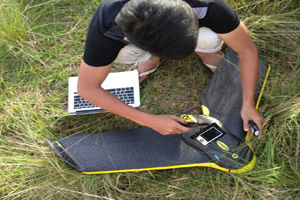












Comment: While the U.S. is breaking international laws using (autonomous?) armed drones to indiscriminately hunt and kill its "enemies" and innocent victims, using reaper drones to gather intelligence or RPA (remotely piloted aircraft) for domestic surveillance, others are using the technology for intelligent and humanitarian purposes: tracking property damage from catastrophes, hunting for survivors, as a tool for research, and as a network for transport (such as medical supplies or lab samples between rural clinics) which aims to help millions of people who do not have year-round ground access or services. A different kind of road, a different kind of bridge.