Earth ChangesS


People

UN security council to consider climate change peacekeeping

Image
© Matthieu Paley/CorbisSmall island states, which could disappear as sea levels rise, want the UN security council to intervene.
Special meeting to discuss 'green helmets' force to intervene in conflicts caused by rising seas levels and shrinking resources

A special meeting of the United Nations security council is due to consider whether to expand its mission to keep the peace in an era of climate change.

Small island states, which could disappear beneath rising seas, are pushing the security council to intervene to combat the threat to their existence.

There has been talk, meanwhile, of a new environmental peacekeeping force - green helmets - which could step into conflicts caused by shrinking resources.

The UN secretary general, Ban Ki-Moon, is expected to address the meeting on Wednesday.

Comment: Don't paint the blue helmets green without reading this.


Target

Earthquake shakes Greek island

zakynthos
Quake-hit: The Greek island of Zakynthos suffered an earthquake of preliminary magnitude 5 - but no one was injured
An earthquake of preliminary magnitude 5 has struck off the Greek island of Zakynthos, but no injuries or damage have been reported, authorities said today.

The Athens Geodynamic Institute said the undersea quake struck at 10.13 a.m. (0713GMT), and had its epicentre about 100 kilometres off the island's south-western coast.

The epicentre was about 350 kilometres west of Athens.

Greece is one of the world's most earthquake-prone countries, and Zakynthos lies in an area of frequent seismic activity. But severe damage and injuries are rare.

Bizarro Earth

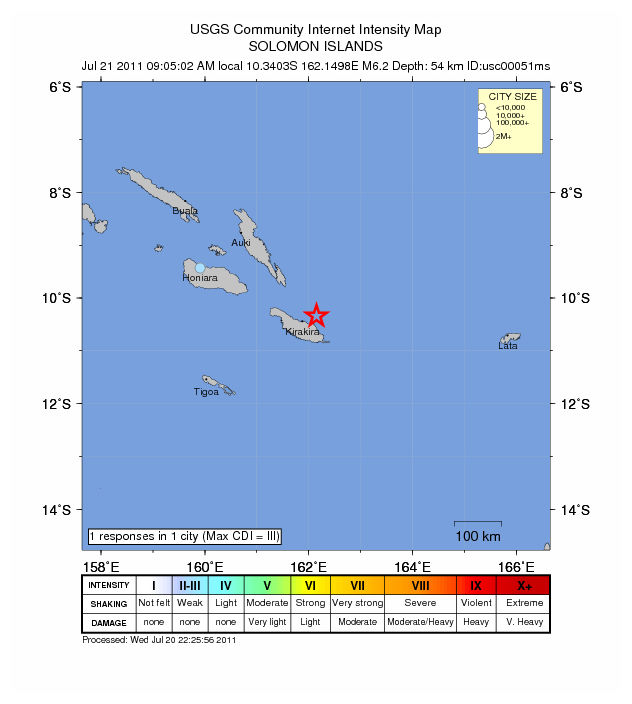
Solomon Islands: Earthquake Magnitude 6.0

Solomon Isles Quake_200711
© USGSEarthquake Location
Date-Time:
Wednesday, July 20, 2011 at 22:05:02 UTC

Thursday, July 21, 2011 at 09:05:02 AM at epicenter

Time of Earthquake in other Time Zones

Location:
10.340°S, 162.150°E

Depth:
54.5 km (33.9 miles)

Region
SOLOMON ISLANDS

Distances:
27 km (17 miles) ENE (63°) from Kira Kira, Solomon Islands

238 km (148 miles) SE (138°) from Auki, Solomon Islands

260 km (161 miles) ESE (112°) from HONIARA, Solomon Islands

1640 km (1019 miles) E (95°) from PORT MORESBY, Papua New Guinea

Eye 1

Oil Pipeline Breaks on Blackfeet Reservation; Significant Volume of Oil Floods Cut Bank River, Montana

Image

Plenty of people have heard of the recent oil spill on the Yellowstone River in Montana. Few are aware, however, that three weeks ago another leak formed a creek of crude running down to Cut Bank River just miles from Glacier National Park.

Cowardly local papers, perhaps for fear of hurting tourism or stepping in front of juggernaut corporations, have completely ignored reports from environmental officials and concerned citizens. They have often repeated the drilling company's press releases verbatim.

We were on site and documented it.

The corporation's reports are false. How can 420 gallons of oil travel a mile through a wheat field into a wetland, down a winding ravine and into a river? It was much much larger. We also do not know when it began, but we know it was three weeks ago was when it was first reported.

Sun

US: Prolonged Heat Wave Heads East, Blamed for 22 Deaths

Image
© Reuters/Shannon StapletonChildren cool off in the water from an opened fire hydrant in the Bronx borough of New York July 19, 2011.
At least 22 deaths have been blamed thus far on the heat wave that for weeks has been taking its toll on the central United States and on Wednesday was expanding eastward, according to the National Weather Service.

Hospitals in Wichita, Kansas, treated 25 heat-related illnesses, according to the Weather Service report. In Des Moines, Iowa, 16 people were hospitalized because of the heat.

In Minneapolis dozens of fans at recent Minnesota Twin games have been treated for heat issues, even though the club did take extra precautions such as providing free water stations and having first aid and guest service staff on hand to monitor crowds.

Day after day of high temperatures and humidity with no relief overnight was taxing the region.

"It's just draining, physically draining," said Chris Vaccaro, a Weather Service spokesman.

People

Casualties Confirmed After Kyrgyzstan, Uzbekistan Quake

Image
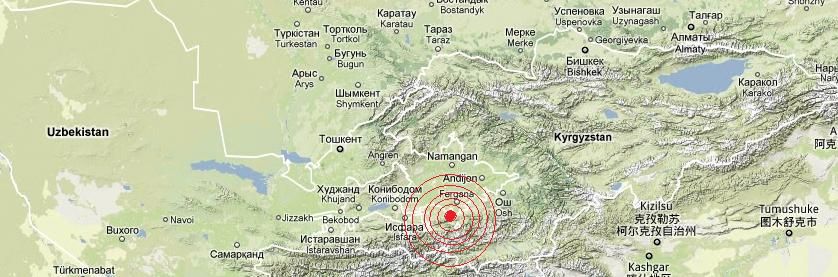
© Google MapEarthquake epicentre.
At least 13 people have been confirmed killed and more than 70 others injured after a strong earthquake struck the southwestern Kyrgyzstan and eastern Uzbekistan border area on early Wednesday morning, officials said.

The 6.2-magnitude earthquake at 1.35 a.m. local time (1935 GMT Tuesday) was centered about 15 kilometres (9.3 miles) east of Okhna, a village in the Batken Province of Kyrgyzstan near the border with Uzbekistan. It struck about 10 kilometres (6.2 miles) deep, making it a shallow earthquake, according to the Kazakhstan National Data Center (KNDC).

The United States Geological Survey (USGS), which measured the strength of the earthquake at 6.1 on the Richter scale, estimated that some 50,000 people may have felt 'very strong' shaking, which could result in moderate to heavy damage. It estimated that some 7.6 million others may have felt moderate to strong shaking.

Arrow Down

US: Three Swept Over Yosemite Waterfall Presumed Dead

Officials at Yosemite National Park have identified three visitors who are presumed dead after being swept over a raging waterfall.

The visitors were identified Wednesday as 22-year-old Hormiz David of Modesto, 27-year-old Ninos Yacoub of Turlock, and 21-year-old Ramina Badal of Modesto.

Witnesses saw the group was swept over Vernal Falls after they crossed a barricade to pose for photographs.

Yosemite search and rescue rangers are searching the Merced River downstream for the bodies.

Butterfly

Farming and the fate of wild nature

endangered bird agriculture
© Lars HolbechChocolate-backed Kingfisher.
Farming is the greatest extinction threat to birds, mammals, plants and insects, and widespread land clearing, irrigation and chemical treatments have profoundly affected wild species and habitats the world over. But why should we care about biodiversity when the necessity of meeting an expected doubling of global food demand is only decades away?

The stark reality, as conservation scientist Professor Andrew Balmford explained, is that biodiversity is not a luxury, it's a necessity for human life: "As well as being a vital source for many people of food and fuel, wild nature is crucial for every one of us in mitigating climate change, regulating water flows, and buffering people from the impact of storms and floods."

"World agriculture developed and flourished during a period of climate stability," he added. "We don't yet know how our current agricultural systems will be affected by climate change but my guess is that they will be more sensitive than we realise. For me, this uncertainty underscores the importance for the future of farming of agriculture having least possible impact on what remains of nature."

Professor Balmford, who helps lead the Conservation Science Group in the Department of Zoology, advocates thinking smart from the start. "It's vitally important to integrate biodiversity concerns into the inevitable expansion in agriculture, especially in developing countries and regions where crop farming is likely to increase the most," he said, "and to do this at an early stage, not when it's too late to save remaining wild habitats and the species that depend on them."

Comment: Recommended watching:

Lierre Keith on 'The Vegetarian Myth - Food, Justice and Sustainability'


Vader

Powers That Be preparing for lockdown as Earth Changes increase? UN security council to consider 'climate change peacekeeping force'

Image
Special meeting to discuss 'green helmets' force to intervene in conflicts caused by rising seas levels and shrinking resources

A special meeting of the United Nations security council is due to consider whether to expand its mission to keep the peace in an era of climate change.

Small island states, which could disappear beneath rising seas, are pushing the security council to intervene to combat the threat to their existence.

There has been talk, meanwhile, of a new environmental peacekeeping force - green helmets - which could step into conflicts caused by shrinking resources.

The UN secretary general, Ban Ki-Moon, is expected to address the meeting on Wednesday.

But Germany, which called the meeting, has warned it is premature to expect the council to take the plunge into green peacemaking or even adopt climate change as one of its key areas of concern.

Comment: As Andres Perezalonso pointed out in Climate Change, Food Shortages and Economic Crisis - Coming to a Town Near You, the Pentagon is well aware of the real nature of climate change and is preparing itself accordingly:
In February 2004, The UK Observer reported that a study commissioned by the Pentagon predicted that food riots would result from abrupt climate change. The grim document described how the planet would reach the edge of anarchy and countries would threaten each other with nuclear weapons to defend and secure dwindling food, water and energy supplies. "Disruption and conflict will be endemic features of life," the analysis concluded. "Once again, warfare would define human life."

The Pentagon paper is remarkable for several reasons. Through it we see how the United States establishment understands that the real threat we are facing is climate change, not the manufactured threat of 'terrorism'. But a more frank admission is that 'climate change' is an abrupt phenomenon - not relatively gradual as most proponents of man-made global warming insist when they refer to computer models that chart rises in temperatures over a time-frame of several decades. The report specifically states that Britain will plunge into a 'Siberian' climate by 2020.


Beaker

US: Ohio Tops List of Most Toxic States

Smokey Chimneys
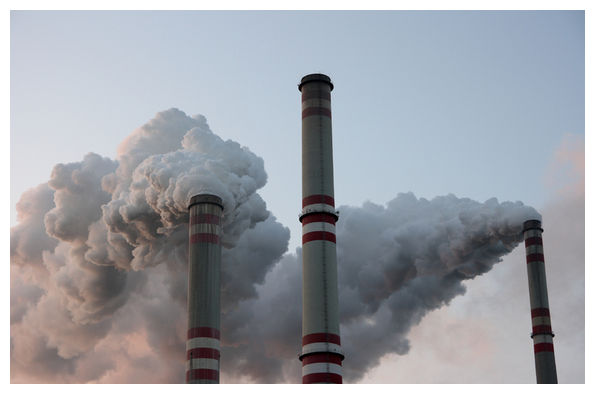
© Danicek | Dreamstime.comThe chimneys of a coal-fired power plant.

Ohio, Pennsylvania and Florida are the states with the most toxic air pollution from coal and oil power plants, according to a new report by an environmental advocacy group.

The Natural Resources Defense Council (NRDC) used Environmental Protection Agency data to rank the top 20 worst states for air pollution from power plants.

According to the report, half of all air pollution from industrial sources in the United States comes from coal- and oil-fired power plants.

According to the NRDC, here are the 20 most toxic states, from worst to best:
  1. Ohio
  2. Pennsylvania
  3. Florida
  4. Kentucky
  5. Maryland
  6. Indiana
  7. Michigan
  8. West Virginia
  9. Georgia
  10. North Carolina
  11. South Carolina
  12. Alabama
  13. Texas
  14. Virginia
  15. Tennessee
  16. Missouri
  17. Illinois
  18. Wisconsin
  19. New Hampshire
  20. Iowa