Earth ChangesS


Snowflake

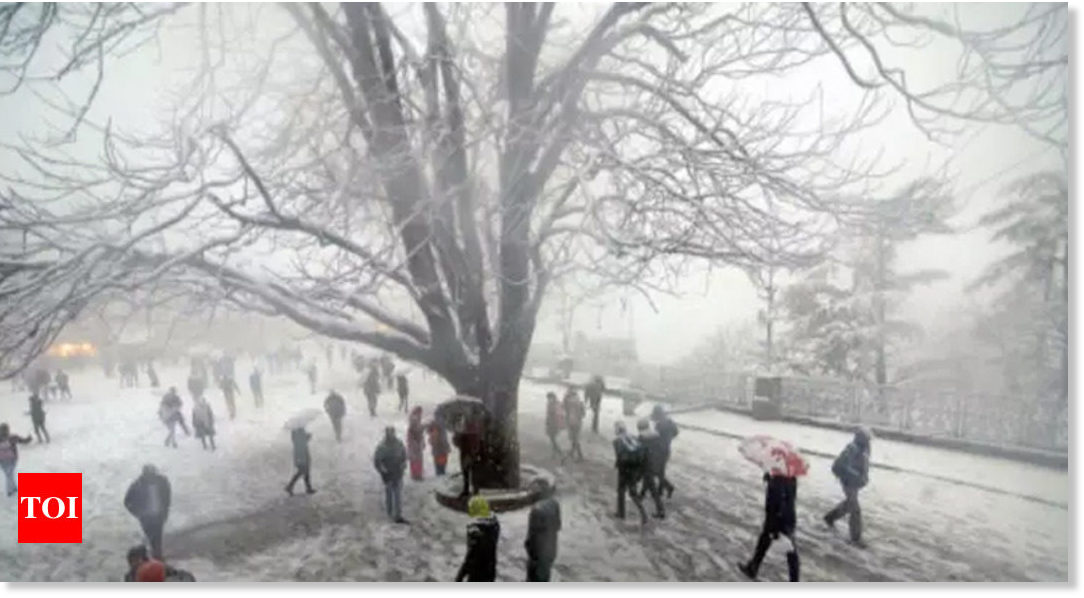
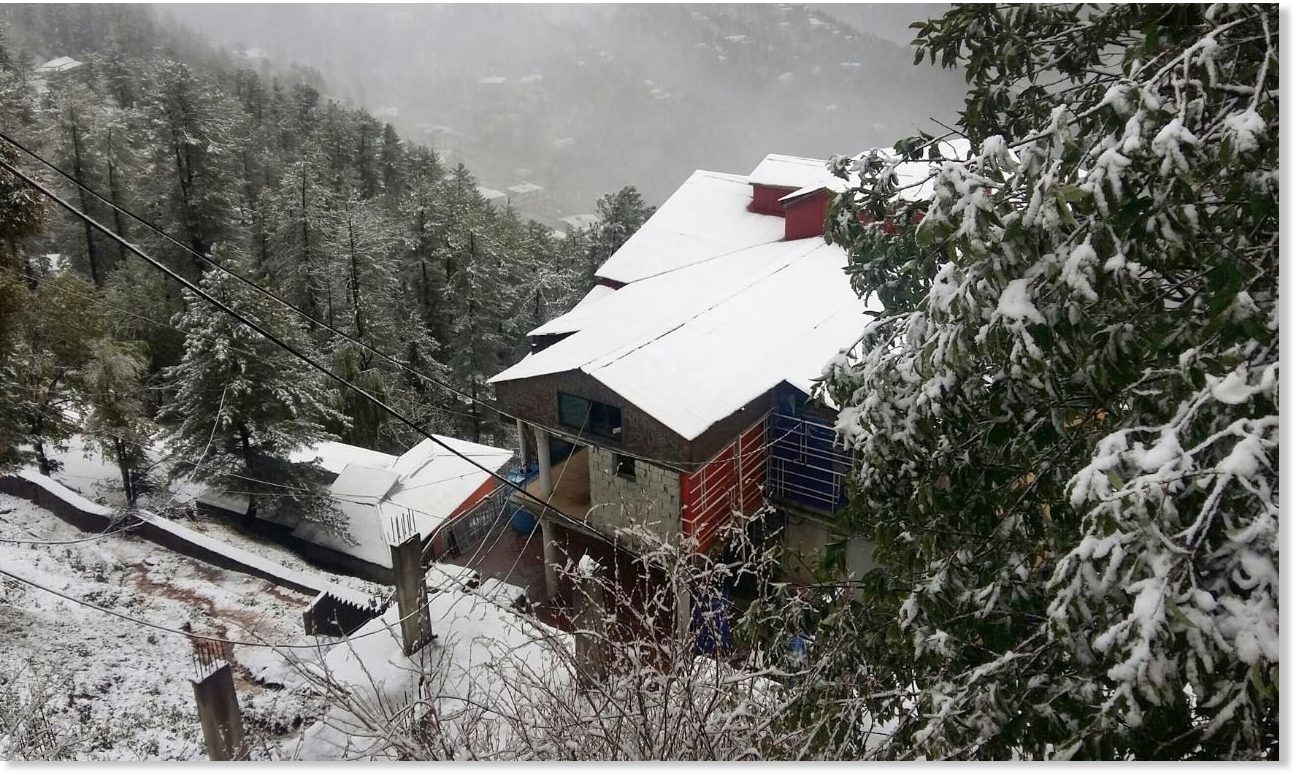
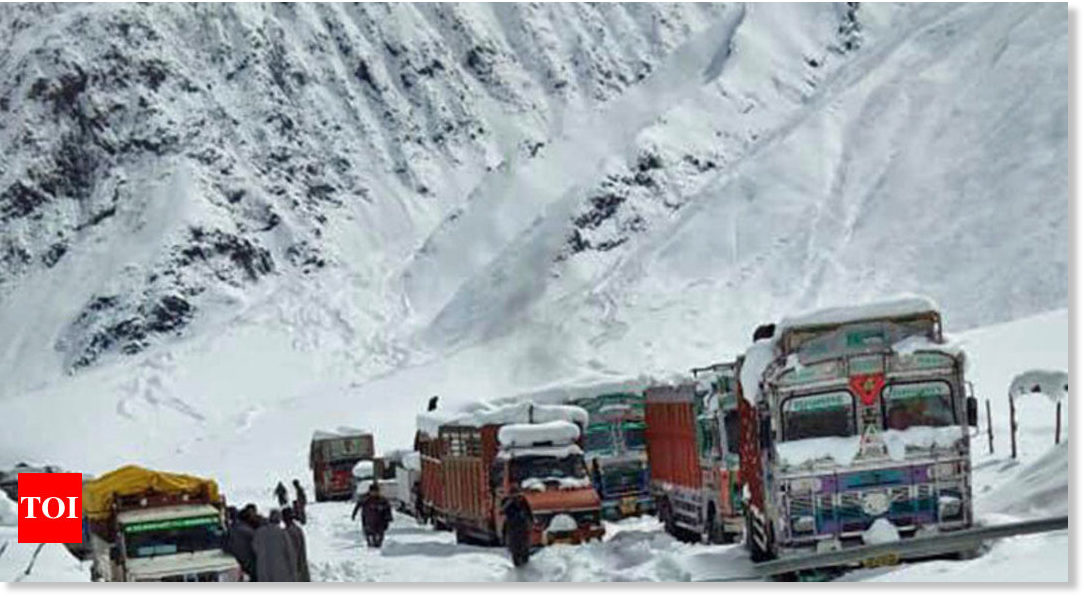
Spring storm dumps 3 feet of snow and closes off dozens of villages in north Kashmir

Srinagar-Leh highway closed due to heavy snowfall
Dozens of far-flung and remote villages, including those near the Line of Control (LoC) were cut off from their district and tehsil headquarters in north Kashmir districts of Kupwara and Bandipora following closure of Sadhna, Razdan passes and Phirkyan and Z-Gali due to fresh snowfall.

There was over three feet of fresh snow at Razdan pass, connecting Bandipora with border town of Gurez which is surrounded by Pakistan-administered-Kashmir (PaK), an official of Police Control Room (PCR) from Bandipora told UNI over phone. He said traffic was suspended on Friday on the road due to snow and slippery road condition. The Border Roads Organisation (BRO), responsible for the maintenance of the road has already pressed into service sophisticated machine and men to clear the snow, he said.


Comment: See also: For the first time in 30 years April snowfall hits Nathia Gali and Murree in Pakistan


Cassiopaea

Interplanetary shock wave sparks rare electric-blue auroras

Original aurora blue
© 2010-2018 matt3224
Surprising sight seen by airplane pilots and passengers on "red eye" flight

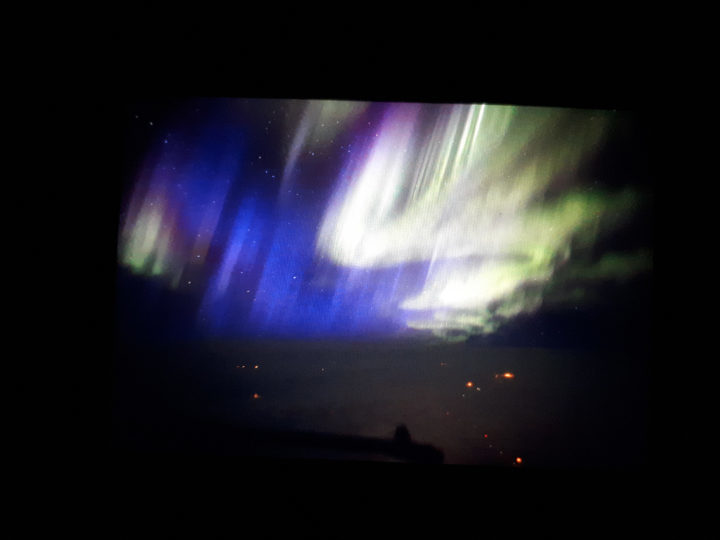
Last night, April 19-20, a shock wave in the solar wind hit Earth's magnetic field, sparking a moderately strong G2-class geomagnetic storm and rare "electric blue" auroras seen from airplanes in flight over Canada. Northern Lights spilled across the Canadian border into a number of US states.

An interplanetary shock wave hit Earth's magnetic field on April 19th around 23:50 UT. When the disturbance arrived, the density of solar wind flowing around our planet abruptly quadrupled and a crack opened in Earth's magnetic field. The resulting G2-class geomagnetic storm sparked unusual "electric blue" auroras.

Electric blue auroras

Comment: See also: Unusual blue auroras seen over Norway


Snowflake

Adapt 2030 Ice Age Report: Record cold and snow persist across the northern Hemisphere

snow
Record cold and snow still pervade the Northern Hemisphere even through late spring with more snow on the way for India and the USA. UK coldest in 42 years, farm animal losses in the fields, massive floods in Hawaii, out of season snow and rain in the middle of the dry season in the Himalaya. The add in record cold in Detroit and Chicago , coldest in 140 years, but its supposedly all explainable through CO2, but maybe we should look at another explanation, the Sun and its 400 year Grand Solar Minimum cycle.


Sources

Cloud Precipitation

Rain, hailstorms hit crops in 5 districts of Pakistan

file photo
Farmers in the plains of about five districts in Khyber Pakhtunkhwa suffered heavy losses where rain and hailstorm wreaked havoc and caused damage to standing crops.

The rain that started late Tuesday night caused damage to houses and destroyed standing crops on a vast swathe of land in the low-lying areas and plains of the Peshawar valley.

The sporadic hailstorm that hit scattered areas of Peshawar, Swabi, Mardan, Charsadda and Nowshera damaged the ripe crop of wheat in these districts.

The rain and sporadic hail in the last three days, accompanied by strong winds, flattened the wheat crop in these areas causing huger losses to the farmers.

Comment: It's a similar situation in the Lamjung district of Nepal, where:
The hailstones that hit Madhyanepal Municipality ward no. 5, 6 and 7, completely damaged fruits, vegetables and maize crops, a local resident Ramchandra Paudel said.

The hailstorm that lasted for about half an hour also affected some parts of Kaski district, according to Yubaraj Ghimire, a secondary school teacher in ward no. 7.

Likewise, Ishaneshwar Campus Chief Ramchandra Ghimire of ward no. 6 said the loss incurred in the hailstorm of enormous magnitude was yet to be worked out.


Sherlock

Aerial photography reveals unexplained holes appearing in Arctic sea ice

Curious Circles in Arctic Sea Ice
© NASA photograph by John Sonntag/Operation IceBridge.
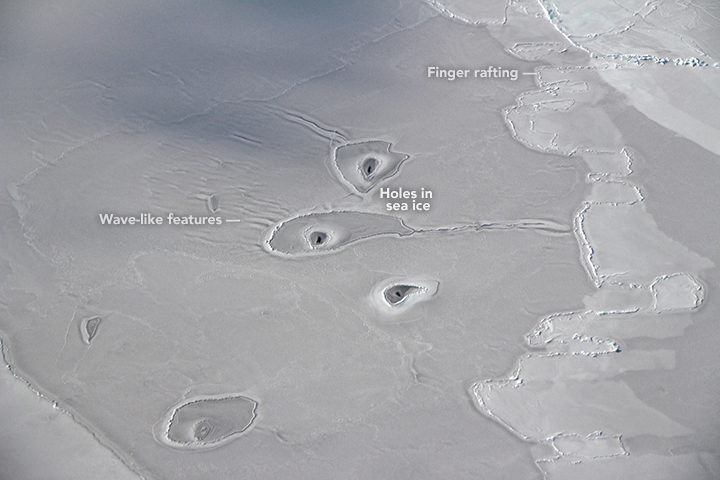
NASA's Operation IceBridge - the airborne mission flown annually over both polar regions-is now in its tenth year making flights over the Arctic. That's a lot of flight hours spent mapping the region's land ice and sea ice. But on April 14, 2018, IceBridge mission scientist John Sonntag spotted something he had never seen before.

Sonntag snapped this photograph from the window of the P-3 research plane while flying over the eastern Beaufort Sea. At the time, the aircraft's location was 69.71° North and 138.22° West, about 50 miles northwest of Canada's Mackenzie River Delta. "We saw these sorta-circular features only for a few minutes today," Sonntag wrote from the field. "I don't recall seeing this sort of thing elsewhere."

The features are more of a curiosity than anything else. The main purpose of the flight that day was to make observations of sea ice in an area that lacked coverage by the mission prior to 2013. Still, the image sparked a fair amount of intrigue, so we set out to see what we could learn. That's not always easy based on a photograph or satellite image alone, so the following ideas are speculation.

Comment: So, this aerial photography has been going on for 10 years, it's the first time these scientists have seen them, and there are no other examples of holes like this?

Considering the activity going on in the depths of our planet, many signs we're seeing on the surface, though this may turn out to be seals, there are other, more worrying, theories as to what could be causing this, such as heat coming from below:


Snowflake

For the first time in 30 years April snowfall hits Nathia Gali and Murree in Pakistan

snow
The weather of Murree and Nathia Gali snowfall grew chiller after snowfall hit the hill station in the summer month.

According to some media reports, it is after some 30 years that there has been snow in Murree, Nathia Gali and surrounding areas during April.

"After 30 years snowfall started in April in Nathiagali and Ayubia. All thanks to Global warming. Shame on people who are criticizing billion tree tsunami project," said one Twitter user.

Attention

Dead humpback whale found in cove at Lubec, Maine

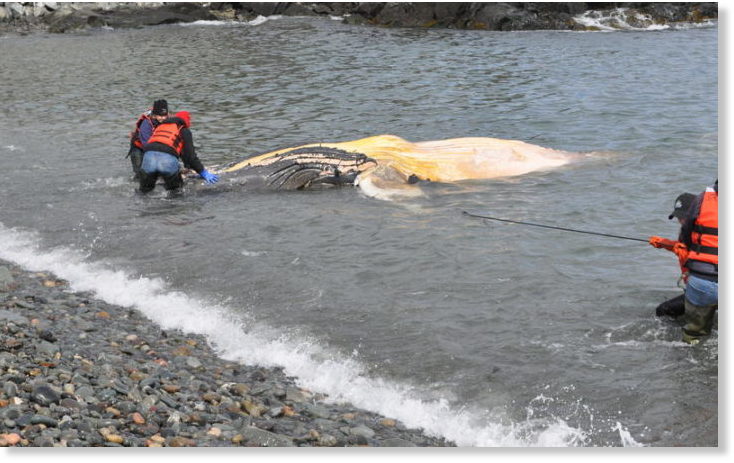
A dead humpback whale was found floating in a Lubec cove, and scientists are eager to find the cause of its demise.
© ALLIED WHALE, COLLEGE OF THE ATLANTICA dead humpback whale was found floating in a Lubec cove, and scientists are eager to find the cause of its demise.
A dead humpback whale was found floating in a Lubec cove, and scientists are eager to find the cause of its demise. The discovery comes at a time of increasing mortality rates for the species.

People who have seen the whale estimate it's about 26 feet long. Ralph Dennison, the Lubec Harbormaster, visited the shore at Boot Cove, near Quoddy Head, to get a view of the animal.

"It was just starting to get kind of bloated," Dennison said. "It had a seagull on it, starting to eat some of the carcass, and there was some eagles flying around, and bits of it starting to wash to shore. That wasn't pretty, but that's the way nature is, I guess."

Dennison, who also captains a whale watch boat, said that judging from the large size of this whale's pectoral fins, it was likely a humpback.

Sun

UK temperatures top 29C in hottest April day for nearly 70 years

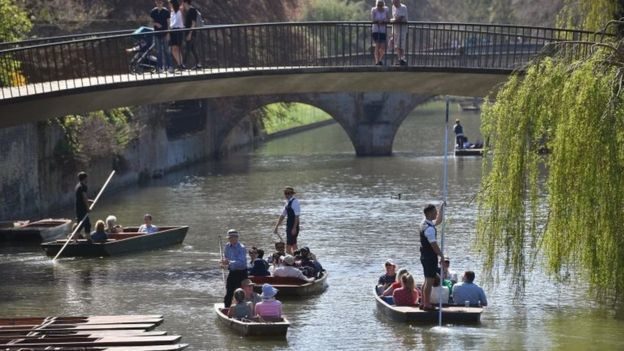
punting along the River Cam
© PAIn Cambridge, people took to punting along the River Cam
Temperatures have soared to over 29C in parts of London, making it the warmest April day for nearly 70 years.

The unusually warm weather across the UK is the result of low pressure over the Atlantic and high pressure over western Europe drawing in warm air.

Thursday's high of 29.1C was recorded at St James's Park in central London during the afternoon, making it the hottest UK day in April since 1949.

The average maximum temperature for the UK in April is 11.9C.

The highest recorded temperature for this month was 29.4C back in 1949 in London.

Pollen levels are high throughout much of the UK, with BBC Weather warning it could be "uncomfortable" for hayfever sufferers.

Comment: Earlier this month up to 4in (10cm) of snow covered parts of Scotland, northern England and north Wales, as Scotland faced its coldest spring for 39 years.


Bizarro Earth

From freezing to triple digits in 10 hours, extreme temperature swings hit Oklahoma and Kansas

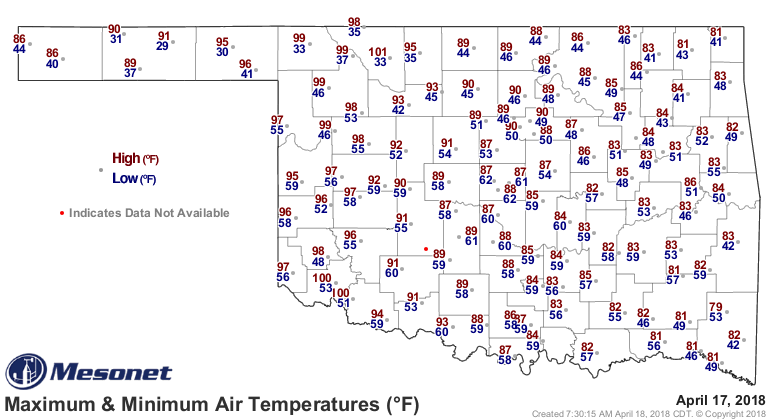
high and low temperatures in Oklahoma
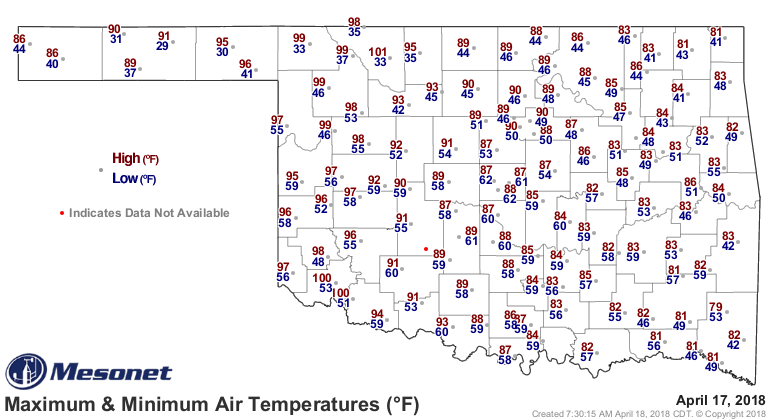
© Oklahoma MesonetTuesday’s high and low temperatures in Oklahoma.
Spring is a season known for its wild temperatures swings, but they usually aren't this extreme. In a single day, temperatures climbed 60 to 70 degrees in parts of Oklahoma and Kansas. One town even went from a near-record low temperature to breaking the record high. That is nuts.

The weather whiplash was caused by two strong low pressure systems that moved through the Central United States nearly back to back. The first caused heavy snow in the Midwest, tornadoes in the Southeast and torrential rain in the Northeast. Behind it, winds from the north pushed temperatures well below average for this time of year.

Right on its heels, though, the next storm came out of the Rocky Mountains, flipping the weather from wintry to summery, seemingly overnight.

On Tuesday morning, winds were a slight breeze out of the northeast. By 1 p.m. they were out of the south and gusting to 30 mph or more, pumping in hot, dry air from northern Mexico and Texas. The effect on temperatures was remarkable.

Alva, in north-central Oklahoma, started the day at 33 degrees just before sunrise. Temperature shot up like a rocket after that, eventually capping out at 101, measured by the Oklahoma Mesonet. That's a temperature rise of 68 degrees.

Blue Planet

Mississippi River flooding is worse now than in the last 500 years

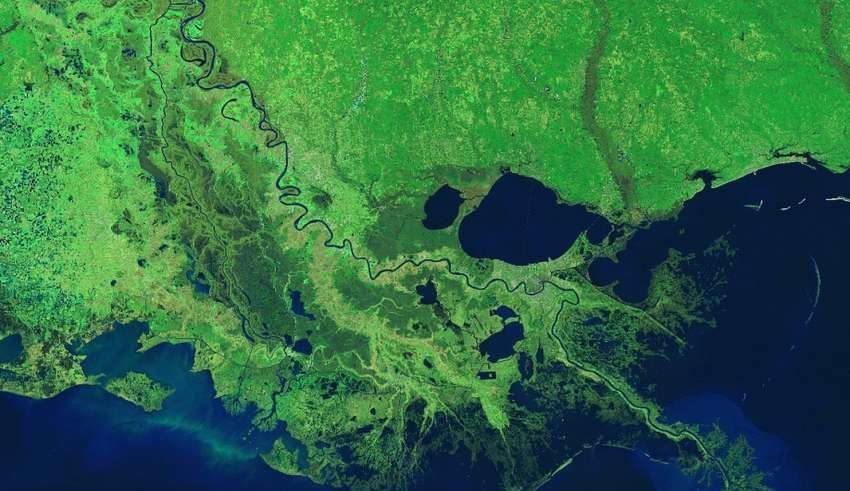
Mississippi River Delta
Guest post by David Middleton
04 APRIL 2018

Mississippi River flooding worse now than any time in past 500 years Efforts to control the river's flow with levees and other structures have increased the risk of dangerous floods.

Floods on the mighty Mississippi River are larger and more frequent today than at any time in the past 500 years - in part, a new study suggests, because structures erected to control the river have increased the flood risk.

[...]

The US Army Corps of Engineers, the government agency that manages the river flow, declined to comment on the study. But Robert Twilley, a coastal-systems ecologist who directs the Louisiana Sea Grant College Program at Louisiana State University in Baton Rouge, says that the study "should be on every desk of every Corps engineer who is designing infrastructure for the Mississippi River".

To reconstruct the river's history, Samuel Munoz, a geoscientist at the Woods Hole Oceanographic Institution in Massachusetts, and his colleagues looked at oxbow lakes and oak trees on the lower Mississippi between southern Missouri and Louisiana. Oxbow lakes are coils of river that became detached from the main flow as the Mississippi changed course.