
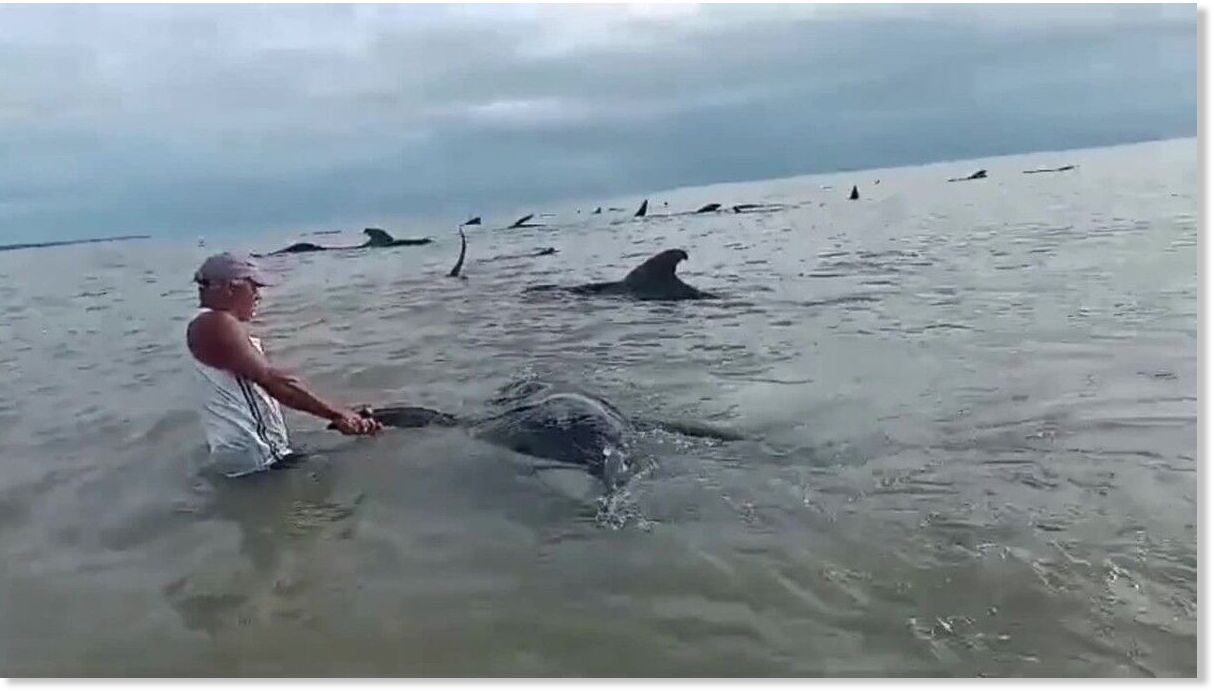
One whale from the identical pod was discovered lifeless on Zumbi seashore, seven kilometers away. Locals and fishermen alerted authorities to the stranded animals, resulting in the deployment of the rescue operation. Biologist Vinícius Gabriel Santana defined that the whales had been unable to return to deeper waters and had been displaying indicators of spatial imaginative and prescient issues.
The group is sustaining surveillance and making ready for potential dangers as they await the whales to achieve the shore. If obligatory, veterinary care shall be offered, and autopsies could also be carried out to find out the reason for the stranding. Santana famous that pilot whales are social animals that always comply with a feminine chief, suggesting that the chief might have fallen ailing, main the others astray.
Mass strandings of pilot whales are unusual within the area, with earlier incidents usually involving just a few people. Pilot whales are acknowledged for his or her sturdy our bodies, distinctive bulbous heads, and cooperative looking habits. They primarily feed on squid, fish, and different marine invertebrates utilizing teamwork to seize prey. The whales are identifiable by their darkish colours and conical form, distinguishing them from different whale species.
The rescue group continues to observe the state of affairs, with plans to help the stranded whales in returning to the ocean safely.


Reader Comments
to our Newsletter