Science of the SpiritS


Info

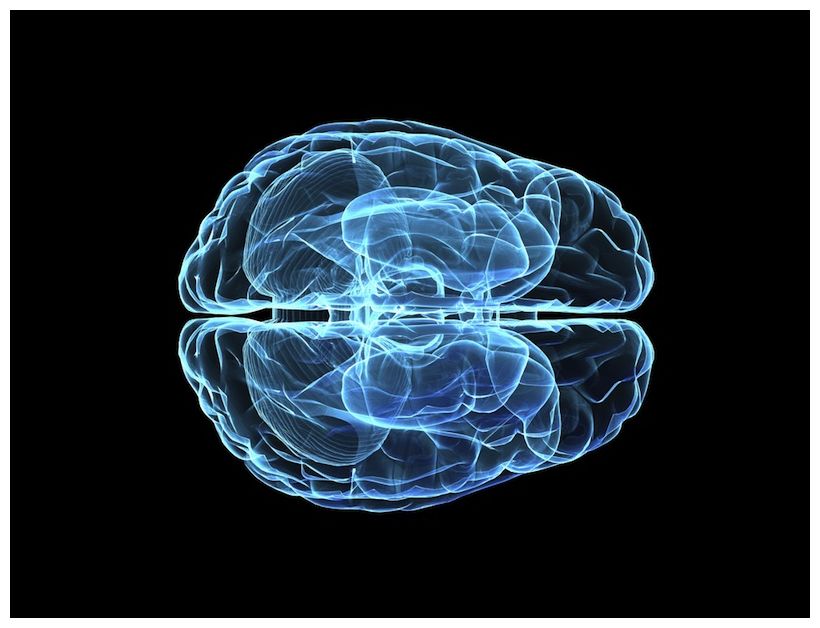
Brain Scan Foretells Who Will Fold Under Pressure

brain
© unknown
Chicago - As any high school senior staring down the SAT knows, when the stakes are high, some test-takers choke. A new study finds that activity in distinct parts of the brain can predict whether a person will remain cool or crumble under pressure.

The results, presented April 1 at the annual meeting of the Cognitive Neuroscience Society, offer some great new clues that may help scientists understand how the brain copes with stressful situations, says psychologist Thomas Carr of Michigan State University in East Lansing. "Sometimes you come across a study you wish you'd done yourself," he says "This is such a study."

In the study, Andrew Mattarella-Micke and Sian Beilock, both of the University of Chicago, had volunteers perform math problems, some easy, some hard, while undergoing a functional MRI scan. These two-step calculations were designed to tap into a person's working memory: Participants had to hold an intermediate number in mind to correctly calculate the final answer.

After volunteers had performed about 25 minutes of low-stakes math, the researchers ratcheted up the pressure. Participants were told that their performance had been monitored the whole time, and if they improved, they would get 60 bucks instead of the 30 they had been promised. In addition to raising the financial stakes, the researchers added social pressure, too. They told volunteers that if the participants failed to improve, a teammate would lose money.

Magic Wand

Accentuating the positive memories for sleep

Image
© Unknown
Sleep plays a powerful role in preserving our memories. But while recent research shows that wakefulness may cloud memories of negative or traumatic events, a new study has found that wakefulness also degrades positive memories. Sleep, it seems, protects positive memories just as it does negative ones, and that has important implications for the treatment of post-traumatic stress disorder.

"The study of how sleep helps us remember and process emotional information is still young," says Alexis Chambers of the University of Notre Dame. Past work has focused on the role of negative memories for sleep, in particular how insomnia is a healthy biological response for people to reduce negative memories and emotions associated with a traumatic event.

Two new studies presented this week at a meeting of cognitive neuroscientists in Chicago are exploring the flip side: how sleep treats the positive. "Only if we investigate all the possibilities within this field will we ever fully understand the processes underlying our sleep, memory, and emotions," Chambers says.

Protecting the positive

To test how sleep affects positive memories, Rebecca Spencer of the University of Massachusetts, Amherst, and her colleagues split 70 young adults into two groups, one that got to sleep overnight and one that had to stay awake. Both groups viewed images of positive items, such as puppies and flowers, and neutral items, such as furniture or dinner plates. The researchers then tested the participants' memories of and emotional reactions to the images 12 hours later, after either the period of sleep or wake.

Info

How to Use Light to Control the Brain

Neurons
© iDesign, ShutterstockScientists can use light to switch on a neuron.
In the film Amèlie, the main character is a young eccentric woman who attempts to change the lives of those around her for the better. One day Amèlie finds an old rusty tin box of childhood mementos in her apartment, hidden by a boy decades earlier. After tracking down Bretodeau, the owner, she lures him to a phone booth where he discovers the box. Upon opening the box and seeing a few marbles, a sudden flash of vivid images come flooding into his mind. Next thing you know, Bretodeau is transported to a time when he was in the schoolyard scrambling to stuff his pockets with hundreds of marbles while a teacher is yelling at him to hurry up.

We have all experienced this: a seemingly insignificant trigger, a scent, a song, or an old photograph transports us to another time and place. Now a group of neuroscientists have investigated the fascinating question: Can a few neurons trigger a full memory?

In a new study, published in Nature, a group of researchers from MIT showed for the first time that it is possible to activate a memory on demand, by stimulating only a few neurons with light, using a technique known as optogenetics. Optogenetics is a powerful technology that enables researchers to control genetically modified neurons with a brief pulse of light.

To artificially turn on a memory, researchers first set out to identify the neurons that are activated when a mouse is making a new memory. To accomplish this, they focused on a part of the brain called the hippocampus, known for its role in learning and memory, especially for discriminating places. Then they inserted a gene that codes for a light-sensitive protein into hippocampal neurons, enabling them to use light to control the neurons.

Bulb

Brain Makes Boring Speeches Interesting

Image
© Unknown
Your brain talks over when listening to some boring speech, in order to make it more interesting to you, researchers from the University of Glasgow's Institute of Neuroscience and Psychology have found.

"You may think the brain need not produce its own speech while listening to one that is already available. But, apparently, the brain is very picky on the speech it hears. When the brain hears monotonously-spoken direct speech quotations which it expects to be more vivid, the brain simply 'talks over' the speech it hears with more vivid speech utterances of its own," said Dr Bo Yao, researcher at the University of Glasgow's Institute of Neuroscience and Psychology.

Eye 1

Psychopaths 'flourish' at top of corporate ladder

Psychopaths are "flourishing" at the top of the corporate ladder at a rate four times higher than the normal population, new research shows.
psychopath CEO
© NonePsychopathic CEOs on the rise?

"They're rising because of bad economic times, and will prevent early solutions to the global financial crisis," Liza van Wyk, CEO of national management training company AstroTech said on Monday.

"The recent high profile resignation of Goldman Sachs trader, South African Greg Smith, who expressed disgust with management practices that were contemptuous of clients is an example of how traumatic such 'bosses' can be for their staff," Van Wyk added.

Quoting new research from Britain's Clive Boddy who developed the first diagnostic test for psychopathy in 1980, Van Wyk said: "Boddy believes that the 2007-2008 financial crisis has resulted in a proliferation of psychopathic personalities in the corner office.

"He says that as companies rely more on academic achievement scores and poach high-performing executives instead of encouraging long careers in their companies, more psychopaths are getting to the top."

Bulb

SOTT Focus: The Dot Connector Magazine Issue 15 Now Available!

It's hot off the presses and packed full of Truth! Get your copy today!


Magic Wand

Smiling Through the Tears: Study Shows How Tearjerkers Make People Happier

Image
© Unknown
People enjoy watching tragedy movies like Titanic because they deliver what may seem to be an unlikely benefit: tragedies actually make people happier in the short-term.

Researchers found that watching a tragedy movie caused people to think about their own close relationships, which in turn boosted their life happiness. The result was that what seems like a negative experience -- watching a sad story -- made people happier by bringing attention to some positive aspects in their own lives.

"Tragic stories often focus on themes of eternal love, and this leads viewers to think about their loved ones and count their blessings," said Silvia Knobloch-Westerwick, lead author of the study and associate professor of communication at Ohio State University.

The key is the extent to which viewers thought about their own relationships as a result of watching the movie. The more they thought about their loved ones, the greater the increase in their happiness. Viewers who had self-centered thoughts concerning the movie -- such as "My life isn't as bad as the characters in this movie" -- did not see an increase in their happiness.

Bulb

Chronic Stress Can Shrink Your Brain

Image
© Science photo libraryA healthy brain, as seen on an MRI scan. Research has shown stress can cause brain cells to warp.
This is your brain on stress.

Want something else to worry about? Worry about worrying too much. The evidence is building that chronically elevated stress shrinks your brain!

A study in press at the journal Biological Psychiatry asked 103 people about how often they had experienced stressful events, both recently and over the course of their lifetimes, as well as about their chronic ongoing stress, and then took functional magnetic resonance images of their brain. The more stress, the smaller the brain...in several particular cortical areas.
  • "Cumulative adversity (a combination of recent stressful events and the lifetime total of stressful events) was associated with smaller volume in medial prefrontal cortex (PFC), insular cortex, and subgenual anterior cingulate regions."
  • "Recent stressful life events were associated with smaller volume in two clusters: the medial PFC and the right insula."
  • "Life trauma (total stressful events over a lifetime) was associated with smaller volume in the medial PFC, anterior cingulate, and subgenual regions."
  • "The interaction of greater subjective chronic stress and greater cumulative stressful life events was associated with smaller volume in the orbitofrontal cortex, insula, and anterior and subgenual cingulate regions.
And what do all those cortical areas have in common? They are all associated with reasoning and decision making, emotion, and self-control. The researchers were careful to say that "...lower volumes do not necessarily equate to poorer functioning," adding "...it may be that regions of lower volume represent greater efficiency in functioning." In other words, smaller brains may not mean less competent brains.

Comment: For more information about how stress can be controlled and reduced with Breathing Exercises and Meditation check out the Éiriú Eolas - Irish Gaelic for "Growth of Knowledge" Program:
Éiriú Eolas Stress Control, Healing and Rejuvenation Program is the modern revival of an ancient breathing and meditation program which is being acclaimed around the world as THE TOOL that will help you to:
  • Relax from the stresses of everyday life
  • Gently work your way through past emotional and psychological trauma
  • Release repressed emotions and mental blockages
  • Rejuvenate and Detoxify your body and mind
Éiriú Eolas removes the barriers that stand between you and True Peace, Happiness, and ultimately a successful, fulfilling life.
To learn more about how Meditation Strengthens the Brain:

Brain Scans Reveal Why Meditation Works
Power of Meditation in Response to Stress
Meditation and Its Benefits


Display

Facebook Leads To Narcissism, 'Shallow Relationships' New Study Claims

Image
© Unknown
How many friends do you have on Facebook? If the answer is a lot, a new study says you might be a narcissist.

Researchers at Western Illinois University found that the number of friends you have on Facebook directly correlates to how much of a "socially disruptive" narcissist you are.

Using the Narcissistic Personality Inventory, the study measured 'self-promoting' and 'anti-social' behaviors of 292 participants, aged 18 to 65. "Self-promoting" Facebook behavior involved posting status updates and photos and "anti-social behaviors" included getting angry when friends didn't 'like' a status.

The higher the score on the Inventory the more narcissistic you were.

People who had high scores had more friends on Facebook and updated their newsfeed frequently, concluding that young people are becoming more narcissistic and are obsessed with self-image and shallow friendships.

Magic Wand

Learning best when you rest: Sleeping after processing new info most effective, new study shows

Image
© Science Photo Library
Nodding off in class may not be such a bad idea after all. New research from the University of Notre Dame shows that going to sleep shortly after learning new material is most beneficial for recall.

Titled "Memory for Semantically Related and Unrelated Declarative Information: The Benefit of Sleep, the Cost of Wake," the study was published March 22 in PLOS One.

Notre Dame Psychologist Jessica Payne and colleagues studied 207 students who habitually slept for at least six hours per night. Participants were randomly assigned to study declarative, semantically related or unrelated word pairs at 9:00 a.m. or 9:00 p.m., and returned for testing 30 minutes, 12 hours or 24 hours later. Declarative memory refers to the ability to consciously remember facts and events, and can be broken down into episodic memory (memory for events) and semantic memory (memory for facts about the world). People routinely use both types of memory every day - recalling where we parked today or learning how a colleague prefers to be addressed.