Science of the SpiritS


Robot

The Master Betrayed #6

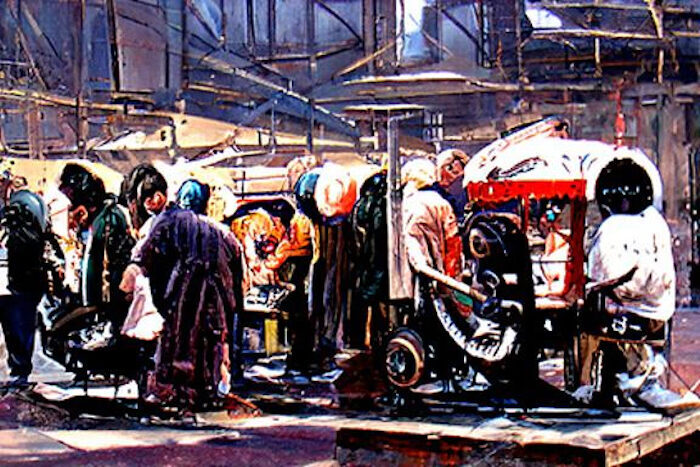
production line
© UnknownMachines making machines
A series based on Iain McGilchrist's conclusions about a left brain dominated world

In the conclusion of Iain McGilchrist's book The Master and His Emissary, the question is asked:
"What would the left hemisphere's world look like?" if the left hemisphere of the brain "became so far dominant that, at the phenomenological level, it managed more or less to suppress the right hemisphere's world altogether."
In this series of posts I'd like to break down his conclusion and discuss just how closely our world is conforming to the left hemisphere's perspective.

Berger and colleagues(1) emphasise that consciousness changes its nature in a world geared to technological production. It adopts a number of qualities which again are clearly manifestations of the world according to the left hemisphere, and therefore in such a world technology could be expected to flourish and, in turn, further to entrench the left hemisphere's view of the world - just as bureaucracy would be both a product of the left hemisphere and a reinforcement of it in the external world. In a society dominated by technology, Berger and colleagues predict what they refer to as: 'mechanisticity', which means the development of a system that permits things to be reproduced endlessly, and enforces submergence of the individual in a large organisation or production line; 'measurability', in other words the insistence on quantification, not qualification; 'componentiality', that is to say reality reduced to self-contained units, so that 'everything is analysable into constituent components, and everything can be taken apart and put together again in terms of these components'; and an 'abstract frame of reference', in other words loss of context.


Comment: See also: The Master Betrayed #1


Family

Progressivism, sexuality, and mental illness

gay pride lgbtq
© Norbu Gyachung/Unsplash
Is contemporary liberal-left culture producing greater mental distress?

Will America be entirely gay in a few generations? Will everyone be mentally ill? It would appear so from a straight-line extrapolation of the stunning rise in both LGBT identification and mental illness among young Americans.

Let's begin with trends in sexual orientation among young people. A recent Gallup survey found that:
"Roughly 21% of Generation Z Americans who have reached adulthood — those born between 1997 and 2003 — identify as LGBT. That is nearly double the proportion of millennials who do so, while the gap widens even further when compared with older generations."
Abigail Shrier, meanwhile, reports a 1,000-fold increase in trans identification. Reactions to these trends have varied. Republican Congresswoman Marjorie Taylor Greene thinks they indicate that there will be no straight people in a few generations; Bill Maher lampoons the increase as a rebellious fad; and progressives celebrate the rise as an electoral boon for the Democrats. Other liberals view the rise as the product of increasing toleration, similar to left-handedness, in which identification increases as stigmas are lifted and people come out of the closet.

Brain

The importance of non-attachment

non-attachment
"Non-attachment" sounds a bit intimidating, doesn't it?

Unfortunately, most people tend to associate this spiritual phrase with being emotionally cold and unfeeling. But true non-attachment is quite the opposite: it allows us to live in this world fully, without being attached to people, things or thoughts that create suffering.

As the Dalai Lama was once quoted to have said:
Attachment is the origin, the root of suffering; hence it is the cause of suffering.

Info

Optical illusion makes you see an 'expanding black hole'

It seriously tricks your brain.

Expanding Hole
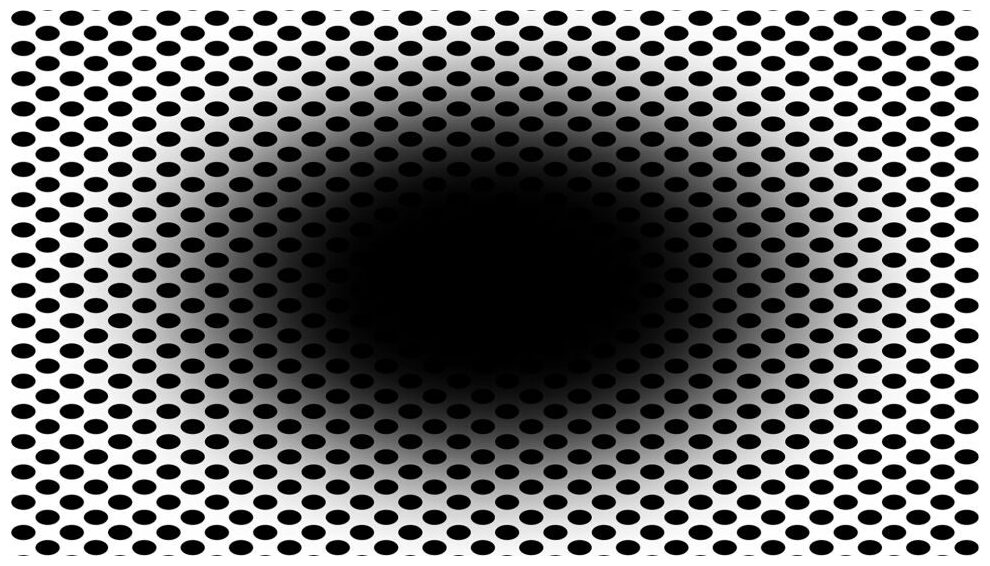
© Frontiers in Human NeuroscienceThis "expanding hole" illusion may trick your brain into thinking you are walking into a cave or tunnel.
A brand new optical illusion tricks the majority of people into thinking that a dark "black hole" region at the center of a stationary image is rapidly expanding, as if the observer were moving toward it. Researchers now suspect that the image literally tricks the brain into thinking that the observer is moving into a darkened space, like a cave or tunnel.

The illusion consists of a large black ellipse surrounded by a dark halo on a white background filled with smaller black ellipses. Typically, as a person stares at the image, the dark elliptical region will appear to expand outward for a couple of seconds, which is why the design has been nicknamed the "expanding hole."

In a new study, researchers found that 86% of the 50 participants who looked at the optical illusion reported seeing the expanding darkness. The team suspects that the illusion plays on the brain's perception of changing light levels.

"The expanding hole is a highly dynamic illusion," lead researcher Bruno Laeng, a psychologist at the University of Oslo in Norway, said in a statement. The illusion tricks the mind into seeing a change in brightness that isn't really there, "as if the observer were heading forward into a hole or tunnel," Laeng added.

Brain

What happens in our brains when we 'hear' our own thoughts?

woman at desk
© JGI/Jamie Grill via Getty ImagesDo you sometimes talk to yourself in your head without actually speaking out loud?
If you've ever had an imaginary argument in your head, you may have "heard" two voices at once. Your own inner voice and that of the other person in the quarrel. You may even "hear" the other person's accent, or the timbre of their voice.

So what's happening in the brain when that inner monologue is running? How is it that you can "hear" your thoughts?

As it turns out, the brain undergoes similar processes when you're thinking words as when you're speaking out loud.

Inner monologues are thought to be a simulation of overt speech, said Hélène Loevenbruck, a senior neurolinguistics researcher and head of the language team in the Psychology and NeuroCognition Laboratory at CNRS, the national French research institute. When we're children, we're virtual sponges, soaking up new information from every angle. Children playing alone will often speak dialogue aloud, for instance between a toy truck and a stuffed animal. At around 5 to 7 years old (opens in new tab), that verbalization moves inward, Loevenbruck said.

Comment: See also: Living with aphantasia: 'I can't picture things in my mind'


Robot

Are you a machine?

transhumanism
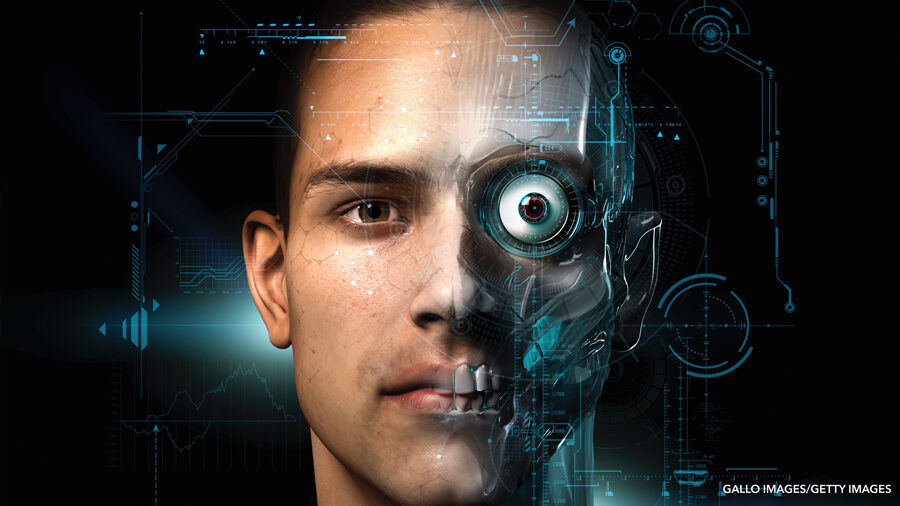
In chapter 12 of Iain McGilchrist's book The Matter With Things, he elegantly debunks the myth that the living, organic world is anything like a machine. With many examples of totally un-machine like behaviour, McGilchrist completely dismantles the notion that organisms like ourselves, or single cells for that matter, are anything like a machine. The second half of the chapter he addresses the reasons why the machine model has been so pervasive in our perception of just about everything.

I think this is an important awareness for us as some strive for a transhuman future and try to convince us this is a good thing. The transhumanist agenda1 of marrying human to machine only makes sense if the human is seen as one type of 'machine' and computer/hardware another type of machine, that can seamlessly integrate. I have no doubt it can be of use in some cases - artificial limbs come to mind - but doubt its wisdom when attempting to 'evolve' the human race as a human/machine hybrid (a cyborg2). The other part of the transhumanist dream is gene editing and the manipulation of our genome for 'enhancement', tackling disease, and longevity. They sound like noble pursuits but they conceptualise DNA like a computer program, and as we will explore, it's way more different and complex than that.

But quite apart from transhumanism, using a model to conceptualise a reality that is very unlike the model is severely limiting and forces an unhealthy bias. Machines are designed from the bottom up for a purpose. Utility is fundamental. Output, productivity, service, is all foundational to the model. As we will see below, the world of the living, the organic, is quite unlike a utility, unlike a machine, and should be conceptualised in a completely different way. A human has more in common with a river than a robot.

Padlock

6 million Canadians detained in largest prison in the world

Travel refused
© ShutterstockTravel Ban Restrictions Apply
I am one of over 6 million Canadians who are currently forbidden to board an airplane, train, boat or long-haul bus to travel across Canada or leave Canada. The Federal Ministry of Transportation put this rule into effect in October 2021. Now it is late April 2022. The Federal Government of Canada continues to refuse to lift this travel ban. Period. No comment. No discussion. No debate. In addition to the Canadian government travel ban, the United States government forbids us to cross the border by car into the USA.

I am one of over 6 million Canadian citizens who are currently being held as political prisoners. The walls of this very large prison are the borders and shorelines of Canada. There are vast amounts of land within the walls of this prison, so it would appear to other Canadians that we are free. But the travel ban has created walls that feel as real as the Berlin Wall once was. I wake up at night, my flight response activated, heart pounding, adrenalin running, terrified. During the day I listen to friends, neighbours and collegues talk about their recent trips to visit family in Canada or holidays abroad. Many are oblivious to the fact that I am one of the invisible prisoners. This disturbs me even more deeply than the midnight panic attacks.

Comment: Weak leaders oppress to remain in control.


Brain

Cracking consciousness: how do our minds really work?

brain imaging scan
© Getty Images
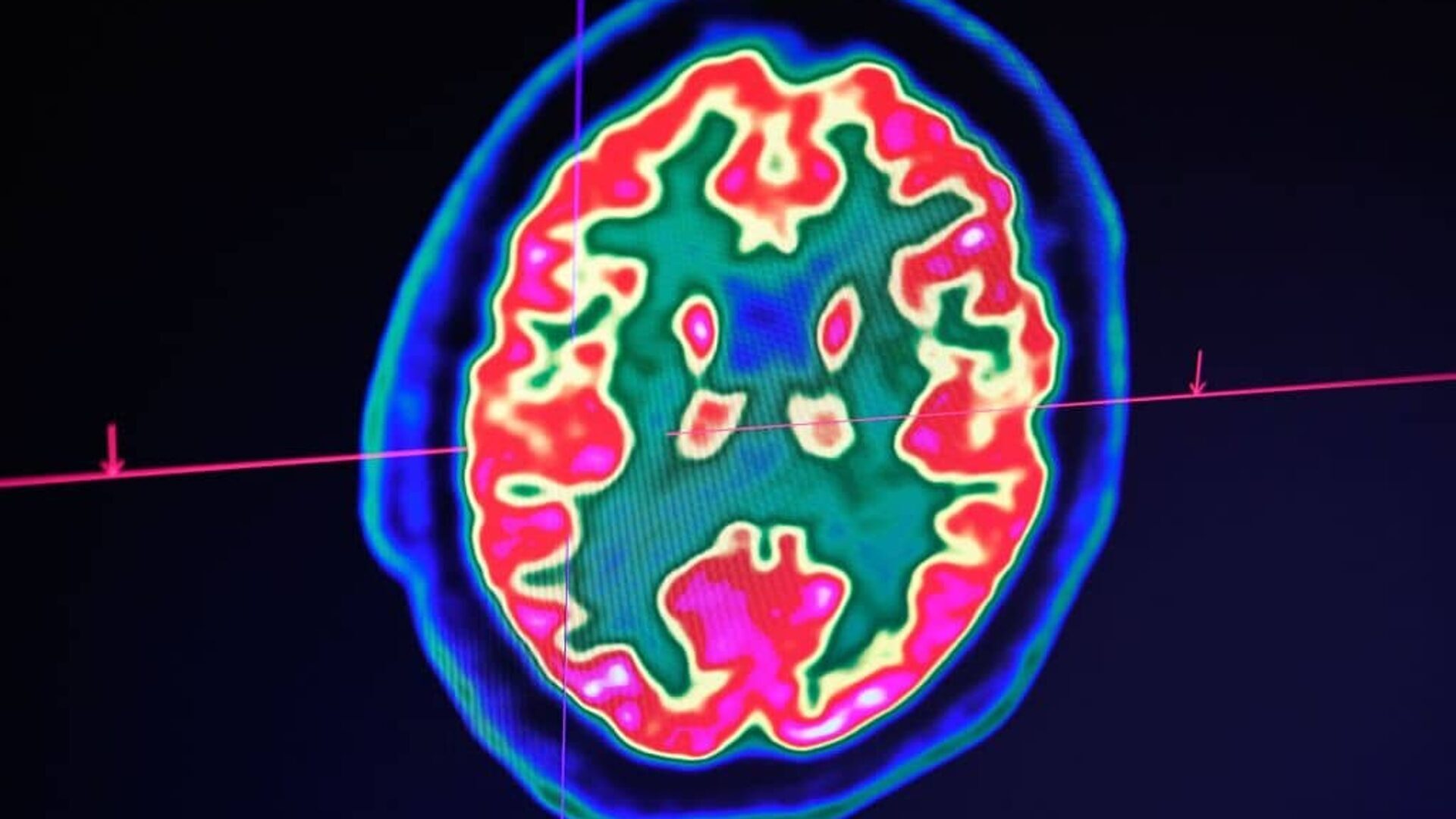
With scientists mapping our neurons in ever greater detail, and programmers creating ever more humanlike artificial intelligence, the gap between brain and machine seems to be rapidly shrinking — throwing the question of consciousness, one of the great philosophical mysteries, back into the heart of scientific debate. Will the human mind — that ineffable tangle of private, first-person experiences — soon be shown to have a purely physical explanation? The neuroscientist Steven Novella certainly thinks so:

'The evidence for the brain as the sole cause of the mind is, in my opinion, overwhelming.'

Elon Musk agrees:

'Consciousness is a physical phenomenon, in my view'.

Google's Ray Kurzweil puts it even more bluntly:

'A person is a mind file. A person is a software program.'

Comment: See also:


Brain

Study finds psychopathic individuals are more likely to have larger striatum region in the brain

Assistant Professor Olivia Choy
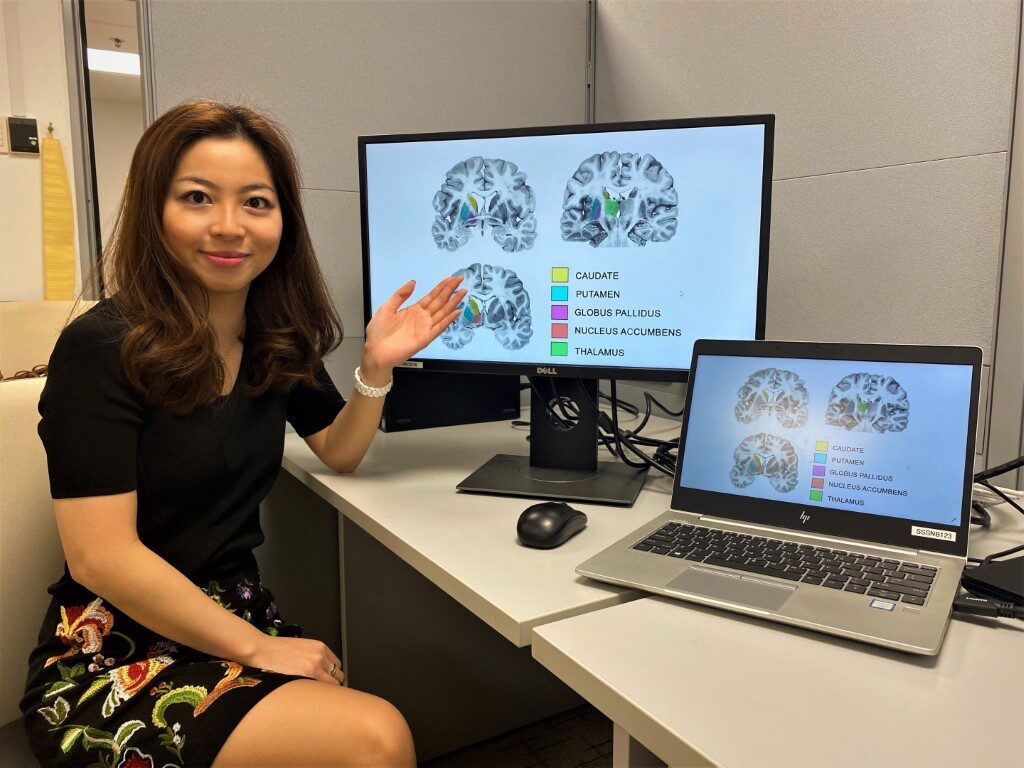
© Nanyang Technological UniversityAssistant Professor Olivia Choy, a neuroscientist from NTU’s School of Social Sciences, presenting diagrams of the human striatum.
Neuroscientists from Nanyang Technological University, Singapore (NTU Singapore), University of Pennsylvania, and California State University, have established the existence of a biological difference between psychopaths and non-psychopaths.

Using magnetic resonance imaging (MRI) scans, they found that a region of the forebrain known as the striatum, was on average 10% larger in psychopathic individuals compared to a control group of individuals that had low or no psychopathic traits.

Psychopaths, or those with psychopathic traits, are generally defined as individuals that have an egocentric and antisocial personality. This is normally marked by a lack of remorse for their actions, a lack of empathy for others, and often criminal tendencies.

Comment: See also:


Eye 1

21st century schizoid man

schizoid man
In his psychoanalytic take on the psychology of politics, Pyschopathology and Politics, Harold Lasswell observed:
The special value of the psychopathological approach is that it represents a supermicroscopic method of utilizing individual instances for the study of culture patterns. (p. 258)

The distinctive mark of the homo politicus is the rationalization of the displacement [of private motives onto public objects] in terms of public interests. (p. 262)

Political acts depend upon the symbolization of the discontent of the individual in terms of a more inclusive self which champions a set of demands for social action. (p. 265)
Political ponerology operates on a similar principle, but with a focus on personality disorders. One of its arguments is that the distinctive cognitive and emotional features of various personality disorders — in other words, their typical "worldviews" — influence what types of politics their holders are attracted to, and what place they might find within such a system. As an example of such a worldview, here's how Nicholas Thomson summarizes the psychopathic worldview:
"I can do whatever I want because I have been wronged in the past; everyone else is dishonorable, selfish, weak and manipulative; therefore, I am justified to take advantage of them." (Understanding Psychopathy, pp. 29-30, slightly adapted)