Secret HistoryS


Sherlock

Deep under the covers: Some of the world's strangest spy sex scandals revealed

spy sex scandal
© Pixabay
Several FBI employees stationed in half a dozen cities across Asia have been recalled to Washington while the agency investigates allegations related to parties and interactions with prostitutes, it has been reported.

The exact nature of the allegations against the FBI personnel and where the incidents allegedly took place haven't been disclosed - although details on a number of historic sex scandals involving intelligence agency and military staff are widely available.

In Plain Sight

As Central Intelligence Agency chief 1953 - 1961, Allen Dulles oversaw some of the organization's most notorious and blood-soaked operations of the Cold War. However, he also found time to engage in innumerable affairs.

One such conquest was Queen Frederika of Greece, who in 1958 came to the US on a tour with her son, future King Constantine II - when visiting Washington, she discussed "spiritual values" with President Dwight D. Eisenhower in the White House, then visited Dulles at CIA headquarters. They'd been alone in his office for nearly an hour when an aide knocked - hearing no response, he entered, finding the office empty, but lascivious noises emanating the adjoining dressing room.

Comment: It just goes to show that despite how well trained and elite some may considered to be, many are still weak when it comes to the whims of their desires - and for some, it's probably part of the reason they're so good at their job in the first place: Also check out SOTT radio's: Behind the Headlines: Florida School Mass Shooting: Gun Control, Mental Illness and the Criminal Mind


Boat

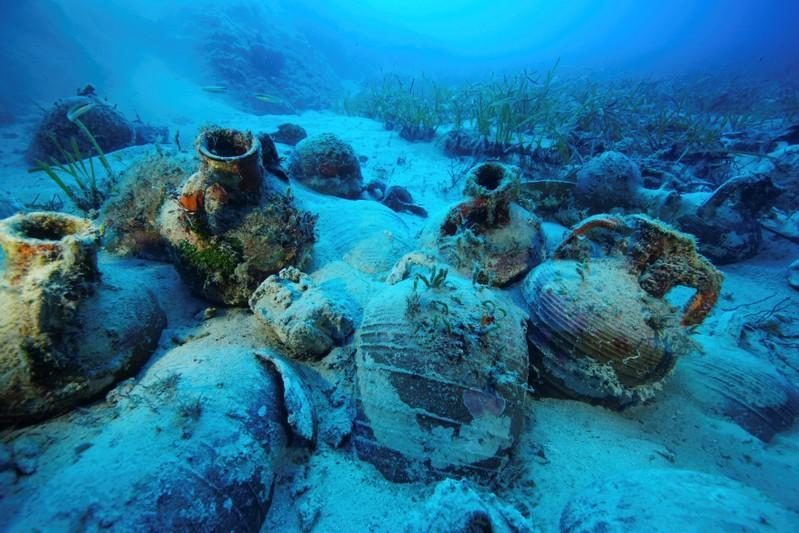
Ancient shipwrecks found in Greek waters help map trade routes

Amphorae underwater shipwreck
© Vassilis Mentogiannis/Hellenic Ephorate of Underwater AntiquitiesAmphorae are seen at the sea bottom at a shipwreck site on the island of Fournoi, Greece, September 15, 2018. Picture taken September 15, 2018.
Archaeologists in Greece have discovered at least 58 shipwrecks, many laden with antiquities, in what they say may be the largest concentration of ancient wrecks ever found in the Aegean and possibly the whole of the Mediterranean.

The wrecks lie in the small island archipelago of Fournoi, in the Eastern Aegean, and span a huge period from ancient Greece right through to the 20th century. Most are dated to the Greek, Roman and Byzantine eras.

Although shipwrecks can be seen together in the Aegean, until now such a large number have not been found together.

Info

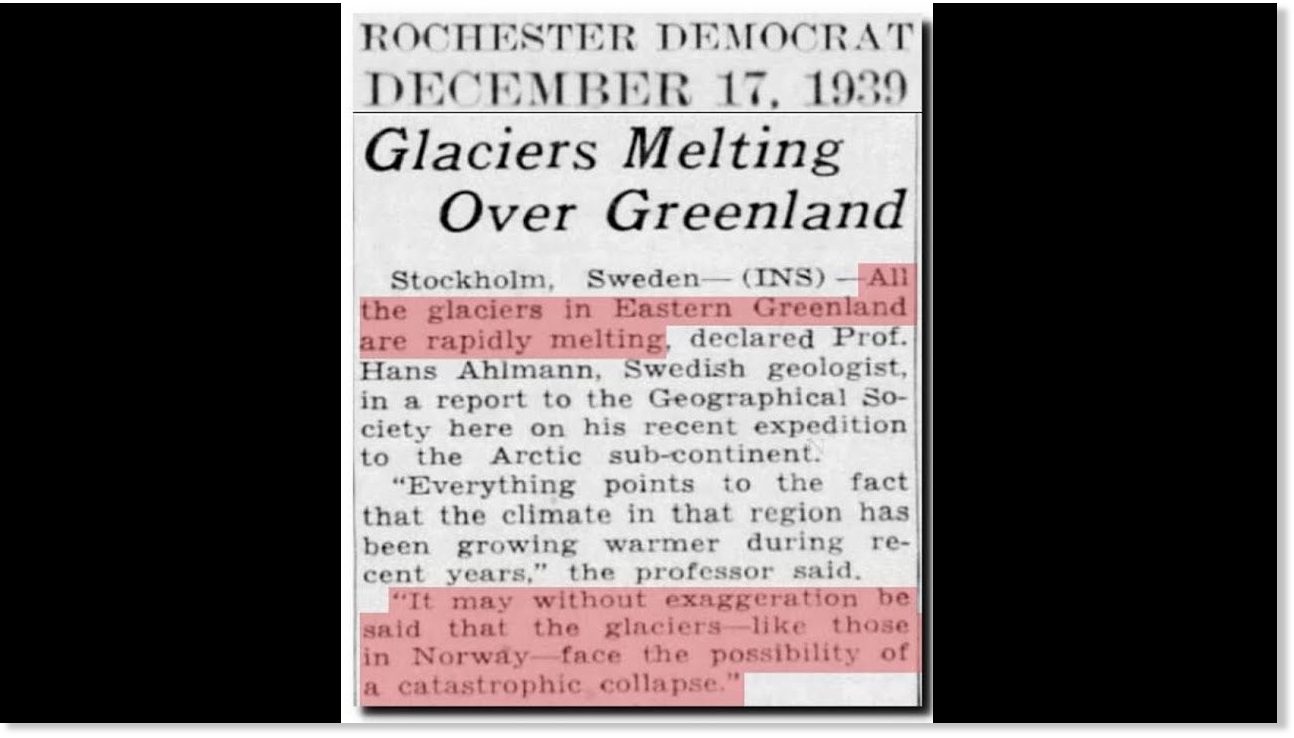
(Always) Ten years left to save the planet

headlines
Every ten years, climate scientists say we have ten years left to save the planet. Sometimes they want to save it from global warming, other times they say they want to save it from global cooling.


Fire

Exploded skulls and vaporized bodies: Pompeii finds reveal horror of Vesuvius eruption

pompeii skull
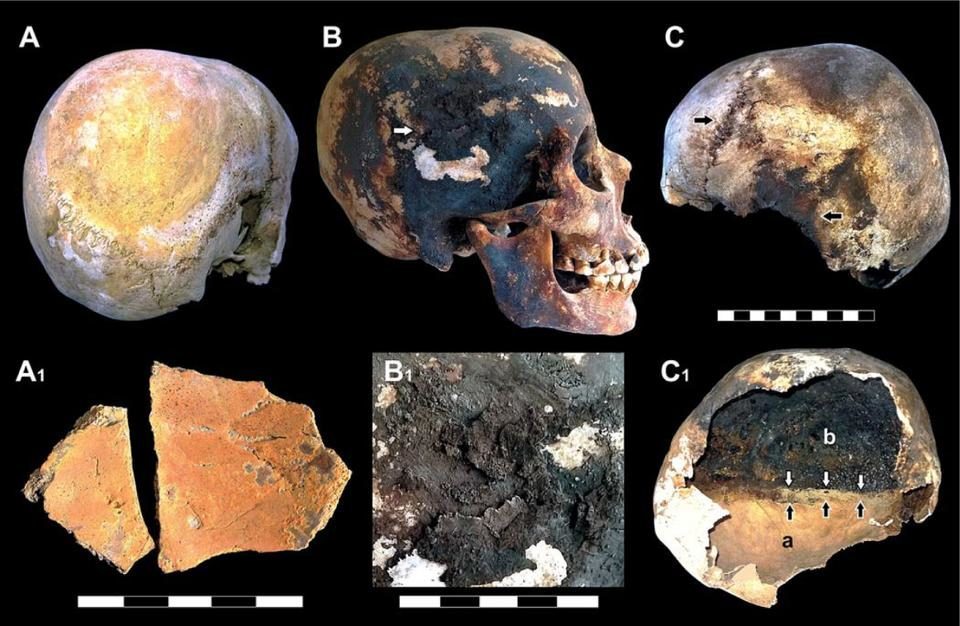
© Petrone et al. / PLOS One / CC BY 4.0Red and black mineral incrustations detected in Herculaneum victims' skulls.
In 79 AD, thousands of Romans were killed when Mt. Vesuvius erupted over a period of two days, covering the towns of Pompeii and Herculaneum and burying outlying villas like Stabiae and Oplontis. A new study suggests that the proximate cause of death for many people may have been immediate vaporization of body fluid with resulting skull explosions due to the intense heat of the volcano.

Writing last week in the journal PLOS One, a team of Italian researchers, led by Pierpaolo Petrone of the Federico II University Hospital in Naples, Italy, has revealed that numerous skeletons recovered from the waterfront chambers at Herculaneum were covered in mysterious red and black mineral residues. Based on mass spectrometry and microspectroscopy, the team hypothesizes that the residues represent iron from human blood that was exposed to extreme heat.

The so-called boat houses at Herculaneum where approximately 140 skeletons have been found were not excavated until the 1980s, as the massive site was buried underneath 20 meters of volcanic deposits. These skeletons were removed for laboratory analysis, and the bodies that tourists today stop to examine are actually fiberglass reproductions.

Comment: The evidence shows that Pompeii wasn't an isolated case, because similarly catastrophic events happened elsewhere at that time, as well as before, after, and, if current events are anything to go by, are likely to be reality for many of us in the very near future: Also check out SOTT radio's: Behind the Headlines: Earth changes in an electric universe: Is climate change really man-made?


Star of David

To Zionists, the 'two-state solution' has always meant more ethnic cleansing

David Ben-Gurion
© Arnold NewmanDavid Ben-Gurion
A Palestinian state has always been a fiction for Zionists. Therefore, the notion of partition in any form of historical Palestine was only ever endorsed by Zionists as a political-diplomatic means towards overtaking more territory and dispossessing more Palestinians.

To demonstrate this, I shall first go back to an early partition plan - that of the British Royal Peel Commission of 1937, to gradually reach our present day.

The British Peel Commission partition plan

The British Royal Peel Commission was constructed in order to determine the origins of the great tensions between what they would regard as "Jews and Arabs", following the onset of the Great Arab Revolt by Arab Palestinians of 1936 (which lasted until 1939).

Nuke

Declassified memo: US general prepped to nuke Vietnam behind President Johnson's back

Vietnam soldiers
© US Army/ReutersSoldiers in Vietnam War
The commander of US forces in Vietnam had devised a secret plan to use nuclear warheads against the communist North during the Vietnam War, before President Johnson halted the ongoing preparations, declassified documents reveal.

General William Westmoreland, who commanded American military operations in the Vietnam War from 1964 to 1968 had authorized a nuclear weapons transfer to the Southeast Asian nation, before national security advisor, Walt W. Rostow, notified the White House, prompting President Lyndon Johnson to immediately cancel the secret deployment of weapons, which could have sparked World War III, the New York Times reports, citing declassified documents.

Finding themselves in a stalemate against the North Vietnamese Army (NVA) in the middle of the months-long Battle of Khe Sanh, Gen. Westmoreland devised a contingency scheme to use nuclear weapons should US forces be overrun by their enemy. The secret plan codenamed Fracture Jaw required the US nukes to get transferred from Okinawa, Japan to South Vietnam by the US Pacific command, under the leadership of Admiral Ulysses Simpson Grant Sharp Jr. The secretly planned operation was to be set in motion under a memo sent by Westmoreland to Sharp on February 10, 1968.

Archaeology

Dressing for the ages - ancient Egyptian style

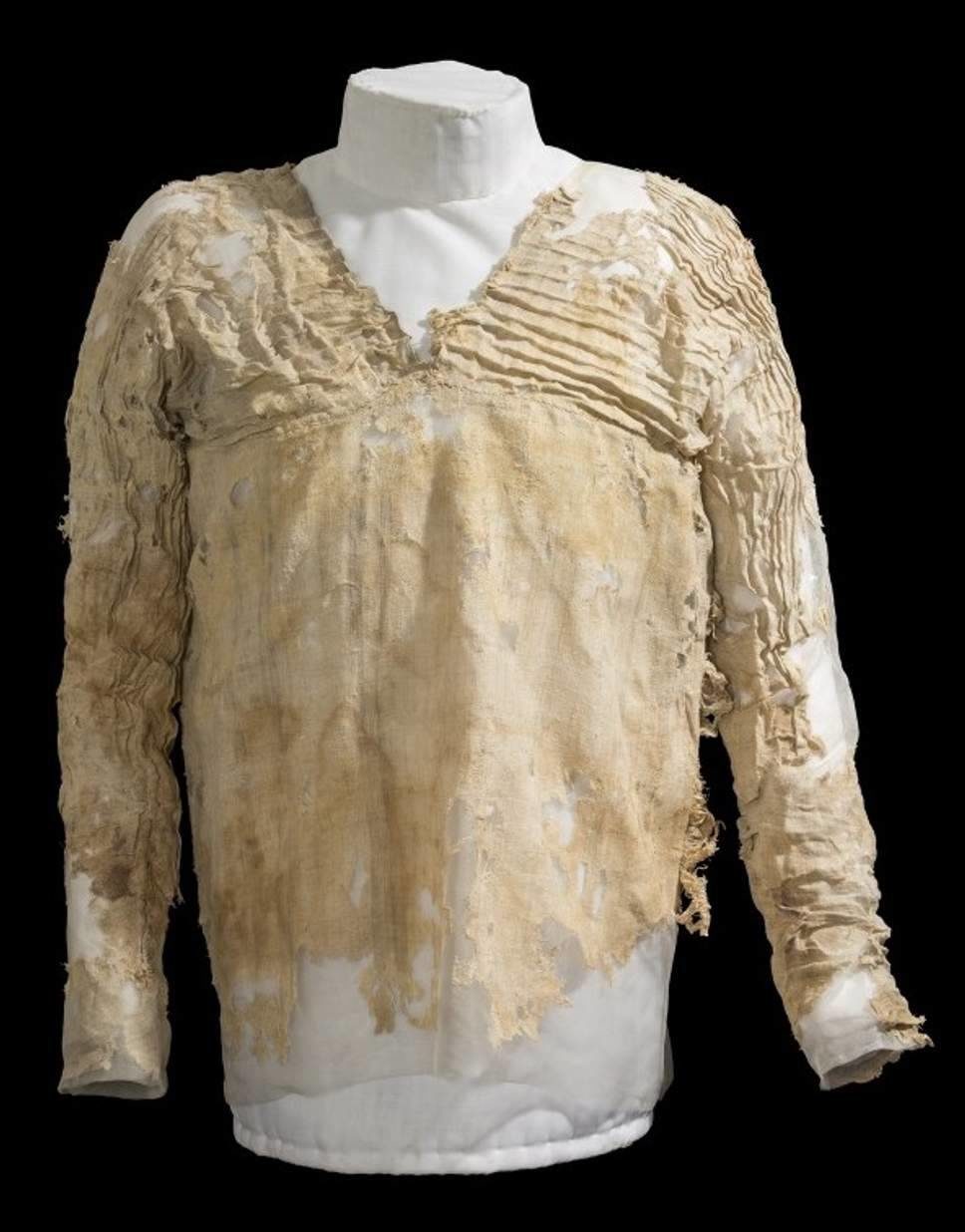
tarkhan dress oldest woven garment
© UCL Petrie Museum of Egyptian ArchaeologyThe Tarkhan Dress likely was worn by a young or slim female member of the royal court, and then placed in the tomb as a funerary object. Although the bottom does not survive, it may once have been full-length.
Over the two-plus years Alice Stevenson has been curator of the Petrie Museum of Egyptian Archaeology in London, she has looked at the delicate cream-colored garment hundreds of times, wondering at both the fineness of its workmanship and its extraordinary age. Thought to date from nearly 5,000 years ago, the "Tarkhan Dress" was once part of a large pile of dirty linen cloth excavated by Sir Flinders Petrie in 1913 at the site he named Tarkhan after a nearby village 30 miles from Cairo. In 1977, researchers from the Victoria and Albert Museum, while sorting through the pile of textiles as they prepared to clean them, discovered the dress, remarkably well preserved. They conserved the fabric, sewed it onto a type of extra-fine, transparent silk called Crepeline to stabilize it, and mounted it for display. The dress came to be known not only as Egypt's oldest garment, but also as the oldest woven garment in existence. Yet in the absence of a precise original archaeological context - the mudbrick tomb in which the linen had been found had been plundered in antiquity - the exact age of the dress remained a subject of contention.

Star of David

Flashback The myth of the generous offer: Distorting the Camp David negotiations

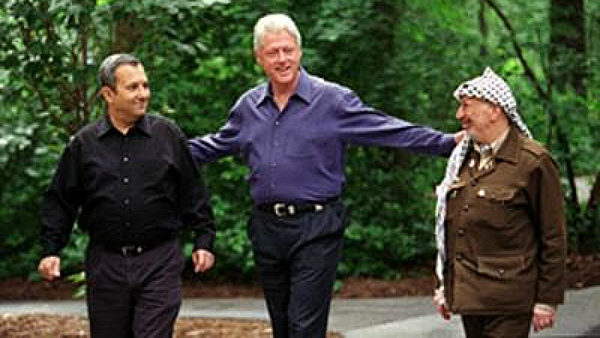
Ehud Barak,  Bill Clinton, Yasser Arafat at Camp David
Israeli Prime Minister Ehud Barak, President Bill Clinton and Palestinian Authority chair Yasser Arafat at Camp David.
The seemingly endless volleys of attack and retaliation in the Middle East leave many people wondering why the two sides can't reach an agreement. The answer is simple, according to numerous commentators: At the Camp David meeting in July 2000, Israel "offered extraordinary concessions" (Michael Kelly, Washington Post, 3/13/02), "far-reaching concessions" (Boston Globe, 12/30/01), "unprecedented concessions" (E.J. Dionne, Washington Post, 12/4/01). Israel's "generous peace terms" (L.A. Times editorial, 3/15/02) constituted "the most far-reaching offer ever" (Chicago Tribune editorial, 6/6/01) to create a Palestinian state. In short, Camp David was "an unprecedented concession" to the Palestinians (Time, 12/25/00).

But due to "Arafat's recalcitrance" (L.A. Times editorial, 4/9/02) and "Palestinian rejectionism" (Mortimer Zuckerman, U.S. News & World Report, 3/22/02), "Arafat walked away from generous Israeli peacemaking proposals without even making a counteroffer" (Salon, 3/8/01). Yes, Arafat "walked away without making a counteroffer" (Samuel G. Freedman, USA Today, 6/18/01). Israel "offered peace terms more generous than ever before and Arafat did not even make a counteroffer" (Chicago Sun-Times editorial, 11/10/00). In case the point isn't clear: "At Camp David, Ehud Barak offered the Palestinians an astonishingly generous peace with dignity and statehood. Arafat not only turned it down, he refused to make a counteroffer!" (Charles Krauthammer, Seattle Times, 10/16/00).

This account is one of the most tenacious myths of the conflict. Its implications are obvious: There is nothing Israel can do to make peace with its Palestinian neighbors. The Israeli army's increasingly deadly attacks, in this version, can be seen purely as self-defense against Palestinian aggression that is motivated by little more than blind hatred.


Comment: See also:


Dig

115,000 year old neanderthal child's bones 'eaten by a giant bird' found in Poland

neanderthal bone bird
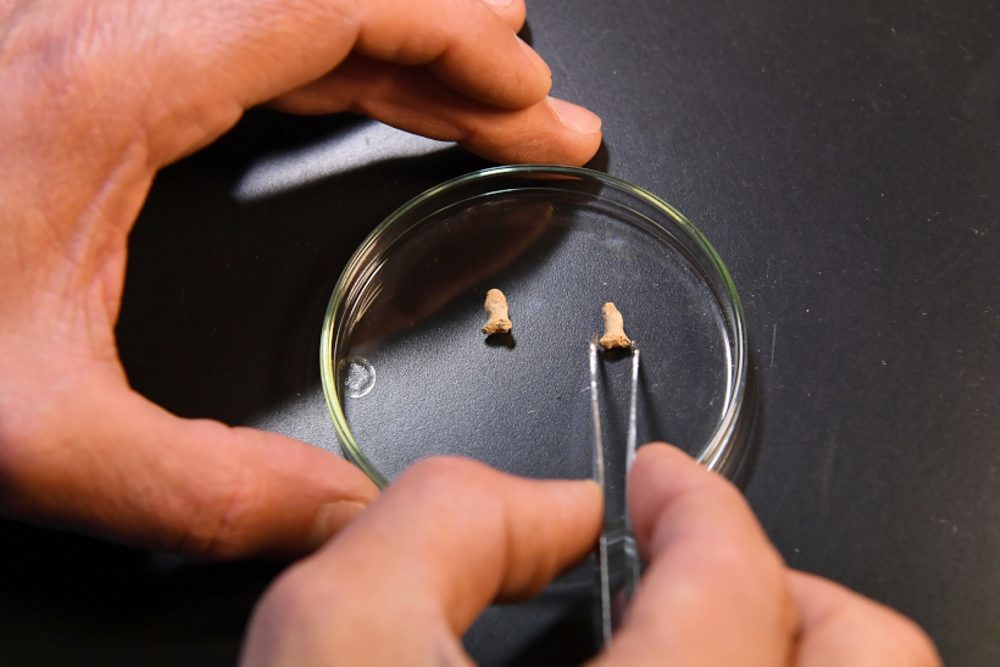
© Jacek Bednarczyk/PAPThe remains were found mixed with other animal bones several meters below the contemporary floor of the cave. It was only after detailed analysis that archaeologists realised they belonged to a member of Homo sapiens neanderthalensis.
Archaeologists have discovered the oldest hominid remains ever found in Poland.

"The bones discovered by our team at Jaskinia Ciemna [a cave in the southern Małopolska region] are the oldest hominid remains from the area of Poland," Professor Paweł Valde-Nowak of the Jagiellonian University of Kraków told PAP.

The discovery of finger bones from the hand of a Neanderthal child that died roughly 115,000 years ago are more than twice as old as the previous oldest find of hominid bones in the area.

Previously, the oldest Neanderthal remains were three teeth dated to 52,000-54,000 years.

Comment: The Out of Africa theory has been proven to be incorrect by a number of different disciplines already, but, as is often the case, scientific dogma lags behind. And, in recent years, an increasing number of finds are pointing to a much more complex story of the history of humanity:


Palette

Secrets of child's sock from ancient Egypt revealed with new imaging tool

ancient child sock egypt
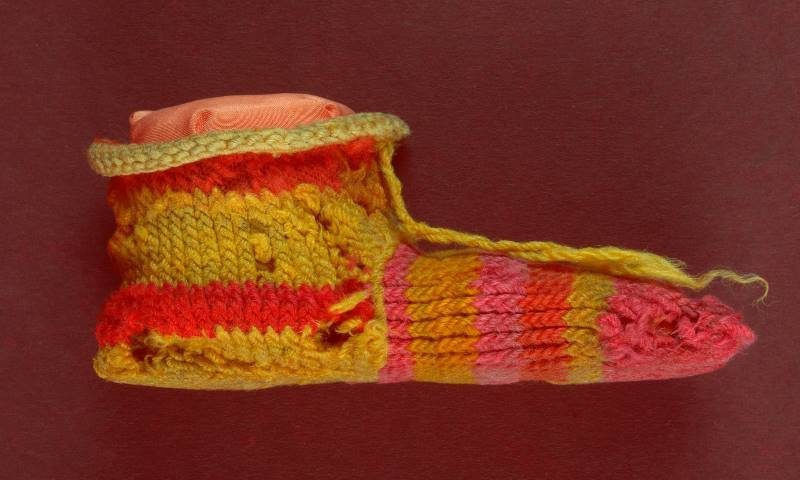
© The British MuseumStripy child’s sock dating from 300AD was found in a rubbish dump in Egypt.
Non-invasive technique devised by British Museum sheds light on dyeing and weaving process

The ancient Egyptians famously gave us paper and the pyramids, but were also early adopters of the stripy sock.

Scientists at the British Museum have developed pioneering imaging to discover how enterprising Egyptians used dyes on a child's sock, recovered from a rubbish dump in ancient Antinoupolis in Roman Egypt, and dating from 300AD.

New multispectral imaging can establish which dyes were used - madder (red), woad (blue) and weld (yellow) - but also how people of the late antiquity period used double and sequential dying and weaving, and twisting fibres to create myriad colours from their scarce resources.