Secret HistoryS


Info

The Celts' astronomical secrets: The Chão de Lamas lunula and the Coligny calendar connection

lunula
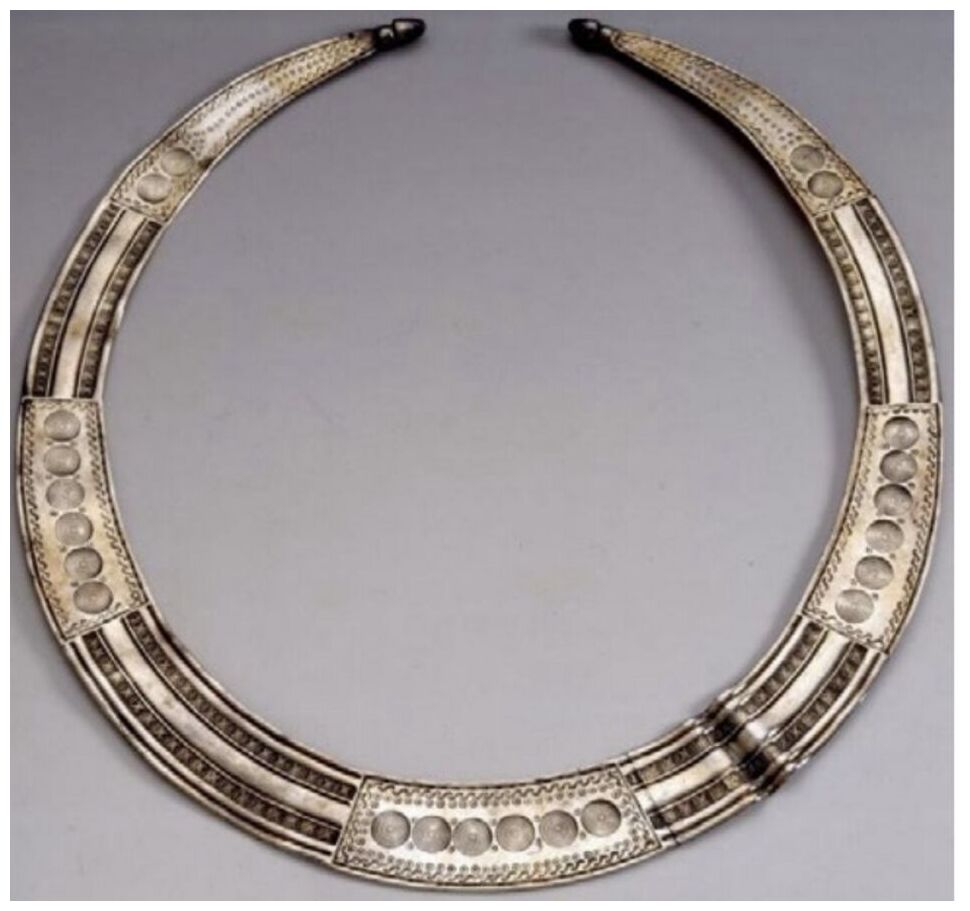
© Piero Baguzzi / R. Matesanz / MAN, Ministerio de Cultura de España
A groundbreaking study published in the journal Palaeohispanica has shed light on the ancient timekeeping practices of the Celts, centering on a unique piece of jewelry known as the lunula from the Chão de Lamas treasure in Portugal. Conducted by Professor Roberto Matesanz Gascón from the University of Valladolid, the research posits that this intricately designed gold artifact may hold crucial information regarding the synchronization of lunar and solar cycles within the Celtic calendar.

Traditionally viewed as a mere decorative item, the lunula — shaped like a half-moon and discovered in Chão de Lamas (Miranda do Corvo, Coimbra) — has now been reinterpreted. Matesanz's analysis of its complex geometric patterns suggests that it could serve as a visual representation of a Celtic calendrical cycle lasting 114 years. This timeframe aligns with six Metonic cycles, each spanning 19 years, which is a known astronomical framework that facilitates the alignment of lunar and solar calendars.

The Coligny calendar, an important epigraphic source from France dating back to the 2nd century AD, provides detailed insights into how the Celts structured their time. It organizes time into five-year cycles comprising 62 months, totaling 1,835 days. However, scholars have long debated how these cycles correspond to the tropical year of 365.24 days.

Matesanz's study is particularly innovative as it establishes a connection between the Coligny calendar and the geometric designs of the Chão de Lamas lunula. He theorizes that the circular motifs on the jewel represent a timekeeping system that adjusts the solar year by eliminating 53 days every 114 years. This intriguing figure of 53 days is also referenced in Irish literary sources, hinting at a potential link to Celtic traditions in Ireland.

Jet1

IDF carried out Hannibal Directive, new 'Sword of Damocles' operation on October 7

Ckpoint
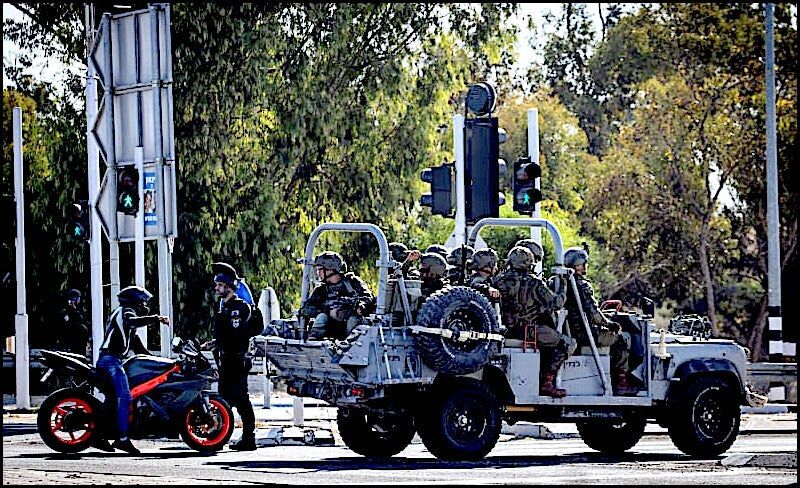
© Ben Hakdon/Flash90Israeli security forces • Checkpoint Sderot, Israel • October 7, 2023
The Israeli Air Force was carrying out a new "the Sword of Damocles" operation - a code name only being revealed on Thursday for the first time - to attack many Hamas commanders and their headquarters around 10:30 a.m. on October 7, 2023, just as it was carrying out the "Hannibal Directive" of gunning down anything that moved around the Israel-Gaza border.

The Air Force has been questioned about if the forces it had invested in attacking Hamas commanders deep in Gaza would have been better used to defend the Gaza border and to attack Hamas invaders in Israeli villages.

Air Force sources hoped air power had been used 'differently' on October 7

Air Force sources have said that they wish this air power had been used differently on October 7, given that protecting the villages and the border should have been a higher priority than killing top Hamas officials.

Further, Air Force sources indicated that had they known all of the information being debated between IDF Chief of Staff Lt.-Gen. Herzi Halevi and IDF Southern Command Chief Maj.-Gen. Yaron Finkleman, such as the Israeli SIM cell phone cards which Hamas had activated in Gaza, they might have pushed for the aircraft to be used differently.

Comment: Grand scale incompetence is a rare admit for Israel.


Star of David

Ancient papyrus deciphered after 1,900 years, reveals 'sophisticated tax fraud' by two Jewish men

Greek papyrus Roman Empire
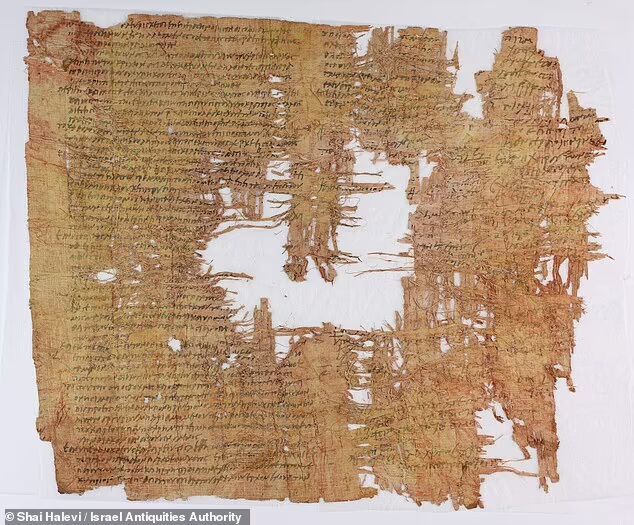
© Shai Halevi / Israel Antiquities AuthorityFor the first time in 1,900 years, humans have been able to read ancient Greek text dating from the height of the Roman Empire (pictured)
For the first time in 1,900 years, humans have been able to read ancient text dating from the height of the Roman Empire.

The historic text was written on a scroll of papyrus - a material similar to paper, made from the pith of the papyrus plant - found in the Judean desert.

Consisting of 133 lines of text in ancient Greek, it is a court document concerning a case of 'sophisticated tax fraud' by two Jewish men during the first half of the 2nd century AD.

Eye 1

How USAID exported the CIA's Balkan terror methods to Haiti

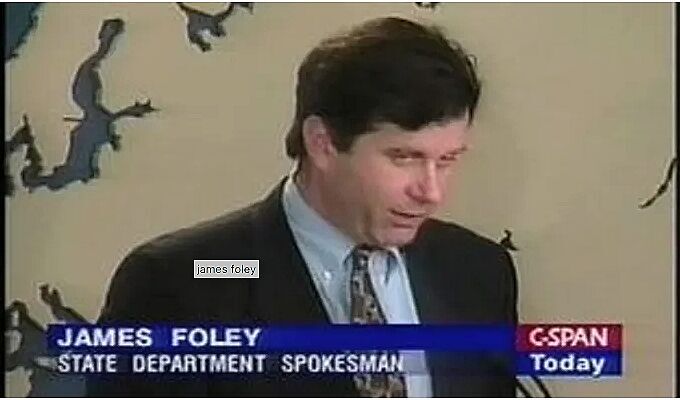
Former U.S. ambassador to Haiti, James Foley
© C-SPANFormer U.S. ambassador to Haiti, James Foley
On December 19th, James Foley, US ambassador to Haiti 2003 - 2005, published an explosive op-ed in rabidly anti-Communist Miami Times. He lamented how the country had become a "ticking time bomb", with hundreds of thousands of refugees threatening to emigrate Stateside, "mounting gang violence", withdrawal of "humanitarian relief organizations" due to "threats", and "criminal" entities "on the verge" of capturing Port-au-Prince entirely. His remedy was simple - direct US "intervention" to secure control locally, and reassert Washington's "primacy in the hemisphere."

As the CIA's man in Port-au-Prince at the start of the millennium, Foley was on the frontlines of a brutal coup that displaced popular, legitimately-elected, anti-imperialist President Jean-Bertrand Aristide from power, and all the horrors that followed. As this journalist and academic researcher on Haiti Jeb Sprague exposed in February, Aristide's ouster was orchestrated by the Agency, in direct coordination with the most extreme, murderous local opposition elements. This tragic event produced a neverending descent into nightmarish lawlessness, which endures to this day in the country.

Comment: Unfortunately, loyalty to the Empire means nothing:

US kidnapped & imprisoned Guy Philippe for 'damning evidence' of their involvement in Haiti's 2004 coup

More background:


Binoculars

Real Life: Mr. X in Oliver Stone's JFK participated in pioneering covert operations

L. Fletcher Prouty
L. Fletcher Prouty [Source: edurakn.org]

New Documentary Explores Life and Legacy of Fletcher Prouty, who wrote about CIA covert operations in his classic book The Secret Team


In a famous scene in Oliver Stone's epic 1992 film JFK, Kevin Costner's character confers with a shadowy CIA operative played by Donald Sutherland known as Mr. X who tells him about the existence of a conspiracy behind the JFK assassination.

Mr. X is modeled after the real-life character of L. Fletcher Prouty, a Pentagon official in the 1950s and early 1960s who served as the Air Force's liaison to the CIA.

Actors Kevin Costner and Donald Sutherland
Kevin Costner, playing New Orleans District Attorney Jim Garrison, and Donald Sutherland, playing Mr. X (Fletcher Prouty) in JFK. [Source: pinterest.com]
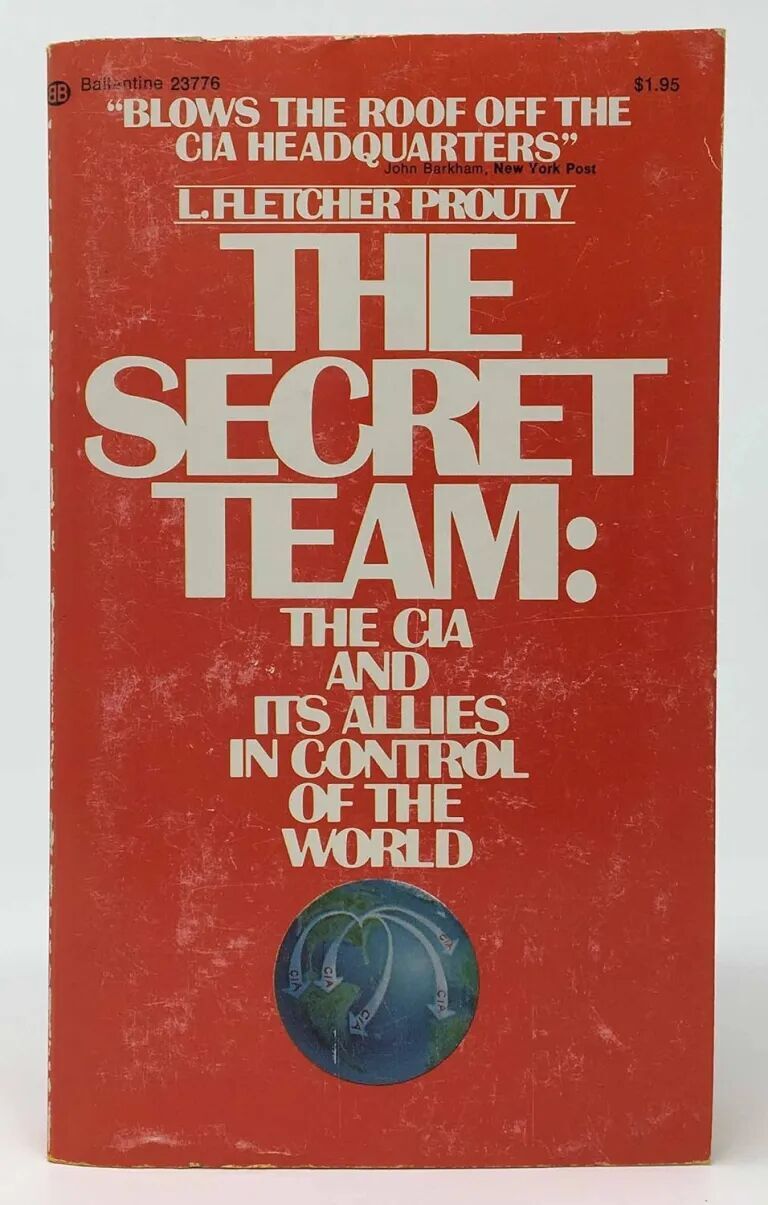
Prouty became known to the public when he published magazine articles about the CIA and the classic 1973 book, The Secret Team: The CIA and Its Allies in Control of the United States and the World (Englewood Cliffs, NJ: Prentice Hall, 1973).

This book included damning information
The Secret Team: The CIA and Its Allies in Control of the United States and the World
[Source: amazon.com]
about previously unknown CIA covert operations and alleged that the U-2 crisis of 1960 — resulting from the Soviets shooting down the U-2 spy plane — had been set up to sabotage Eisenhower-Khrushchev peace talks.

Prouty is the subject of a 2024 documentary film produced by Jeff Carter, a Vancouver-based filmmaker and audio-technician, entitled Fletcher Prouty's Cold War.

The film includes historical footage mixed with interviews conducted with Prouty by "deep-state" researcher John Judge along with commentary by Len Osanic of Black Op Radio, who also interviewed Prouty, and Oliver Stone.

Music

How Rachmaninoff's manuscript became a reason for cooperation between Russia and US

Rachmaninoff
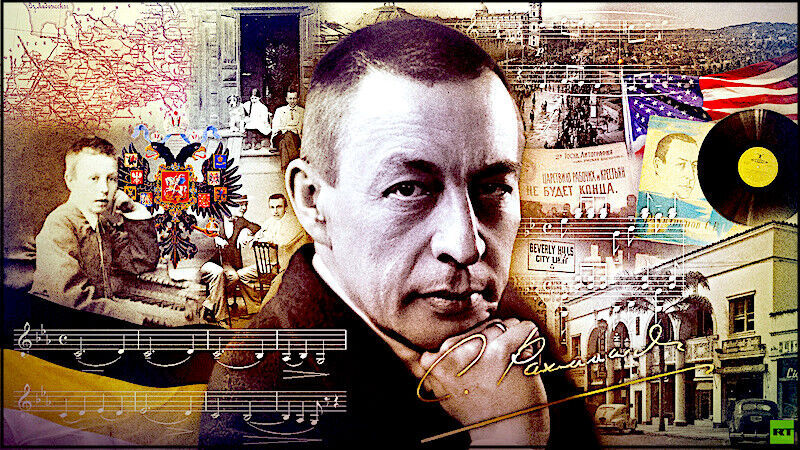
© RT/RTComposer Sergei Rachmaninoff
In the midst of the Cold War against Russian culture, an American philanthropist donated a digital copy of the autograph manuscript of the great composer for publication in a scholarly edition.

Russian Music Publishing is preparing to release a unique scholarly edition: The autograph manuscript of the Second Symphony by the Russian composer Sergei Rachmaninoff. The digital copy of the manuscript, long considered lost, was entrusted to the publishing house by American art collector and philanthropist Robert Owen Lehman Jr. The return of this rare document to Russia took 20 years.

The lost manuscript

Experts believe that the Second Symphony occupies a central place in Rachmaninoff's oeuvre. It was composed in 1907-1908, when the composer lived with his family in Dresden after two successful seasons as conductor at the Moscow Bolshoi Theater. The premiere of the symphony took place in January 1908 at the Mariinsky Theater under Rachmaninoff's direction and was a tremendous success. The author held his work to exceptionally high standards. His First Symphony failed in 1897 and resulted in a serious moral trial for the composer.

Bizarro Earth

Westerners and the conflict in Ukraine

TrumpPutin
© unknownPresidents Donald Trump and Vladimir Putin • 2018
Peace in Ukraine may not solve anything at all. This war was not caused by an expansionist desire of Russia, as Atlanticist propaganda assures us, but by real problems. By simply acknowledging a change in borders, we will not address the root causes.

This war is the result of NATO's expansion in defiance of its given word; an expansion that directly threatens the security of Russia, whose borders are too large to be defended. In order to expand in Ukraine, NATO supported neo-Nazi groups that it placed in power and who have installed their laws in this country. Added to this has been the resurgence of a supposed conflict of civilizations between European and Asian values. There will be no real peace as long as the West does not respect its own given word.

US President Donald Trump and Russian President Vladimir Putin have officially begun negotiations to end the war in Ukraine. Whatever the territorial solutions, they will not resolve the entire dispute. It will probably persist beyond peace.

Three problems overlap:

Info

80,000-year-old stone blades discovered in Southern Arabia

Jebel Faya archaeological site
© Knut BretzkeThe Jebel Faya archaeological site on the Arabian Peninsula.
An international team of researchers led by Knut Bretzke of Friedrich Schiller University Jena uncovered 80,000-year-old stone blades at the rock shelter site of Jebel Faya in the Emirate of Sharjah.

The discovery of the oldest evidence to date of the systematic production of stone blades on the Arabian Peninsula marks a significant advancement in the understanding of prehistoric human technology in the region. This discovery provides new insights into the history of human habitation in Arabia and the possible routes used by Homo sapiens in their expansion out of Africa, highlighting the cultural practices associated with tool-making and the migration patterns of early humans.

Published in the journal Archaeological and Anthropological Science, the study emphasizes the crucial role of southern Arabia in the cultural evolution and diversification of early human populations in Southwest Asia, with the artifacts being dated to approximately 80,000 years using luminescence techniques.

Dr. Bretzke notes that the region's climatic history has been marked by dramatic changes, transitioning from a period of favorable conditions — characterized by permanent rivers and lakes — beginning around 130,000 years ago, to an extreme arid phase that significantly influenced human settlement and cultural practices.

The findings suggest that while northern and southern Arabia experienced distinct cultural developments during this transition, the shared traditions in stone tool production indicate a complex interplay of human activity across the peninsula. This differentiation is crucial for understanding the timeline and pathways of early human migrations from Africa to Asia.

Attention

The expansion of NATO and the dissolution of the pan-European order

TroopsFlagsNato
© UnknownNATO at the crossroads
Let's briefly retrace one of the fundamental steps in reaching the current status quo: the dissolution of the order that reigned in Europe.

First rule, conquer

The choice to promote a global order dominated by the collective hegemony of the West after the Cold War had profound consequences for European security. It was clear that NATO enlargement would compromise efforts towards an inclusive pan-European security architecture, leading to a new division of the continent, the isolation of Russia and the reignition of latent conflicts. Many political leaders had warned of the risks of a new cold war resulting from the expansion of the Alliance; however, it was pursued by taking advantage of Russian weakness, with the conviction that any crises could be managed by the West. The expansion of NATO was conceived as a guarantee against future clashes with Russia, which, paradoxically, would have been triggered precisely by this expansion. This contradiction, which led the West into direct confrontation with Moscow, became a central element of the new world order.

Pharoah

3,500-year-old tomb of King Thutmose II discovered: The first royal burial unearthed since King Tutankhamun

Tomb C4 King Thutmose II.
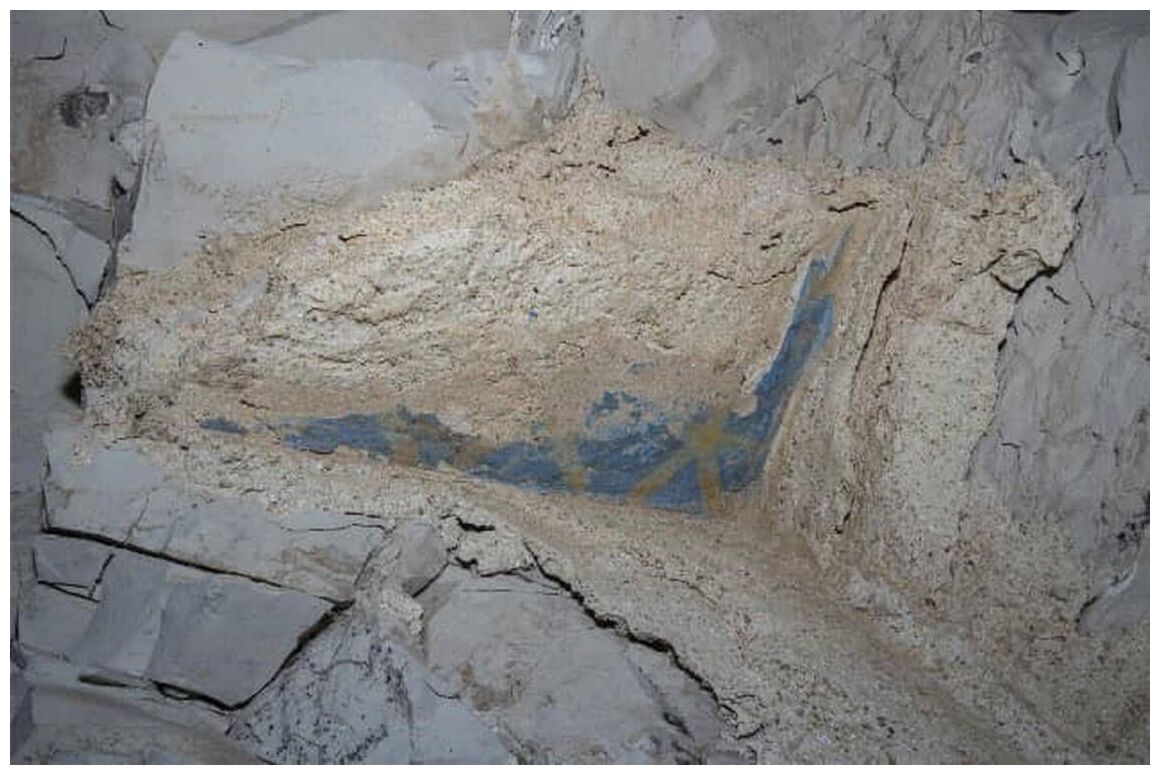
© Egypt’s Ministry of Tourism and AntiquitiesA section of tomb No. C4, identified as the burial site of King Thutmose II.
Egyptian officials have announced a groundbreaking discovery: the long-lost tomb of King Thutmose II, marking the last of the royal tombs from ancient Egypt's Eighteenth Dynasty. This significant find comes over a century after the discovery of King Tutankhamun's tomb in 1922, and it sheds new light on a period that reigned from approximately 1550 BC to 1292 BC.

A joint archaeological mission comprising British and Egyptian teams uncovered the tomb, designated as No. C4, located a few miles west of Luxor in the area known as the mount of Thebes. The entrance and main passage were initially discovered in 2022, and while the team initially speculated that the tomb might belong to one of the wives of the kings due to its proximity to the tombs of Queen Hatshepsut and the wives of King Thutmose III, further excavations revealed compelling evidence linking it directly to King Thutmose II.

Among the artifacts found were several fragments of alabaster vases inscribed with the name of King Thutmose II, referring to him as the "deceased king." Additionally, sections of a religious text associated with ancient Egyptian royal burials and plaster fragments adorned with blue paint and yellow stars were discovered. These findings have led archaeologists to conclude that Tomb No. C4 was indeed the final resting place of King Thutmose II.