Puppet MastersS


Explosion

Iran signals a 'fight to the end' with choice of new ayatollah

israel strike on iran tehran war
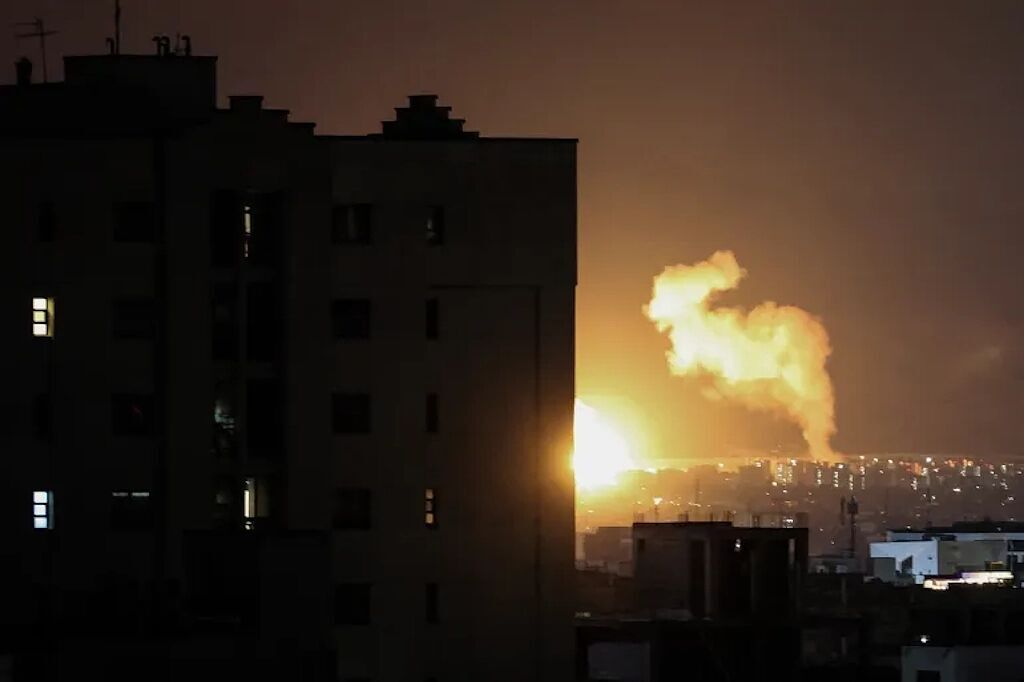
© Agence France-PresseSmoke rises following airstrikes in a central area of Tehran on March 6, 2026.
Smoke rises following air strikes in a central area of Iran's capital, Tehran, on March 6, 2026
Meanwhile, the US struggles to define Israeli-coordinated endgame

Summary:
  • Lebanon wants direct peace talks with Israel to end fighting but Israeli rejects it, also amid US skepticism: Axios.
  • Trump says too soon to talk about seizing Iran's oil but does not rule it out, tells NBC.
  • Analyst consensus on question of potentially protracted conflict: Iran Signals a Fight to the End With Appointment of Khamenei's Son
  • Senator Graham: "The American Embassy is being evacuated in Riyadh because of sustained attacks by Iran against the Kingdom of Saudi Arabia."
  • Timeline to end Iran war? Trump signals decision will be only after 'mutual' decision with Netanyahu.
  • Trump Truth Social post calls for Australia to give Iran National Woman's Soccer team Asylum, but it remains unclear if the whole team is actually requesting it, or if individuals are.
  • Iranian official to Al Jazeera: "we are able to continue the war for a long time and there is no room for diplomacy now."
  • G7 'closely monitoring' energy markets, 'ready' to take necessary measures, including possible oil stockpile release.

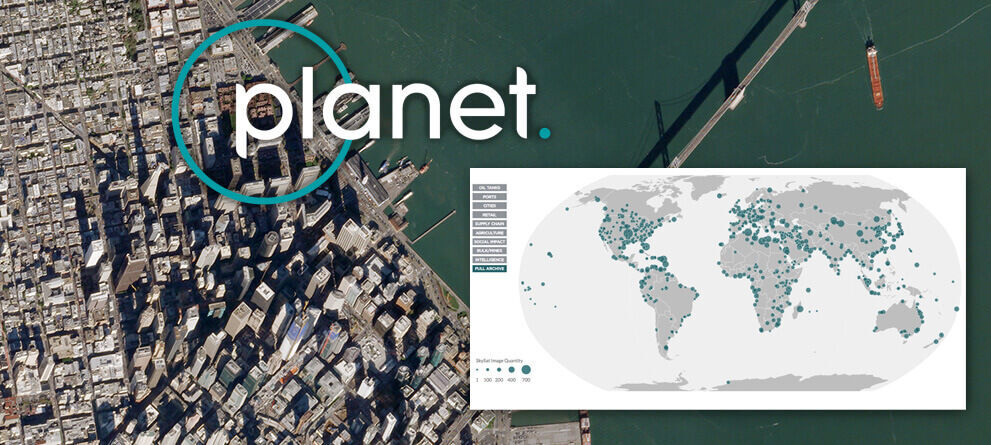
Satellite

Satellite firm pauses imagery after revealing Iran's attacks on US bases

Planet Labs
Planet wants to prevent "adversarial actors" from using images for "Battle Damage Assessment" purposes.

Planet Labs, one of the world's leading commercial satellite imaging companies, said Friday it is placing a hold on releasing imagery of some parts of the Middle East as a regional war enters its second week.

The company, which brands itself as Planet, operates a fleet of several hundred Earth-imaging satellites designed to record views of every landmass on Earth at least once per day. Its customers include think tanks, NGOs, academic institutions, news media, and commercial users in the agriculture, forestry, and energy industries, among others.

Planet also holds lucrative contracts selling overhead imagery to the US military and US government intelligence agencies.

"In response to the conflict in the Middle East, Planet is implementing temporary restrictions on data access within specific areas of the affected region," Planet said in a statement emailed to Ars. "Effective immediately, all new imagery collected over the Gulf States, Iraq, Kuwait, and adjacent conflict zones will be subject to a mandatory 96-hour delay before it is made available in our archive."

Comment: Funny how the focus is on Russia being the culprit of sharing targeting information and not much of a mention of China. This despite the fact that China has a highly advanced spy ship, the Liaowang-1, stationed of the coast of Oman, which is the likely source of the high quality images of the damages in real time done to US bases in the Gulf. The lack of mention of China is likely due to the US badly needing a good meeting with President Xi next month to help open up for rare earth minerals needed for high tech weapons production.

Here is a picture of Liaowang-1
Liaowang-1
The Liaowang-1, China's most sophisticated electronic reconnaissance vessel, is now stationed in the Gulf of Oman, reportedly at Iran's request. Equipped with multiple radar domes, high-gain antennas, and advanced signal processing systems, it can track satellites, missiles, and naval movements in real time. Escorted by Type 055 and Type 052D destroyers, the ship operates legally in international waters but holds significant strategic value in the ongoing US-Israel-Iran conflict.
In the previous conflicts, the US/Israel were able to monopolise the satellite images and thus hide damage inflicted on them. In this war the playing field is more balanced giving Iran access to critical information about US/Israeli bases and the ability to observe changes in real time.


Helm

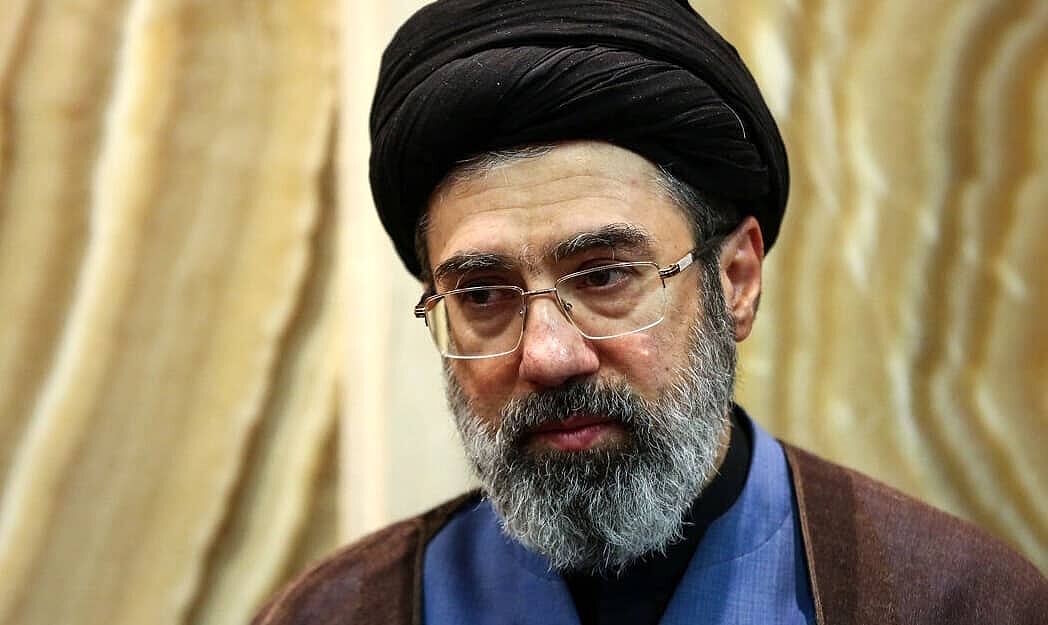
Iran names assassinated Ayatollah's son, Mojtaba Khamenei, as new supreme leader

Mojtaba Khamenei new supreme leader iran son ayatollah
Mojtaba Hosseini Khamenei, son of Ayatollah Ali Khamenei, has been elected as the next Supreme Leader of Iran, March 2026
Mojtaba Khamenei, a son of Iran's late supreme leader, has been named as the Islamic Republic's next ruler, authorities announced Monday, as Tehran widened its attacks across the Mideast to strike oil and water facilities crucial to its desert sheikdoms.

With Iran's theocracy under assault by the U.S. and Israel for more than a week, the country's Assembly of Experts chose as the next supreme leader a secretive, 56-year-old cleric who maintains close ties to the country's paramilitary Revolutionary Guard. The Guard has been firing missiles and drones at Israel and Gulf Arab states since the younger Khamenei's father, Ayatollah Ali Khamenei, was killed Feb. 28 during the war's opening salvo.

The war has shaken global energy markets, pushing oil prices above $100 a barrel and leading to tighter supplies of natural gas after Qatar turned off its production.

Bad Guys

Flip-flop: Dem leaders struggle to explain their past support for unilateral presidential war powers

nancy pelosi adam schiff
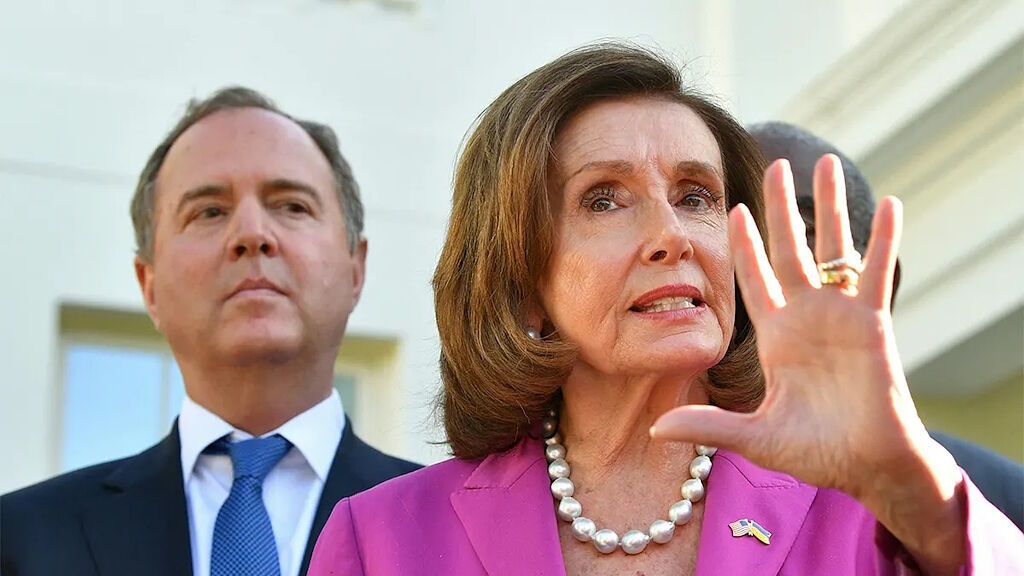
© Nicholas Kamm/AFP via Getty ImagesRep. Adam Schiff, D-Calif., and Speaker of the House Nancy Pelosi White House in Washington, D.C, May, 2022
In Rage and the Republic, I quote former Rep. Jaamal Bowman (D., N.Y.) as capturing the essence of an age of rage when a colleague asked him to stop yelling outside of the House floor. Bowman responded, "I was screaming before you interrupted me."

Bowman's statement came to mind this week when Democratic members were miffed when they were interrupted in tirades over war powers with questions about their prior support for unilateral attacks by Democratic presidents. Leaders like Rep. Nancy Pelosi (D., Cal.) and Sen. Adam Schiff (D., Cal.) struggled to explain their prior support for President Barack Obama in doing precisely that in Libya with embarrassing results.

The greatest face plant may have been Schiff's appearance on Real Time with host Bill Maher. After Schiff denounced any attack without prior congressional approval, Maher read "This statement from the administration: 'The president had the constitutional authority to direct the use of military force because he could reasonably determine that such use of force was in the national interest.'"

Vader

Meet the new boss, same as the old boss: Trump hints U.S. will turn to Cuba after Iran - 'Just a question of time'

trump
President Donald Trump on Thursday suggested his administration will turn its sights to Cuba after U.S. military operations in Iran are finished.

"What's happening with Cuba is amazing," Trump said at the White House while participating in a visit of Inter Miami CF, the 2025 Major League Soccer champions.

"We think that we want to fix — finish this one first, but that will be just a question of time before you and a lot of unbelievable people are going to be going back to Cuba, hopefully not to stay," Trump said to the Miami-heavy audience that included people of Cuban heritage.

The comments show Trump, less than a week into an escalating military conflict in the Middle East, is considering another major foreign policy move.

Snakes in Suits

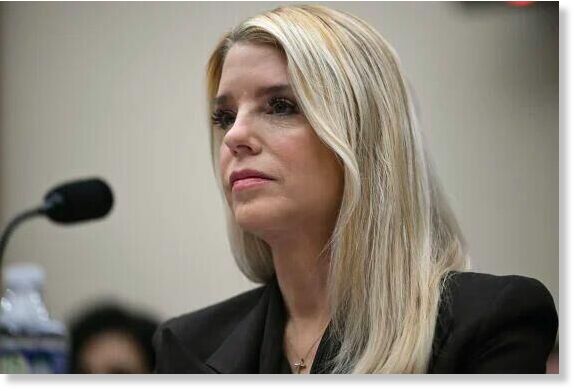
DOJ fail: Pam Bondi ditches probe of Biden autopen as prosecutors fail to make Trump's case

bondi
President Donald Trump may love calling former President Joe Biden the 'autopen,' but neither the former President nor his aides will be prosecuted over the Democrat's use of it.

The New York Times reported Wednesday that Attorney General Pam Bondi's team at the Department of Justice was unable to build a criminal case over Trump's claims.

The President has pushed that Biden and his advisers broke the law when using an autopen to sign documents, citing his alleged 'cognitive decline,' and paying specific attention to the device's use in presidential pardons.

Autopens are commonly used by presidents to apply their signatures to the overwhelming amount of correspondence they receive.

Comment: The House Oversight Panel is also hauling Bondi in on a subpoena related to the limited Epstein Files release. According to reports, thousands of records that had briefly been available online have vanished from the public database. CBS News reported Tuesday that more than 47,000 files - totaling about 65,500 pages - were taken down by late February.


Attention

India To US: We Don't Need Permission To Buy Russian Oil

New Delhi
© MR online
India has really been walking a careful geopolitical tight-rope, wanting to keep relations on good terms with the Trump administration, but also wanting to defend its energy sovereignty and decision-making.

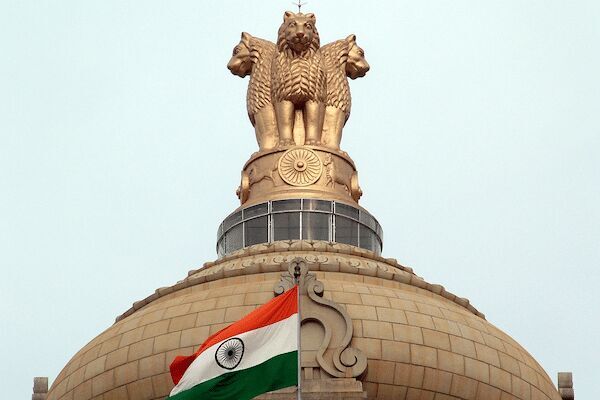
On Saturday the government issued a somewhat surprisingly feisty statement, in terms of its tone, after the United States just granted a sanctions waiver that allows for Russian oil shipments currently stranded at sea to be unloaded to Indian buyers.

India's Press Information Bureau wants the world to know New Delhi was never dependent on "a short-term waiver" to buy Russian oil.

This is clearly a bit of a loud brush-off to Washington, and Moscow is certainly going to welcome it:

"India has never depended on permission from any country to buy Russian oil," the government said in a statement.

And further, as the AFP also reports, the New Delhi statement reminded the West: "India is still importing Russian oil even in February 2026, and Russia is still India's largest crude oil supplier."

Comment: Well said India!


Attention

The strait is closed: How Trump's strike on Iran triggered a global energy crisis

The world entered a new era of energy insecurity not with a treaty or a market crash but with a single ill-conceived military decision.
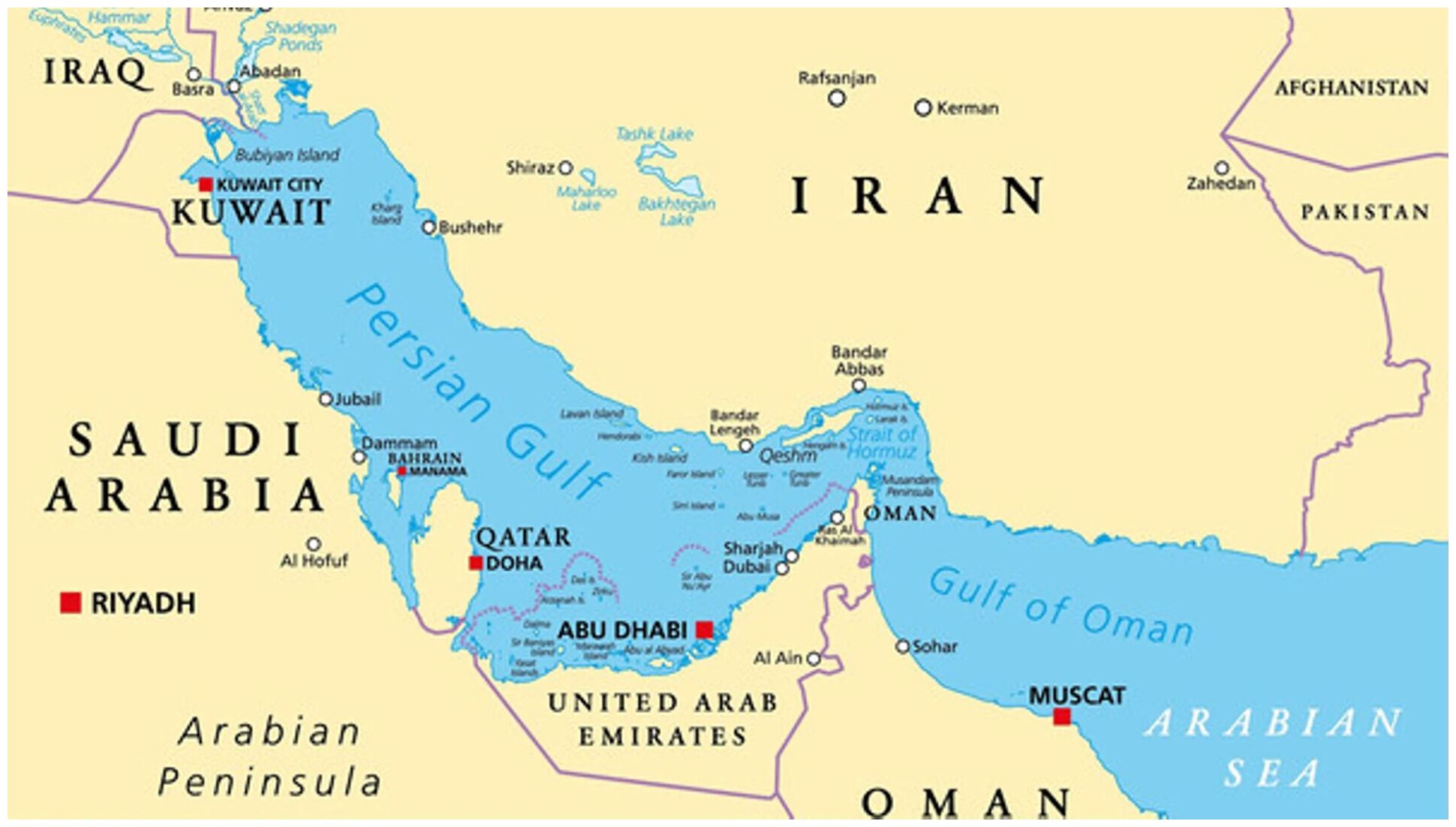
Strait of Hormuz
© New Eastern Outlook
On the weekend of February 28, 2026, the United States, in coordination with Israel, launched airstrikes deep inside Iran, killing Supreme Leader Ayatollah Ali Khamenei and striking key command centers across Tehran, Qom, and Isfahan. President Donald Trump, in a recent address, declared that "combat operations will continue for several more weeks" to "degrade Iran's capacity to threaten global stability."

Monumental Blunder

Instead of restoring order, the strike achieved the opposite: it triggered a cascading collapse of the world's most critical energy artery — the Strait of Hormuz — and exposed the fragility of Western assumptions about oil, power, and deterrence.

Within 48 hours, Iran's Islamic Revolutionary Guard Corps (IRGC) retaliated not just with missile barrages on U.S. bases in Iraq and Israel, but with a far more consequential move: it sealed the Strait of Hormuz. Using drones, fast-attack boats, and coastal missile batteries, Iranian forces disabled or turned back nearly all commercial traffic attempting to transit the narrow waterway. Satellite data confirmed only two tankers passed through on Monday — a fraction of the usual 20 million barrels per day that normally flow through this 21-mile-wide chokepoint.

The immediate effect was not panic, but paralysis. Over 3,000 vessels — tankers, container ships, and LNG carriers — now idle in Gulf ports from Basra to Doha, unable to move without risking destruction. Global oil benchmarks surged past $85 per barrel, with senior IRGC officials openly predicting prices could reach $200 if the blockade holds. As financial markets tumbled, London's FTSE was down nearly 3%, Tokyo's Nikkei shed over a month's gains in three days, but the real crisis unfolded not on trading screens but in the physical reality of supply chains, refineries, and gas stations.

Black Magic

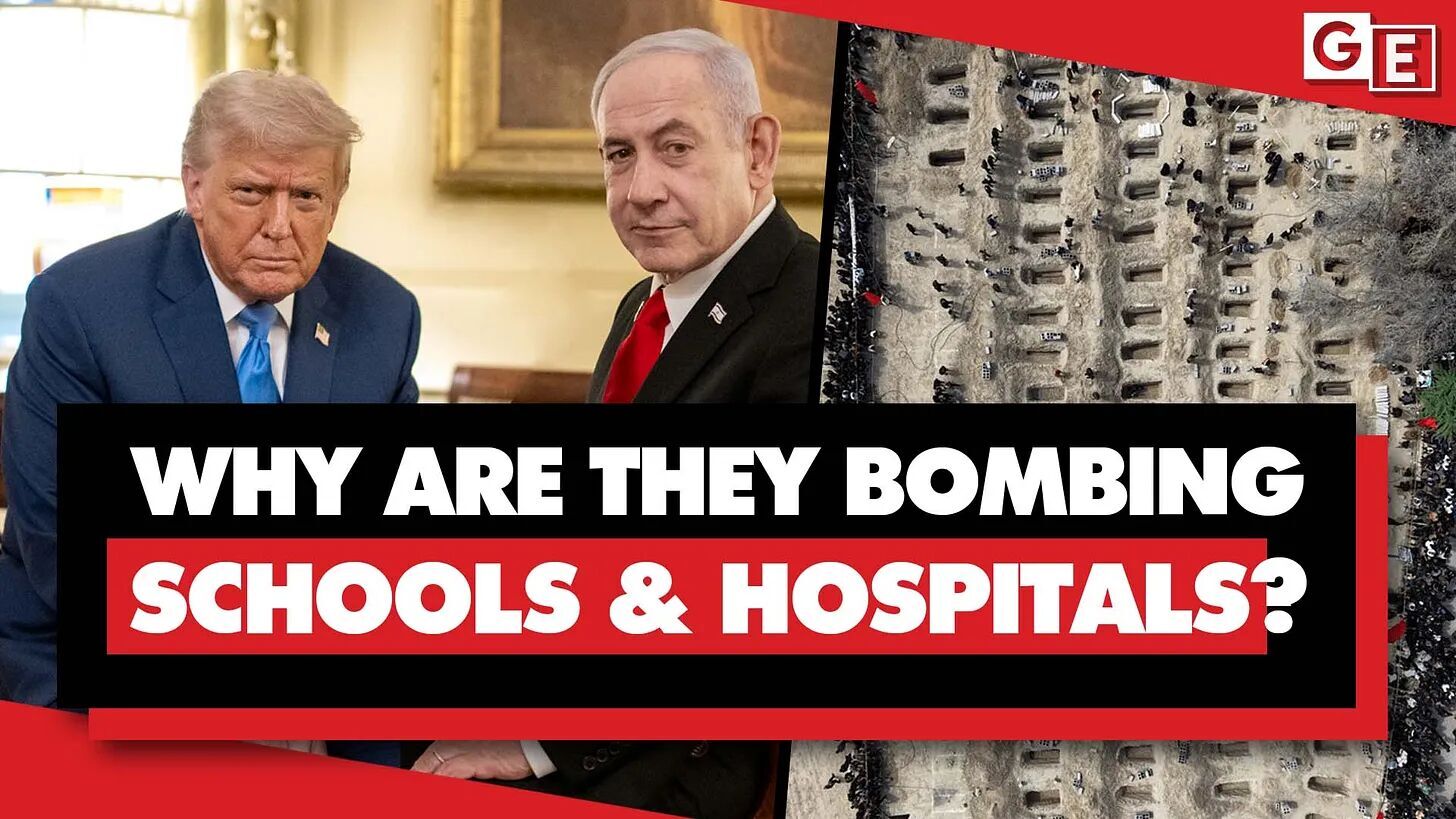
'Punching them while they're down': US & Israel bomb Iran's schools & hospitals, with 'no stupid rules of engagement'

Trump and Bibi
The US & Israel bombed 20 schools & 13 hospitals in Iran in 1 week. War Secretary Pete Hegseth boasted of unleashing "death and destruction" to provoke collapse, with "no stupid rules of engagement".

The United States and Israel are intentionally devastating civilian areas in Iran, brutally bombing schools, hospitals, and residential neighborhoods, in an attempt not only to destroy the state but also to collapse Iranian society itself.

US Secretary of War Pete Hegseth described the scorched-earth strategy in a Pentagon press briefing on March 4.
"This was never meant to be a fair fight, and it is not a fair fight. We are punching them while they're down, which is exactly how it should be", Hegseth boasted.
He added with pride that the US and Israel are raining upon Iran "death and destruction from the sky, all day long".

Hegseth noted that, in the first four days of the war on Iran (named Operation Epic Fury), the US military employed "twice the air power" that it had used in the "shock and awe" invasion of Iraq in 2003.

Comment: See also
SOTT Focus: NewsReal: Operation Epic Fury - What Are The Americans Furious About?


Water

Iran War — Water is a key vector

desalination plants
© Islander Reports
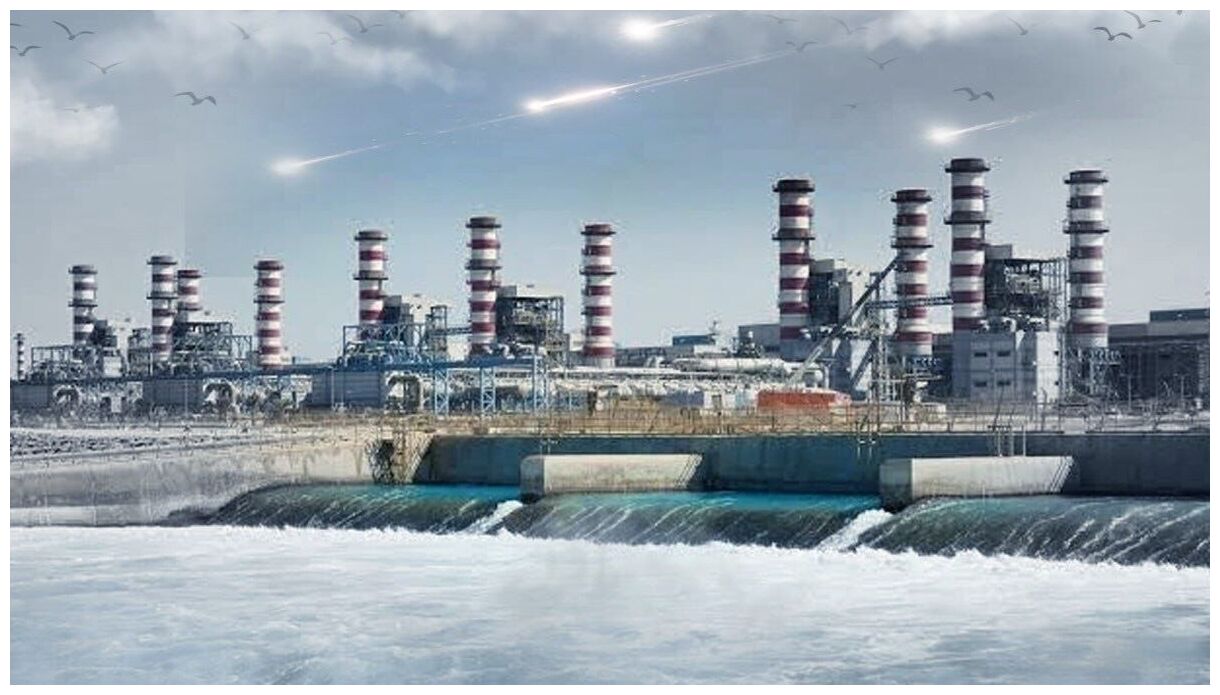
Eight of the ten largest desalination plants on earth sit on the Arabian Peninsula coast. Together the Gulf states account for roughly sixty percent of global desalination capacity. A hundred million people drink what these facilities manufacture from seawater every single day. Kuwait gets ninety percent of its drinking water from desalination. Oman eighty-six. Saudi Arabia seventy. Without these plants, the most powerful petroleum states on earth become uninhabitable within days. Not weeks but days.

A leaked 2008 U.S. diplomatic cable concluded that Riyadh "would have to evacuate within a week" if the Jubail desalination plant or its associated infrastructure were seriously damaged. That was 2008. The population is larger now. The consumption is higher. The alternative freshwater sources remain exactly zero.

On March 2, Iranian strikes on Dubai's Jebel Ali port landed roughly twelve miles from one of the world's largest desalination complexes — a facility producing more than 160 billion gallons of the city's water each year. The Fujairah power and water complex took damage. Kuwait's Doha West desalination plant took damage. Neither was destroyed. Both appeared to be collateral — nearby port attacks, interceptor debris.

That distinction was the most important signal in this war. Emphasis on was.

Because Washington couldn't leave well enough alone. On Friday, the United States destroyed a freshwater desalination plant on Iran's Qeshm Island — reportedly with missiles launched from its Jufair base in Bahrain. Iranian Foreign Minister Araghchi responded immediately: "The US committed a blatant and desperate crime by attacking a freshwater desalination plant on Qeshm Island. Water supply in 30 villages has been impacted. Attacking Iran's infrastructure is a dangerous move with grave consequences. The US set this precedent, not Iran." Washington denied it. Of course they did. U.S. Navy Captain Tim Hawkins called the claim false, calling Iran "the same terrorist regime that has attacked 12 different countries." The plant on Qeshm Island, meanwhile, remained destroyed.

Then, today, Bahrain reported what everyone with a functioning brain knew was coming. An Iranian drone attack caused material damage to a water desalination plant... the first time a Gulf nation had reported direct targeting of such a facility in this war.