Puppet MastersS


Star of David

'Once a Holocaust denier, always a Holocaust denier': Netanyahu slams Abbas for anti-Semitism

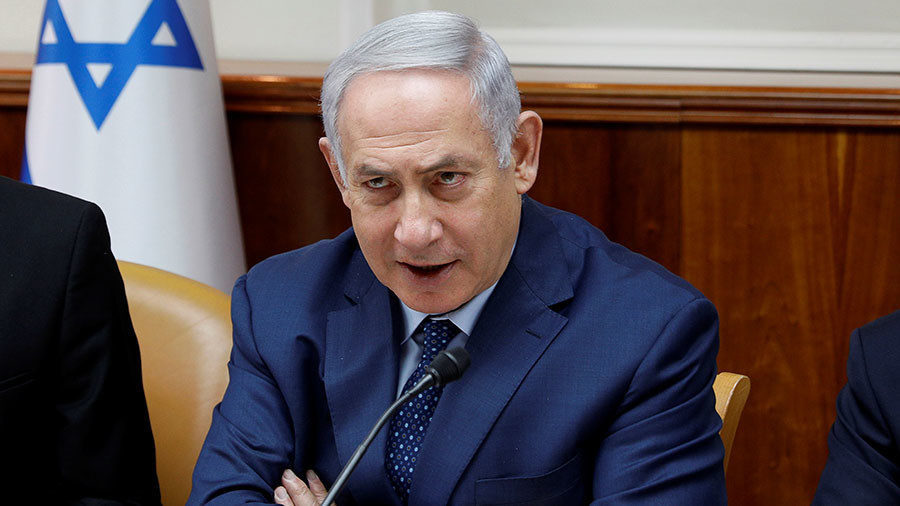
Benjamin Netanyahu
© Gali Tibbon / Reuters
Israeli Prime Minister Benjamin Netanyahu has taken to Twitter to slam Palestinian Authority President Mahmoud Abbas who, during a Monday speech, suggested that through their "social role" Jews brought persecution upon themselves.

Netanyahu accused the Palestinian leader of both Holocaust denial and anti-Semitism. "Apparently the Holocaust denier is still a Holocaust denier. I call on the international community to condemn his severe anti-Semitism; the time has come for it to pass from the world," he wrote.

Comment: Abbas didn't deny the Holocaust happened; he said it 'takes two to tango'.

From Theodore Herzl's - the founder of Zionism - own pen:
"When we sink, we become a revolutionary proletariat, the subordinate officers of all revolutionary parties; and at the same time, when we rise, there rises also our terrible power of the purse."


Jet5

Report: Syrian base storing Iranian anti-aircraft missiles hit by Israeli F-15s

Israeli Jet
© AFP 2018 / JACK GUEZ
Arms depots in the vicinity of the Syrian cities of Hama and Aleppo were attacked in the early hours of Monday with "hostile rockets," a Syrian military source told Sputnik. The Israeli military has declined to comment on the strikes.

Three US officials told NBC News on condition of anonymity that Israeli F-15 jets attacked the military facilities after Iran had transported its weapons there. According to them, Tehran had been delivering weapons, including surface-to-air missiles, small arms and anti-aircraft missiles for two weeks.

Two officials alleged that the weapons were delivered to Syria for Iranian ground forces for a subsequent attack against Israel.

Comment: See also:


Question

Israel postpones US-based test of its Arrow-3 missile defense system indefinitely - previous tests cancelled over 'data transfer' and 'safety' problems

Irael Arrow II missile interceptor
© ReutersArrow II missile interceptor
A planned test of the Israeli Arrow-3 long-range ballistic missile interceptor has been postponed indefinitely, to ensure that the system is indeed fully ready for the test, the Israeli Defense Ministry has announced.

"Following consultation between the American Missile Defense Agency and the Israeli Defense Ministry, it was decided to postpone the test of the Arrow-3 system in Alaska - this is in order to reach maximum preparedness ahead of the test in the American [airfield]," the ministry said in a statement. The ministry then said that it was working with its US partners to set another date for the test but did not reveal any details about a future schedule.

The military emphasized that the test delay would by no means affect the Arrow-2 and Arrow-3 missile defense systems that are already operational and are currently used by the Israeli Defense Forces (IDF). Developed jointly by Israeli Aerospace Industries and Boeing, the Arrow-3 system passed its first test over the Mediterranean Sea in 2015 and has been in service in Israel since 2017.

Chess

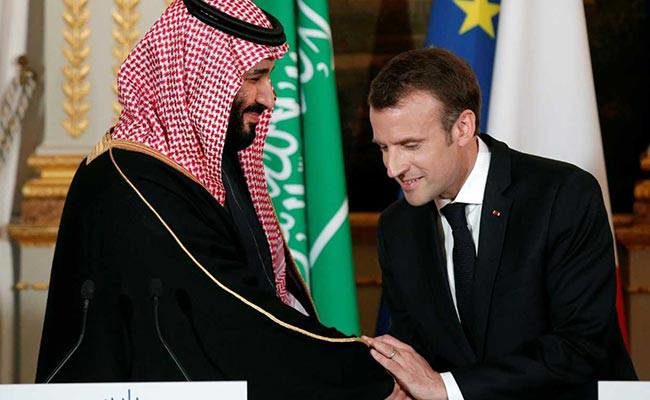
'Special relationship most likely': The CIA got Macron elected - It looks like they wrote his big US speech too

Saudi crown prince and French president Macron
He does what he's told
A study in the illegal intervention in US political life by our intelligence services

In this essay, I offer a detailed textual analysis of the speech which French President Emmanuel Macron delivered before the Joint Session of Congress, Washington, D.C. on 25 April 2018, in line with the kind of textual analysis which I performed on major political documents signed by heroic East European freedom fighters in 2007 and 2009, which were in fact authored by US intelligence operatives.

I maintain here that a substantial part of Macron's speech was either written by or coordinated closely with these same intelligence services for the purpose of exerting maximum influence on domestic US politics by reinforcement of centrist American predispositions from respected foreign actors. It is also essential to explain how M. Macron became president of France in 2017 with the connivance of these same intelligence services. I will attempt to do that in the second part of the essay.

I freely admit that my argumentation is circumstantial and relies heavily on hunches that today are sagely phrased as "most likely" scenarios. But whereas the "most likely" reasoning of Theresa May is used to justify unprecedented verbal attacks on Russia and military attacks on the sovereign state of Syria, my reasoning, if unpersuasive, has no other consequence than to lose a reader here or there.

Comment: See also: Behind the Headlines: Western Order Break-Up? New Middle East? New Korea?


Bad Guys

US troops to remain in South Korea despite forming peace treaties - President Moon Jae-in

US army South Korea
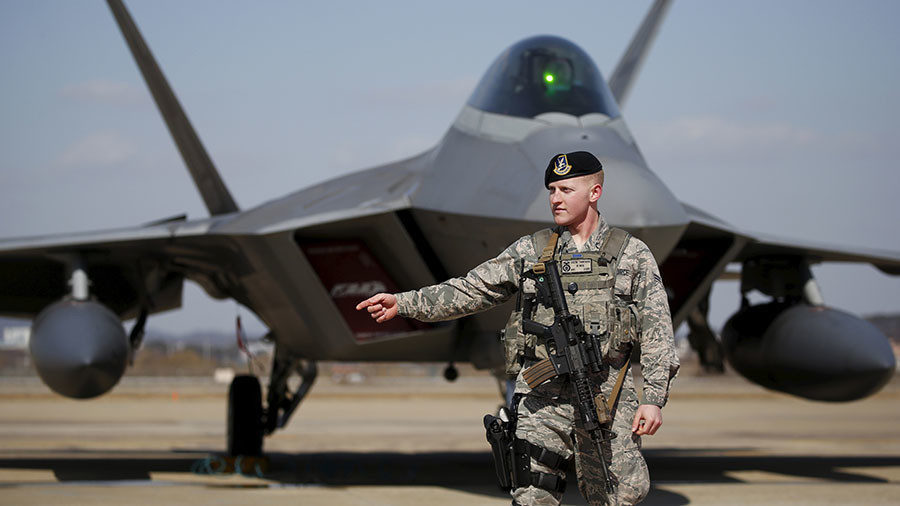
© Kim Hong-Ji / ReutersA US army soldier stands guard in front of a F-22 stealth fighter jet at Osan Air Base in Pyeongtaek, South Korea.
South Korean President Moon Jae-in said on Wednesday that US troops will remain on the peninsula even if a peace agreement with the North is reached, saying their presence has "nothing to do with signing peace treaties."

"US troops stationed in South Korea are an issue regarding the alliance between South Korea and the United States. It has nothing to do with signing peace treaties," Moon's spokesperson Kim Eui-kyeom said at a press conference.

The statement came in response to a Foreign Affairs magazine article written by presidential adviser, Moon Cung-in, in which he stated that it would be "difficult to justify [US forces] continuing presence in South Korea," if peace is concluded with the North. The spokesperson warned the adviser "not to cause any more confusion" with such comments.

Comment: Citing 'the Libya model' for the future of North Korea doesn't exactly instill a great sense of hope over the intentions of the US for North Korea.

See: Should North Korea think twice about ditching nukes after what happened to Libya?


Recycle

Best of the Web: Xi and Modi meet at SCO Summit: It's the Belt and Road Initiative against Washington's Indo-Pacific strategy all over again

Xi Jinping Narendra Modi China India
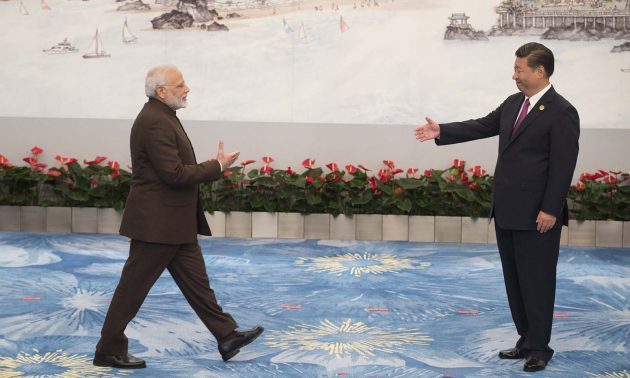
© AFP/Fred DufourChinese President Xi Jinping welcomes Indian Prime Minister Narendra Modi during the BRICS Summit in Xiamen on September 4, 2017.


Modi and Xi meeting could have a crucial SCO subplot focusing on security and economic cooperation


All bets are off on the outcome of India Prime Minister Narendra Modi's potentially ground-breaking meeting with Chinese President Xi Jinping this Friday and Saturday in Wuhan.

Things have not exactly started in auspicious mode.

After a meeting in Beijing of foreign ministers represented at the Shanghai Cooperation Organization (SCO), India, once again refused to support the New Silk Roads, known as the Belt and Road Initiative (BRI) in the final communiqué.

Every other SCO member - represented by the foreign ministers of Russia, Kazakhstan, Kyrgyzstan, Uzbekistan, Tajikistan and Pakistan - did.

So here we go again - back to the interminable, intractable India-Pakistan soap opera.

Comment: This puts Trump's threats to scrap the JCPOA and Netanyahu's accusations against Iran in a new light.

As for India, money talks, at the end of the day. If it's committed to INSTC, it'll find solutions to Kashmir, sooner or later.


Life Preserver

Best of the Web: Should North Korea think twice about ditching nukes after what happened to Libya? (VIDEO)

Kim Jong Un North Korea nukes
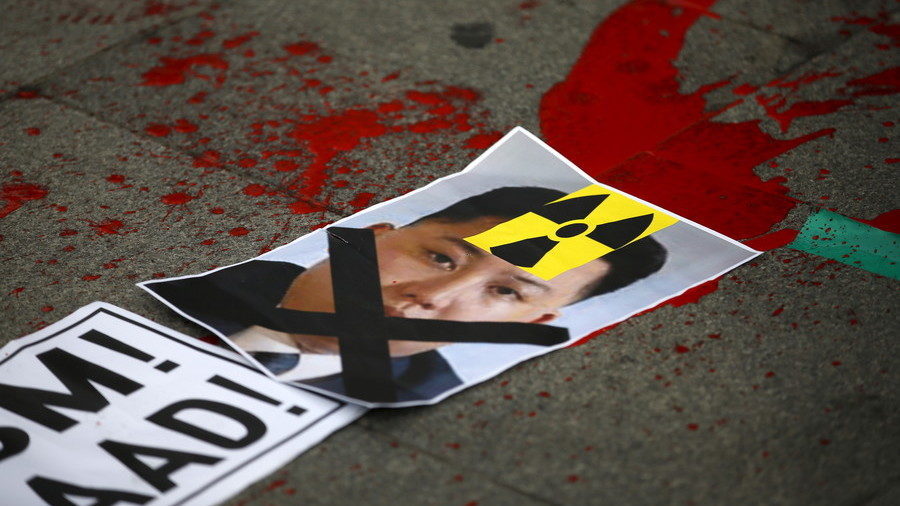
© Kim Hong-Ji / ReutersA poster with the image of North Korean leader Kim Jong-un during an anti-North Korea rally in central Seoul, South Korea, February 11, 2016.
The US says North Korean denuclearization should proceed along the Libyan scenario. RT's Murad Gazdiev remembers how Muammar Gaddafi was killed by US-backed rebels a few years after ditching nukes, and asks - is that a good idea?

There was a time when tales of Gaddafi's death had Kim Jong-un keeping his both hands on the nuclear button, which, by his own admission, he cautiously kept on his desk.

Now US President Donald Trump, who not long ago had been erratically tweeting away about his own shiny red button, is suddenly an advocate for peace, welcoming Kim's push to ditch nukes. RT's Murad Gazdiev believes this bears the question - is Libya's history about to be repeated?

And when US officials speak about the "Libyan model", they mean the 2003 denuclearization, not the devastating West-assisted civil war of 2011. Don't they?


Black Cat

Did ultra-warhawk Bolton leak intelligence to undercut a Trump-Kim Deal?

bolton
© Gage Skidmore / CC BY-SA 2.0War monger John Bolton speaking at the 2015 Conservative Political Action Conference in National Harbor, Md.
The still-unscheduled Donald Trump-Kim Jong Un summit offers the opportunity for a denuclearization deal that would avoid a possible nuclear war, but that potential deal remains vulnerable to a hostile corporate media sector and political elites in the United States. At the center of this hostility is national security adviser John Bolton, who's not just uninterested in selling a denuclearization deal to the public. He's working actively to undermine it.

Strong circumstantial evidence indicates that he leaked intelligence to a Washington think tank sympathetic to his views in order to generate media questioning about the president's announced plan to reach an agreement with North Korea's leader.

Bolton made no secret of his visceral opposition to such a deal before Trump announced that Bolton would become national security adviser, arguing that Kim Jong Un would never let go of his nuclear weapons, especially since he is so close to having a real nuclear deterrent capability vis-a-vis the United States.

Comment:


Nuke

Nuclear deal with Iran or JCPOA explained

JCPOA negotiations Vienna
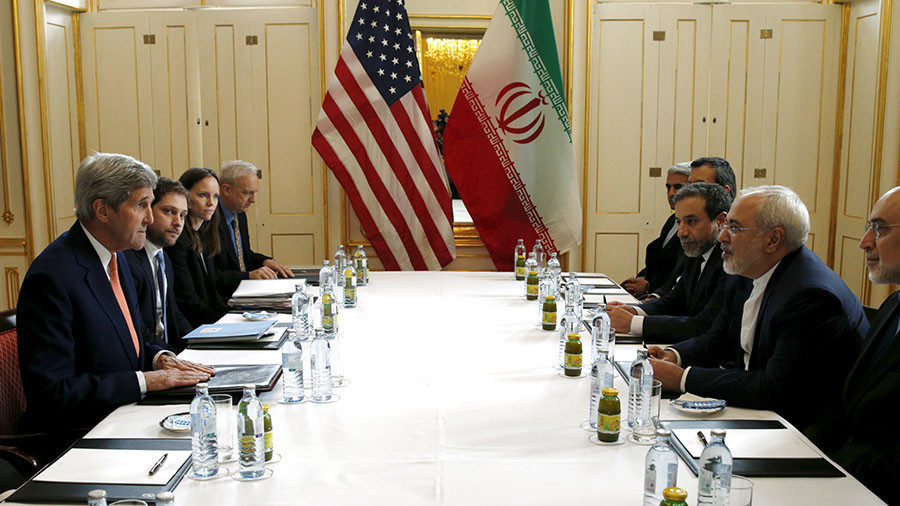
© Kevin Lamarque / ReutersVienna January 16, 2016.
The Iran nuclear deal hangs by a thread as US President Donald Trump keeps everyone in suspense over whether he will recertify it on May 12, despite the scrambling by other Western signatories to defend it. Here's what's at stake.

The Joint Comprehensive Plan of Action (JCPOA), better known as the Iran nuclear deal, is an agreement signed on July 14, 2015, after 20 months and six rounds of rollercoaster negotiations. The signatories are Iran and a group of nations known as the P5+1: Russia, China, the US, UK, France (all permanent UN Security Council members), and Germany. The deal aims to prevent Iran from getting a nuclear weapon by curbing its nuclear program, which dates back to the 1950s and was, ironically, set up with American help before the 1979 revolution ended most of Iran's ties with the West.

Iran's concessions

Under the JCPOA, Tehran gave up 98 percent of the enriched uranium it already had, and only keeps material enriched to the lowest threshold of five percent (weapons-grade uranium starts at 85 percent). Two-thirds of Iran's enrichment centrifuges are halted, leaving only around 6,000 older models operational. Any remaining materials and facilities are to be used strictly for scientific, medical, and agricultural purposes.

Comment: The only reason Trump says it's the "worst deal ever" is that the US cannot profit from as much as its European counterparts. However, his Deep State and Zionist handlers most likely think it should be scrapped because Iran should not be allowed to become a regional power and compete with Israel. Thus, they will try to 'take Iran out', either economically or militarily.

Don't miss:


Document

Leaked Mueller questions prove investigation is a witch-hunt - Mueller wants to take Trump down, but doesn't have the evidence to do so

Mueller bites his nails
© Andrew Burton/Getty Images
Ever since Deputy Attorney General Rod Rostenstein appointed former FBI Director Robert Mueller Special Counsel to investigate the Russiagate collusion allegations, there has been a huge amount of speculation about what if any information Mueller may have which he has not publicly divulged.

Mueller has however succeeded in running an exceptionally tight ship, with no leaks from his investigation to speak of.

The situation has now changed with the leak - possibly by someone in the Trump administration rather than the Mueller's team - of the questions Mueller apparently wants to ask Donald Trump. These provide a fascinating insight into the state of his inquiry.

Here is my take on these questions:

(1) Robert Mueller is in possession of no facts which have not previously been made public

Every single one of the questions is obviously drawn on information which has already been made public and which has been widely discussed.