
© Reuters
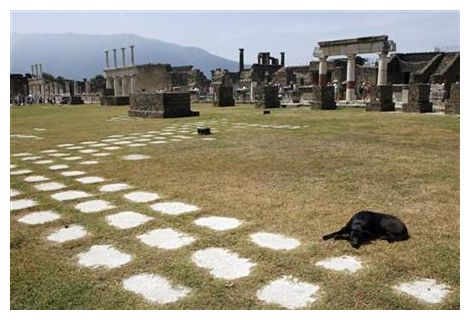
The boiling mud and sulphurous steam holes of the area west of Naples known as the Campi Flegrei or Phlegraean Fields, from the Greek word for burning, are a major tourist attraction.
But the zone of intense seismic activity, which the ancients thought was the entrance to hell, also could pose a danger of global proportions with millions of people literally living on top of a potential future volcanic eruption.
"These areas can give rise to the only eruptions that can have global catastrophic effects comparable to major meteorite impacts," said Giuseppe De Natale, head of a project to drill deep under the earth to monitor the molten "caldera".
One such meteorite impact is thought to have caused the extinction of the dinosaurs 65 million years ago when debris thrown into the atmosphere from the huge explosion plunged the earth into darkness.
Scientists plan to drill 3.5 km (2.2 miles) below the surface to monitor the huge chamber of molten rock near Pompeii and give early warning of any eruption from a 13-km-wide collapsed volcanic caldera.
The Campi Flegrei are similar to the Yellowstone caldera in the U.S. state of Wyoming but of more concern because they are in an area populated by around 3 million people in the Naples hinterland.
"Fortunately, it is extremely rare for these areas to erupt at their full capacity, as it is extremely rare for large meteorites to hit the earth," De Natale told Reuters.
"But some of these areas, in particular the Campi Flegrei, are densely populated and therefore even small eruptions, which are the most probable, fortunately, can pose risks for the population," said De Natale, from the Vesuvius observatory at Italy's National Institute for Geophysics and Volcanology.
"That is why the Campi Flegrei absolutely must be studied and monitored. I wouldn't say like others, but much more than the others exactly because of the danger given that millions of people live in the volcano."
However, the project, funded by the multi-national International Continental Scientific Drilling Programme, has run into major opposition from some local scientists who say the drilling itself could cause a dangerous eruption or earthquake.










Comment: Reign of Fire: Meteorites, Wildfires, Planetary Chaos and the Sixth Extinction
Meteorites, Asteroids, and Comets: Damages, Disasters, Injuries, Deaths, and Very Close Calls
Impact Hazards on a Populated Earth?
Tunguska, the Horns of the Moon and Evolution