Science & Technology
The research is published Feb. 9 in the journal Nature.
The larger, host galaxy, NGC 4449, may be "something of a living fossil," representing what most galaxies probably looked like shortly after the Big Bang, Rich said. The galaxy is forming stars "so furiously" that it has giant clusters of young stars and even appears bluish - a sign of a young galaxy - to the eye in large amateur telescopes, he said.
NGC 4449 has a nucleus that may someday host a black hole and an irregular structure, lacking the spiral arms characteristic of many galaxies, he said. It is surrounded by a huge complex of hydrogen gas that spans approximately 300,000 light years, which may be fueling its burst of star formation.
In its 2012 budget, DARPA has decided to pour US $7 million into the "Avatar Project," whose goal is the following: "develop interfaces and algorithms to enable a soldier to effectively partner with a semi-autonomous bi-pedal machine and allow it to act as the soldier's surrogate." Whoa.
That word "surrogate" implies something more than just telepresence, and indeed DARPA does specify that it is looking for "key advancements in telepresence and remote operation of a ground system." But we're perfectly free to speculate on what those "key advancements" are, which again comes back to "surrogate." To me, the implication is that there's going to be some technology that effectively puts the user "inside" the remote system, whether it's through immersive VR or exoskeleton or some sort of direct brain control. Either of these things is a realistic possibility, especially if DARPA's tossing a couple million at the problem.
Atkinson based his claim on a comparative analysis of the numbers of phonemes found in about 500 present-day languages. Phonemes are the most basic sound units -- consonants, vowels and tones -- that form the basis of semantic differentiation in all languages. The number of phonemes used in natural languages varies widely. Atkinson, who is a biologist and psychologist by training, found that the highest levels of phoneme diversity occurred in languages spoken in southwestern Africa. Furthermore, according to his statistical analysis, the size of the phoneme inventory in a language tends to decrease with distance from this hotspot.
To interpret this finding Atkinson invoked a parallel from population genetics. Biologists have observed an analogous effect, insofar as human genetic diversity is found to decrease with distance from Africa, where our species originated. This is attributed to the so-called founder effect. As people migrated from the continent and small groups continued to disperse, each inevitably came to represent an ever-shrinking fraction of the total genetic diversity present in the African population as a whole.

The Fukushima Daiichi nuclear plant was badly damaged in last year's earthquake and tsunami in Japan Photo.
Now researchers from Manchester University say a similar approach could be used to defend structures against earthquakes and other natural disasters.
In the same way that cloaking devices make objects appear invisible by deflecting light around them, the team claimed that pressurised rubber could be used to "hide" structures from shock waves produced by earthquakes, sending them around the structure rather than through it.

Einstein's theory of special relativity sets of the speed of light, 186,000 miles per second (300 million meters per second), as a cosmic speed limit. Some researchers think they may have broken this limit, and the implications are mind bending.
Vancouver, British Columbia - Physicists stunned the world last year by announcing they'd seen signs that particles called neutrinos were traveling faster than light - a feat thought to be proven impossible by Einstein. Ever since, other researchers have been racing to try the experiment on their own to see if the findings hold up.
Some results of these tests should be announced this spring, scientists said Friday (Feb. 17) here at the annual meeting of the American Association for the Advancement of Science.
"It's very hard to find an error by reading a paper," said particle physicist Rob Roser of the Fermi National Accelerator Laboratory (Fermilab) in Batavia, Ill., who was not involved in the original experiment. "What you need is for someone else to make the measurement. We'll see what happens."
Shocking finding
The bizarre finding was first reported in September 2011, when physicists at the CERN laboratory in Geneva, Switzerland, announced that an experiment called OPERA had measured the tiny subatomic particles apparently breaking what was thought to be the ultimate cosmic speed limit.
OPERA sends neutrinos 454 miles (730 kilometers) underground to the INFN Gran Sasso Laboratory in Italy, and measures how fast they take to make the trip. While researchers expected the almost-massless particles to travel at near light speed, they actually appeared to arrive at their destination about 60 billionths of a second sooner than light would have.
If this really occurred, it would contradict Albert Einstein's special theory of relativity, and throw much of physics into upheaval.
The particular hypernucleus investigated here, called "hydrogen six Lambda" (6ΛH), was first predicted to exist in 1963. Now, in a study published in a recent issue of Physical Review Letters, physicists working in the FINUDA experiment at the Istituto Nazionale di Fisica Nucleare - Laboratori Nazionali di Frascati (INFN-LNF) in Frascati, Italy, have reported finding the first evidence for the particle. The FINUDA collaboration's analysis of millions of events has turned up three events for the rare hypernucleus.
Visit: www.thunderboltsdvd.com - to purchase the DVD andor Thunderbolts Of The Gods 'monograph' (book), - to view higher resolution sequences from the film (with stereo sound), - to subscribe to a free newsletter that will keep you up to date on the latest discoveries in space and a revolutionary new interpretation of them. The Thunderbolts Project calls into question not only countless modern scientific assumptions, but also the billions of dollars of big-science government and corporate funding that continues to preserve and entrench questionable theories - elevating them to the status of doctrine - while systematically excluding legitimate alternatives that threaten the status-quo.
Alternatives that may represent the future of science. The Thunderbolts Project offers remarkably simple explanations for 'black holes', 'dark matter', the electric sun, comets that are NOT made of ice, planetary scarring and many other 'mysterious' phenomena. It proposes that much of the currently observable phenomena of deep space can be intelligently explained by already known principles of electricity. High school students get it immediately. A doctorate in higher math is not required. This extraordinary new theory also redefines ancient history, linking rock art images carved in basalt 5,000 years ago with identical images found only in Hubble photographs of deep space or in photographs of recently declassified high-energy plasma discharge experiments generated in a billion dollar lab. The Thunderbolts Project invites you to participate in this revolution, to test and even challenge its validity, or, if finding it rational and intriguing enough, to contribute to its expansion and further evolution. Thank you, The Thunderbolts Project.
Part One:

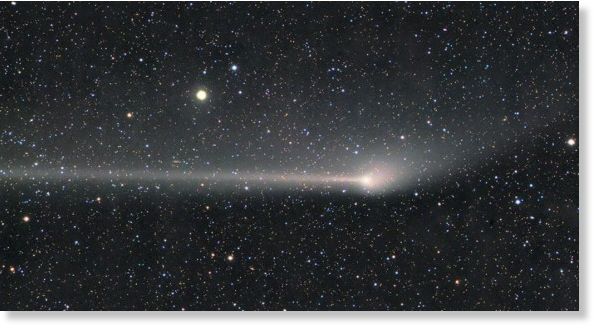
One possible explanation is that the perihelion passage of a Twin Sun companion is exerting tremendous forces on the inner solar system.
As a gas giant, Saturn's rotation has been historically difficult to measure. Its hazy atmospheric features shift with respect to each other and cannot be used to clock the spin rate of the planet's interior.
The most commonly cited figure for Saturn's rotation period - 10 hours, 39 minutes and 22.4 seconds - was derived in 1980 from Voyager observations of radio waves generated by solar radiation hitting the planet's atmosphere. Yet Cassini has returned a result almost 8 minutes longer, a difference that defies easy explanation.
"The knowledge of the rotation period is a very important ingredient when you try to model the interior of a planet like Saturn," says Giacomo Giampieri of NASA's Jet Propulsion Laboratory.

Aurora as seen from the International Space Station as it crossed over the southern Indian Ocean on September 17, 2011.
These light shows are the visible sign that a geomagnetic storm is raging overhead. But there's another phenomenon that happens alongside the northern lights that you won't have noticed at all. Surrounding our planet, way up above the atmosphere, is a doughnut shaped ring of charged particles held in place by Earth's magnetic field. In fact, there are two of them. They're called the inner and outer Van Allen belts.
The Van Allen belts were found in 1958 and were the first major scientific discovery of the space age. During geomagnetic storms, electrons in the Van Allen belts have been known to vanish - only to return a few hours later. This strange phenomenon was first spotted in the 1960s, and has puzzled physicists ever since.

Evolved Fossil viruses are helping to shed light on the deep history of viruses like HIV, shown above with red triangular cores of RNA material.
The virus now turns out to have an intimate bond with every person on Earth. In the latest issue of Nature, a team of Japanese and American scientists report that the human genome contains borna virus genes. The virus infected our monkey-like ancestors 40 million years ago, and its genes have been passed down ever since.