
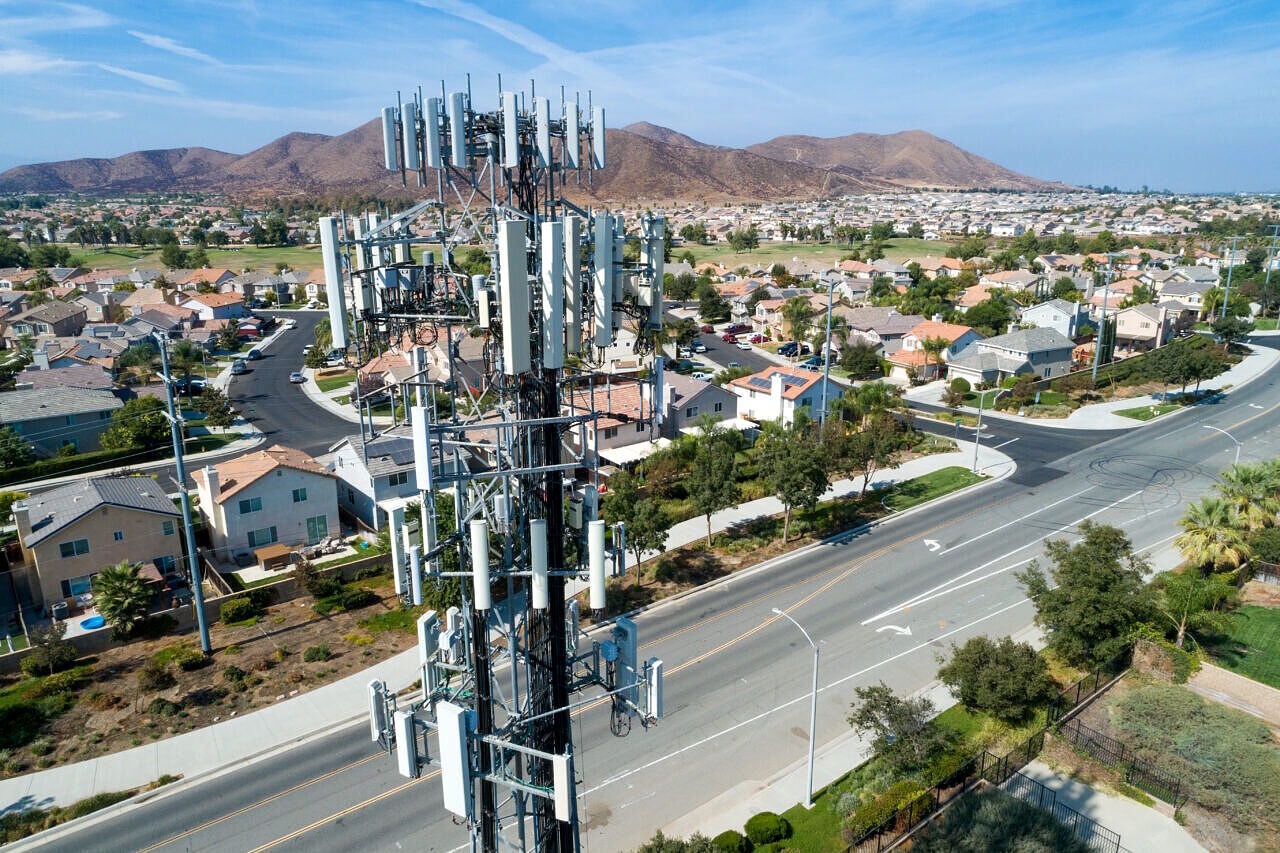
© Shutterstock
Federal health agencies have quietly rolled back years of public-facing assurances that cellphone radiation poses no health risks, as the U.S. Department of Health and Human Services launches a new review of the health effects of wireless technology. According to reporting by The Wall Street Journal, webpages maintained by the U.S. Food and Drug Administration stating that cellphone radiation is not linked to adverse health outcomes were recently taken offline, a move that coincides with a broader HHS-directed study into electromagnetic radiation.
The removal of the webpages was first identified by Children's Health Defense, which reported that the FDA had eliminated content asserting that the "weight of scientific evidence" does not support a connection between cellphone use and health problems. The agency now redirects users to a general landing page outlining its regulatory role over radiation-emitting products.
The changes come as HHS, under Secretary Robert F. Kennedy Jr., begins examining the health effects of wireless radiation, a shift that advocates describe as a significant departure from prior federal policy. Miriam Eckenfels, director of Children's Health Defense's Electromagnetic Radiation & Wireless Program, said the move reflects long-overdue recognition of scientific concerns. "This move is signaling very strong steps in the right direction," Eckenfels said.
Eckenfels said decades of research point to harm from radiofrequency radiation emitted by cellphones and cell towers, adding that federal agencies have historically lagged behind the science. She said Kennedy "is the right person to correct that," according to Children's Health Defense.
The FDA, which operates under HHS, said the website changes reflect a broader scientific reassessment. HHS spokesman Andrew Nixon told Reuters that the agency disabled webpages containing "old conclusions about cellphone radiation" while it undertakes a study to identify gaps in current knowledge, including potential risks posed by newer technologies. Nixon said the review was directed by President Donald Trump's Make America Healthy Again Commission but did not identify study leaders or provide a timeline.
The Make America Healthy Again strategy report released in May 2025 referenced electromagnetic radiation only briefly. Researchers and technology safety advocates told The Defender that the report did not adequately reflect scientific evidence linking wireless radiation to biological harm.
Although the FDA removed its earlier webpages, summaries of its former positions remain accessible through the FDA website. The Federal Communications Commission, which sets legal exposure limits with scientific input from the FDA, continues to state on its website that there is no proof wireless devices cause cancer. The FCC's position aligns with public guidance from the World Health Organization, which describes evidence of health risks as inconclusive while acknowledging that further research is needed.
Recent findings commissioned by the WHO, however, have complicated that position. A WHO-commissioned systematic review published in April 2025 in Environmental International found "high certainty" evidence that radiofrequency radiation causes cancer in animals, noting that the same tumor types observed in animals have also appeared in human studies, according to Children's Health Defense.
Despite those findings, the Centers for Disease Control and Prevention's cellphone radiation webpage continues to state that "more research is needed before we know if using cell phones causes health effects," a position unchanged since Kennedy took office.
Debate over the HHS review has exposed divisions within the scientific community. Joel Moskowitz, a public health professor at the University of California, Berkeley, and a commissioner with the International Commission on the Biological Effects of Electromagnetic Fields (ICBE-EMF), told the Journal that he declined an invitation from a Kennedy aide to participate in a potential literature review or expert roundtable. Moskowitz cited disagreements with Kennedy on vaccines and other public health issues, and criticized the administration's approach. "They're just doing this to kick the can down the road," Moskowitz said.
W. Scott McCollough, lead litigator for CHD's electromagnetic radiation cases, said he was "mystified" by Moskowitz's refusal. McCollough noted that ICBE-EMF has long called for expert scientific recommendations to protect public health from electromagnetic fields and said the HHS effort appears consistent with those objectives. "I can only hope that Dr. Moskowitz is not speaking for that organization and that they will clarify their position," McCollough said.
Eckenfels also urged unity among researchers and advocates. "Tribalism prevents us from making real progress against EMR risks," she said, adding that disagreements on other issues should not overshadow shared concerns. "We are fighting the same enemy — big industry." She said the HHS review should be seen as an opportunity to advance proposed changes "to become a reality," adding, "What Kennedy is trying to do is the right thing."
Scientific criticism of government assurances on wireless safety has intensified in recent years. In October 2025, researchers affiliated with ICBE-EMF published a paper in Environmental Health concluding that the safety of wireless technology is not assured, citing methodological flaws in several WHO-commissioned reviews. In June 2024, ICBE-EMF called for the retraction of a 2023 WHO study, arguing that its authors reached incorrect conclusions about wireless safety.
In 2023, five nonprofit science and public health organizations filed a citizen petition accusing the FDA of violating federal law governing non-ionizing radiation. That same year, toxicologist and epidemiologist Devra Davis criticized the FDA's internal 2008-2018 review, which claimed no consistent evidence of harm from cellphone radiation. Davis said the review was never signed and followed the National Toxicology Program's $30 million study that found clear evidence of cancerous heart tumors in male rats exposed to radiofrequency radiation, along with some evidence of tumors in the brain and adrenal glands.
Davis said the FDA ignored those findings and relied on what she described as a skewed interpretation of the literature. "No one in the FDA was willing to put their name behind such a piece of junk," she said of the unsigned review.
This week, the FDA also loosened oversight of certain wireless technologies, allowing some low-risk wearable devices to bypass medical device review. FDA Commissioner Marty Makary said the changes are intended to promote innovation, while Eckenfels said the guidance fails to address concerns related to radiation exposure, privacy, and informed consent.




I like this one; "During the 1960s, the Canadian government hired Carleton University professor Frank Robert Wake to create a device called the “fruit machine .” This machine was intended to detect and identify gay men in an effort to purge them from government positions..." [Link]