
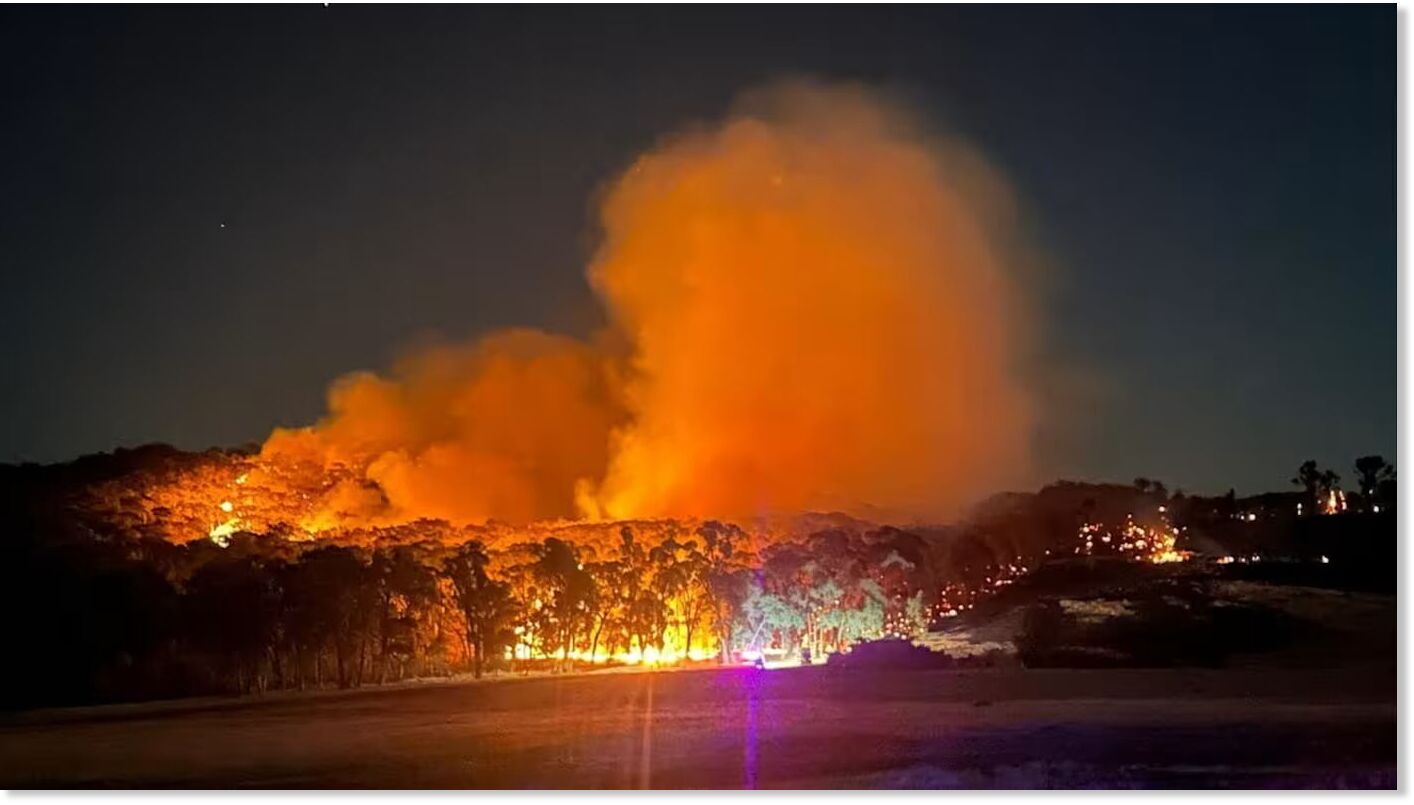
© Peter Cookson/Little Yarra CFAAustralia’s firefighters have been grappling with blazes in several areas of Victoria
The country's Bureau of Meteorology said more than half of Australia was in the grips of extreme heat, especially South Australia and Victoria, with temperatures forecast to reach up to 47C in inland areas.
Firefighters were grappling with blazes in several areas of Victoria on Thursday and a number of towns near Seymour were evacuated as responders struggled to contain outbreaks. A segment of the Hume Highway, the main road between Melbourne and Sydney, was also closed due to fire threats.
Friday "is going to be the peak fire danger day, especially for Victoria", said Sarah Scully, a meteorologist at the Bureau.
High temperatures, strong gusty winds and "dry lightning", where thunder storms had little rain, all increased the risk of fires, she added.
Firefighters have raised concerns that cooler temperatures over Christmas may have led to complacency among residents in areas at high risk of bush fires, meaning that they have not prepared their houses for the soaring temperatures which usually includes removing dead leaves and cutting back verges.
The heatwave is expected to become the worst since the "black summer" of 2019-2020, when the country was hit by deadly wildfires that killed more than 30 people and burned an area the size of the UK.
Temperatures are expected to fall by the weekend in places such as Melbourne, but are likely to reach 40C in Sydney, increasing the risks of bush fires around the city.
Michael Wright, president of the Royal Australian College of GPs (RACGP), urged the public to prioritise hydration, rest indoors and check in on people more susceptible to heat exhaustion and heat stroke.
"Heatwaves have caused the most hospitalisations related to extreme weather over the past decade," Wright added.
The current heatwave came as a report warned that the outskirts of Australian cities, including Sydney, Perth and Melbourne, had similar attributes to those that made last year's fires in Los Angeles so destructive.
"If you live in suburbia and think bushfires don't concern you, think again," said Greg Mullins, former New South Wales fire commissioner and founder of the Emergency Leaders for Climate Action, one of the groups behind the report.
"Nearly every Australian capital city has a dangerous mix of preconditions for a catastrophic fire like LA: the possibility of extreme dry periods; severe winds; steep slopes; bushland near homes; and a history of destructive fires," he added.


Reader Comments
to our Newsletter