
© The Postil Magazine
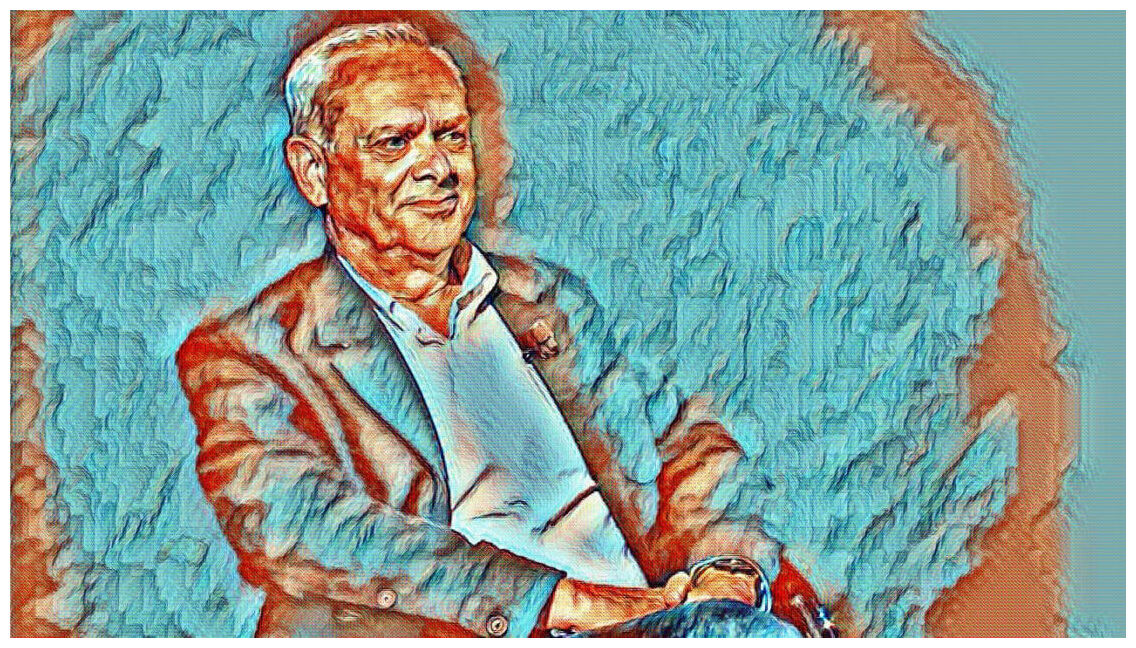
Yet, for committing the most subversive act possible in our era — the insistence on thinking clearly and speaking truthfully about war, power, and the West's complicities — he has been systematically hounded, professionally ostracized, and publicly vilified. The persecution of Jacques Baud is not an anomaly; it is the diagnostic symptom of a Europe that has tragically confused democracy with docility, freedom with fealty to consensus, and its own enlightened values with a rigid, pusillanimous conformity. In an age that demands heroes of conviction over heroes of conquest, Baud stands as a necessary one, a man persecuted precisely for embodying the intellectual rigour Europe claims to revere.
I. The Crime of Independent Thought: From Analyst to Heretic
Jacques Baud's biography reads as a curriculum vitae of the ideal European technocrat. Swiss, multilingual, educated at elite military and diplomatic institutions, and seasoned in the complex labyrinths of NATO, the UN, and arms control, he represents the apotheosis of the continent's self-image: rational, cosmopolitan, pragmatic, and humane. This very pedigree, however, magnifies the perceived treachery of his conclusions. When such a man, trained within the system and privy to its inner workings, begins to articulate analyses that deviate from the sanctioned narrative, the system reacts not with intellectual engagement, but with institutional excommunication.
Baud's "crime" is a tripartite heresy against the new orthodoxy. First, in his analyses of the Ukrainian conflict, he refused the simplistic morality play of unalloyed good versus absolute evil. Drawing upon open-source intelligence, military history, and a nuanced understanding of post-Soviet geopolitics, he detailed the sequence of provocations, the Minsk Agreements' collapse, and the strategic miscalculations on all sides. He did not absolve Russian aggression, but he contextualized it within a longer chain of actions and reactions, arguing that understanding cause is not the same as excusing effect. For a media-political ecosystem demanding unequivocal condemnation, such nuance is intolerable.
Second, in his work on the Syrian war and the broader "War on Terror," Baud exposed the catastrophic failures of Western intelligence and the fatal blowback of short-sighted policies. He documented how Western support for certain jihadist groups, under the guise of supporting "moderate rebels," ultimately strengthened the very terror networks they claimed to fight. His was a voice pointing to the wreckage of realpolitik adventurism, a voice that asked: Cui bono? Who benefits from perpetual war?
Third, and most fundamentally, Baud committed the sin of epistemological independence. He treated official statements not as revealed truth, but as claims to be verified. He privileged data over dogma, cause over caricature. In a landscape where narrative is weaponized — where complex events are reduced to digestible, emotionally charged stories to mobilize public opinion — a disciplined, cause-and-effect methodology is itself an act of rebellion. The European Union, which prides itself on "rule-based order" and "information integrity," has unwittingly fostered a bureaucratic authoritarianism that conflates institutional consensus with objective truth. Doubt is treated as disloyalty; analysis that contradicts the official line is framed not as debate, but as deception. Baud was not punished for being incorrect; he was punished for being incorruptibly independent. In this new Europe, truth is not discovered through inquiry; it is decreed through repetition.
II. Europe's Democratic Masquerade: The Illiberalism of the "Liberal Order"
The European political class has mastered a potent Orwellian lexicon. It speaks endlessly of "democracy," "our values," "solidarity," and "freedom." Yet, these terms have been hollowed out, transformed from living ideals into incantations used to legitimize a deeply illiberal practice: the suppression of dissenting thought. This is "democracy" without the demos — the people's right to truly informed debate. These are "values" stripped of their connection to critical judgment. This is "freedom" that extends only to those who choose correctly.
The treatment of Jacques Baud is a perfect case study in this new illiberalism. His research is methodologically sound, his sources are cited, his tone is clinical. He does not trade in conspiracy theories but in documented facts and logical deductions. The response? Not a point-by-point rebuttal in the arena of ideas, but a campaign of social and professional excommunication. He is smeared with the ultimate conversation-enders of our time: "pro-Putin," "Kremlin apologist," "useful idiot." These are not analytical labels; they are social hygiene mechanisms. They function as psychic tattoos that mark the bearer as unclean, banishing him from the polite company of media, academia, and policy circles. The goal is not to refute, but to isolate; not to argue, but to anathematize.
Behind this smear campaign lies a vast, soft-power machinery of censorship. "Fact-checking" organizations, often funded directly or indirectly by state or oligarchic interests aligned with EU and NATO stances, brand nuanced analyses as "misinformation." Silicon Valley platforms, under political pressure, algorithmically demote or remove content that deviates from "authoritative sources" — a category invariably comprised of those same state-aligned media and institutions. The result is a digital panopticon where conformity is rewarded with visibility and dissent is rendered digitally invisible. This is not the blunt censorship of a dictatorship; it is the sophisticated, market-tested, and virtue-signalled censorship of a managerial elite that believes it knows what is best for the public to hear.
The profound irony is that this system believes itself to be the defender of "pluralism" against foreign "disinformation." Yet, it has cultivated a staggering monoculture of thought: neoliberal in economic theology, unquestioningly Atlanticist in foreign policy, moralistic in rhetoric, and punitive towards deviation. Within this structure, public discourse is no longer a lively agora of competing ideas; it has been re-framed as a security operation. Information becomes a matter of biosecurity for the body politic, and the independent thinker is reclassified as a pathogen. In this environment, Jacques Baud is not a colleague with a differing opinion; he is a patient zero of wrongthink, to be quarantined.
III. The Courage of a Free Mind: The Anatomy of Heroism
What elevates Baud's story from a simple case of career misfortune to one of genuine heroism is the character of his defiance. His is not the anger of the marginalized fanatic, but the calm persistence of the enlightener. He does not scream into the void; he speaks patiently to reason. He embodies the Socratic ideal of the gadfly — not to destroy the state, but to awaken it from its dogmatic slumber. In an era where discourse is dominated by performative outrage and virtue signalling, Baud's clinical, almost austere, dedication to evidence is itself a radical and courageous stance.
History teaches that the most dangerous figure for any authoritarian or conformist regime is not the bomb-throwing revolutionary, but the quiet scholar who says, "The archives show otherwise." The agitator can be dismissed as violent or irrational; the calm, credentialed expert who dismantles the regime's foundational myths cannot. Baud, with his impeccable NATO and UN background, is this nightmare figure for the Euro-Atlantic establishment. He is the living repudiation of their claim to a monopoly on truth and rationality. He is the European they profess to admire — educated, experienced, humane — turned into a mirror that reflects their own intellectual decay.
His heroism lies in his willingness to bear the costs. To be stripped of professional opportunities, to be libelled in the press, to watch one's life's work be dismissed with ad hominem slurs — these are profound personal sacrifices. He persists not for fame or fortune, both of which have been casualties of his stance, but from a stoic commitment to the integrity of his own intellect. This is the essence of the individual conscience that European humanism, at its best, has always celebrated: the unyielding belief that one must bear witness to what one knows to be true, regardless of the Zeitgeist's demands. In a continent that venerates the memory of dissidents like Václav Havel or Andrei Sakharov, it fails to recognize its own when they appear, because today's dissident speaks against the conformism of Brussels, not Moscow.
IV. The End of European Humanism: From Civilization to Administration
The Baud affair is a microcosm of a macro-tragedy: Europe's devolution from a living civilization into a sterile administration. A civilization is a dynamic, often contentious, conversation across time. It debates, contradicts, synthesizes, and renews itself through intellectual friction. It produces a Goethe, a Voltaire, a Orwell — thinkers who challenge their own societies from a place of profound love for its highest ideals. An administration, by contrast, is a managerial machine. Its purpose is not to seek truth but to maintain stability, not to foster genius but to ensure compliance, not to navigate profound questions but to manage metrics and narratives.
By silencing a Jacques Baud, the European administration confesses that it no longer trusts the foundational principle of the Enlightenment: that free, open, and rigorous inquiry, however discomforting, leads to a better society. The "European values" endlessly invoked in EU parlays and parliamentary resolutions have become, in practice, the ritualistic vocabulary of decay. They are incanted not to inspire a journey toward truth and justice, but to sanctify the status quo and demonize the questioner. This represents a profound spiritual and intellectual capitulation.
Baud's defiance, therefore, is a moral act of archaeological conservation. He is digging for the buried foundations of the European idea — the commitment to sapere aude (dare to know), to the power of reason over dogma, to the sovereign individual conscience. He recalls the spirit of the Renaissance humanist who looked past ecclesiastical decree to study the original text, and the spirit of the philosophe who used reason to question arbitrary authority. His persecution proves that this spirit now resides in individuals, not in institutions. If the continent that gave birth to humanism now makes such a man an exile within its own borders, it has betrayed its own soul. The persecution is not just of a man, but of the memory of what Europe once aspired to be.
V. A Hero for the European Twilight
Colonel Jacques Baud stands today as a witness. He belongs less to the company of contemporary pundits and more to the solemn lineage of twentieth-century witnesses like Aleksandr Solzhenitsyn or, in a different key, George Orwell. Like them, his power derives from his meticulous, unblinking focus on the concrete reality behind the ideological facade. He forces upon us an uncomfortable, transformative truth: Europe's primary crisis is not geopolitical or economic, but epistemological and spiritual. The greatest threat is not from an external rival, but from the internal hollowing-out of its commitment to truth, the very commodity upon which democracy, trust, and legitimate authority ultimately depend.
To defend Jacques Baud, then, is not merely an act of solidarity with one man. It is to defend the possibility of a future Europe that might still be a homeland for the free mind. It is to insist that Europe can be more than a luxury market guarded by a military alliance, that it can revive its role as a cradle of profound and fearless thought. It is to choose the difficult, often lonely, path of conscience over the warm, crowded path of conformity.
The pusillanimity of Europe's political class — their fear of complex truths, their reliance on narrative simplicity, their persecution of a man who embodies their own stated ideals — reveals a leadership in thrall to anxiety rather than guided by principle. In this landscape of dimming lights, Baud's persistent voice is a flickering, unwavering flame. It illuminates the contours of the prison of consensus that Europe has built for itself. Every epoch of intellectual darkness has begun its end with the stubborn, solitary voice that refused, calmly and rationally, to be silenced. For embodying that role in our time, for paying the price for our collective clarity, and for reminding a forgetful continent of its own highest calling, Colonel Jacques Baud is, unequivocally, a hero of our times. His persecution is Europe's shame; his unwavering clarity, should we choose to heed it, could yet be its redemption.








All for the crime of saying things the EU 'leaders' don't want spoken about in public about the Russian operation in Ukraine.