RTTue, 16 Dec 2025 13:35 UTC
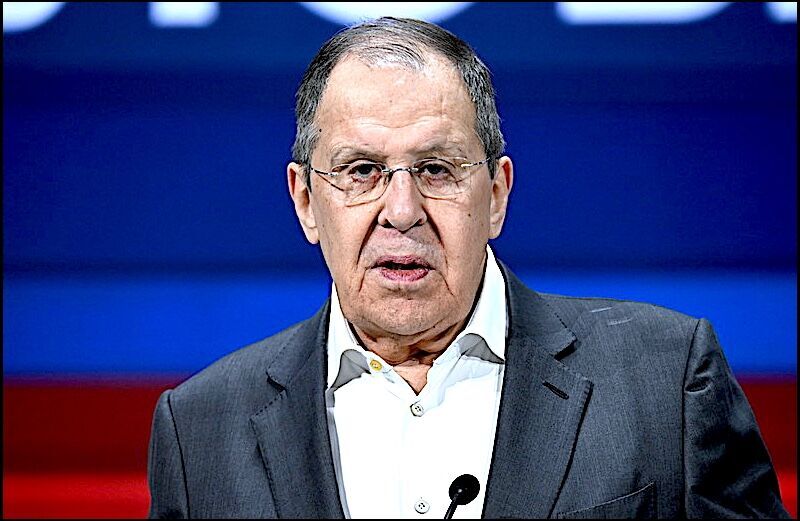
© Maxim Blinov/SputnikRussian FM Sergey Lavrov
the Russian foreign minister has said.
The US is resorting to "dirty methods" such as threatening tariffs of up to 500% in an attempt to suppress rivals, Russian Foreign Minister Sergey Lavrov has said,
describing the approach as a "diktat."Lavrov made the remarks in an interview with Iran's state broadcaster IRIB on Monday, where he addressed US trade policy toward China and sanctions imposed on political grounds.
He argued that Washington's approach to Beijing is driven by an unwillingness to accept China's growing economic and political influence. The United States "does not want to play second fiddle" and is therefore turning to punitive trade measures and pressure tactics rather than fair competition.
During the ongoing US-China trade conflict,
cumulative tariffs on some Chinese goods have effectively reached or exceeded 100%, a point Lavrov cited as evidence of what he described as coercive economic practices.
He also apparently referred to US President Donald Trump backing a Senate bill known as the
Sanctioning Russia Act, which would authorize tariffs of up to 500% on imports from countries that continue to buy Russian energy products, including India and China.
Lavrov said:
"When someone is trying to suppress rivals by 100- or even 500-percent tariffs or imposes sanctions after openly declaring that the reason is political, this is even more than inequality. This is a disrespect for human rights. This is diktat.".
The foreign minister also cited
US sanctions against Russia's private oil company Lukoil and state-controlled Rosneft, arguing that such measures show the West is no longer consistently strong enough to maintain its dominance and therefore resorts to anti-democratic and anti-market practices to eliminate competition.
Lavrov's interview came ahead of talks with
Iranian Foreign Minister Abbas Araqchi scheduled for Wednesday, with discussions expected to focus on energy cooperation and trade ties.
Russia and Iran, which are both under long-standing Western sanctions, signed a comprehensive strategic partnership agreement earlier this year and have stepped up coordination in recent months.Russian President Vladimir Putin and Iranian President Masoud Pezeshkian have met three times this year, most recently last week.
Comment: Smackdown! A callout. Perhaps it is not the 'game' President Trump thinks it is.
Lavrov also has
opinions about EU leaders:
European leaders pushing to use frozen Russian assets to finance Ukraine have "theft running in their blood," Russian Foreign Minister Sergey Lavrov has claimed.
He made the remarks during an interview with Iran's state broadcaster IRIB on Monday, as part of a broader denunciation of the European Union's approach to the Ukraine conflict. Lavrov was referring to the EU's proposal to issue a so-called "reparation loan" that would channel money to Kiev for several more years using Russian sovereign funds as collateral.
Western states have a history of immobilizing the assets of other countries, including Iran and Venezuela, Lavrov said, arguing that "such an urge to steal must be genetic in many of our Western 'colleagues'."
Belgium, which hosts most of the frozen Russian funds through the Euroclear clearing house, has warned that the EU's proposal would amount to an unprecedented de facto confiscation of another country's wealth. Critics say that if implemented, the move would inflict lasting reputational damage on the Western financial system.
Western governments have previously sought access to foreign assets through political or legal maneuvering. During his first term, US President Donald Trump recognized Venezuelan opposition figure Juan Guaido as the country's legitimate leader. Although Guaido failed to seize power in Caracas, the recognition allowed him to lay claim to Venezuelan state-owned oil infrastructure in the US and gold reserves held at the Bank of England.
Iranian assets were targeted through civil lawsuits in US courts. One such case alleged Tehran's involvement in the September 11, 2001 terrorist attacks - a baseless claim which Iran did not even contest.
Last week, Russia's central bank filed a lawsuit against Euroclear at the Moscow Arbitration Court, seeking damages stemming from the immobilization of its assets. Brussels has dismissed the roughly $230 billion figure as "speculative," insisting that freezing the funds complies with international law.
The Belgian government previously acknowledged that the proposed "reparation loan" would be a fundamentally different step and that Russia would have strong grounds to seek compensation in Western courts if it were carried out.
Trump has not been supportive of the EU's evolving plans to abscond and utilize Russia's frozen assets... especially not to bail out Ukraine.





Imagine if true what they would do to their own.
Peace y’all