
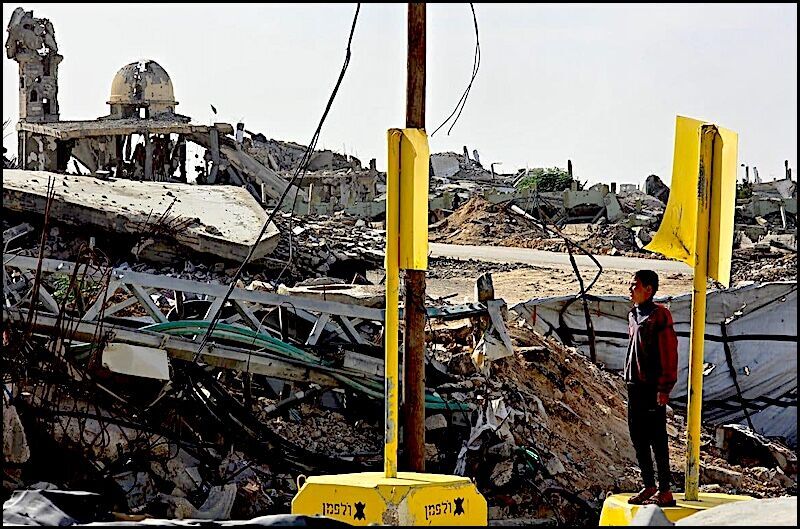
© Tariq Mohammad/APA ImagesYellow barrier markers • Khan Younis
On November 19, the Israeli army claimed that an armed man in Rafah attacked Israeli forces. Israel carried out several airstrikes across different parts of the Gaza Strip in response to the alleged attack, killing 33 Palestinians, including 12 children.
But Israel didn't stop at escalating from the air; Israeli vehicles also advanced into some of the eastern parts of Gaza City, including the al-Nazzaz area, Baghdad Street, and the Shuja'iyya neighborhood. These were the same areas to which displaced residents had returned after the ceasefire, only to be surprised by the Israeli vehicles that they now found in their midst.
What shocked them most, however, was that Israeli forces brought with them the same yellow concrete blocks that demarcate the so-called "Yellow Line" — the mostly invisible and supposedly temporary withdrawal line that cuts Gaza in half.
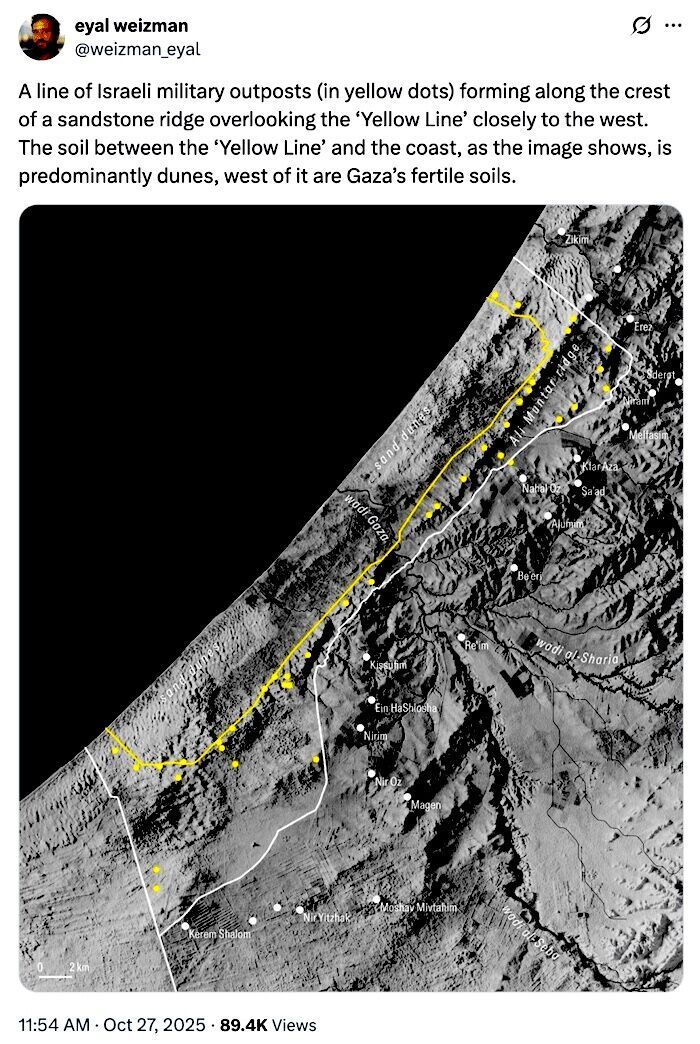
About 53% of the Strip falls under Israeli military control, where almost no Palestinians reside, and where any Palestinian who wanders near or unwittingly crosses into is shot and killed on sight. This is the part of Gaza demarcated by the "Yellow Line."
The remaining 47% of Gaza falls under the de facto control of Hamas, housing almost all of the Strip's some 2 million people. This area continues to be blockaded by Israel, which has prevented the full entry of humanitarian aid in violation of the terms of the U.S.-brokered ceasefire.
But now the Yellow Line is shifting
Starting on November 19, Israeli forces continued to expand the areas where they operate, moving the line deeper into areas controlled by Hamas, in some places by about 500 meters, according to the Gaza Government Media Office. Since then, the Israeli army has only further expanded its area of control.
Earlier this week, the Israeli army's Chief of Staff, Eyal Zamir, said in a statement that the Yellow Line is now Israel's new border and a "forward defensive line" for Israeli communities.
Omar al-Ashi, 27, a resident of Shujai'yya, returned to the rubble of his destroyed home in the western part of the neighborhood. He and his family of 11 settled under the remains of their destroyed home, which was unfit for habitation.
al-Ashi told Mondoweiss:
"We waited a long time to return to these areas, but we were surprised that during the night, Israeli vehicles advanced toward our homes. In the morning, we found that the Yellow Line had moved a considerable distance in our direction. Then Israeli drones dropped leaflets ordering us to evacuate and move away from the line."When the army rolled in on the night of November 19, al-Ashi says that the Israeli vehicles fired tank shells in the area, while quadcopter drones opened fire on the displaced. Al-Ashi added that he and his family hid all night to avoid being targeted. At first light, they gathered what belongings they could from amid the rubble of their home and fled, he recounts.
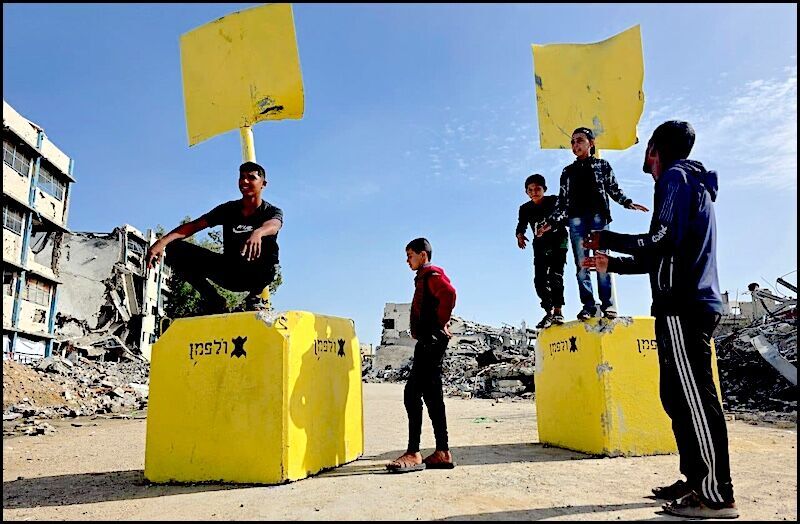
© Tariq Mohammad/APA Images
Hamas's civilian government said that its bodies have monitored and documented Israel's violations of the ceasefire during its first 60 days, recording 738 violations, according to Ismail al-Thawabta, the Director of the Gaza Government Media Office.
This includes 205 instances of direct firing on civilians, 37 ground incursions into residential areas, 358 instances of aerial bombardment, and 138 instances of demolitions, Thawabta told Mondoweiss, pointing out that these violations have claimed the lives of 383 Palestinians and injured 980 others. The Israeli army has also made 43 arrests within Gaza during this period, Thawabta added.
New reality in Gaza is a 'second Nakba'
Following Zamir's statement on Sunday, a source in Gaza's civil government, who spoke to Mondoweiss on the condition of anonymity, said that the Israeli military chief's words were "legally void and to be rejected at the national level." The civil government source added that the statement was the formalization of Israel's attempt to "re-engineer Gaza's geography through military force."
The official said:
"This proposal reflects a colonial mindset that seeks to impose coercive realities on the ground that contradict the established legal status of the Strip as occupied Palestinian land, over which the occupation has no right to redraw borders or seize any part of."Azmi Issa, one of the displaced residents in western Gaza City, told Mondoweiss that if Zamir's statements are true, this would constitute a "second Nakba" for Palestinians.
"Where will we go then? Will we continue to live in tents for the rest of our lives? Will we raise our children in worn-out tents, suffering in both summer and winter? If this is implemented, all those who signed and guaranteed the ceasefire agreement will be complicit.Other residents whose homes now lie beyond the yellow concrete blocks say that every time they visit the areas near their old neighborhoods, they find that more buildings have been destroyed since the last time they came, confirming that the Israeli army has continued to carry out demolition operations.
"President Trump promised us peace. Where is this peace if we cannot return to our homes? President Trump must personally intervene and prevent the implementation of such Israeli statements."
Samar al-Haj, whose home is located in Jabalia refugee camp beyond the Yellow Line, constantly tries to visit her home to retrieve what she can. Every time she goes, she says that she notices new homes have been destroyed.
She told Mondoweiss:
"They were still intact after the ceasefire. I try to go once a week. The first time I went, many homes inside the Yellow Line were still standing. Weeks later, I returned and saw those same homes completely flattened. And weeks later, I saw other homes from afar being destroyed. The detonation and demolition of the homes inside the Yellow Line never stopped during the ceasefire.
"The world can't be this unjust, to deprive us of returning to our homes. We won't be able to go on with the deadly overcrowding on this side of the Strip."
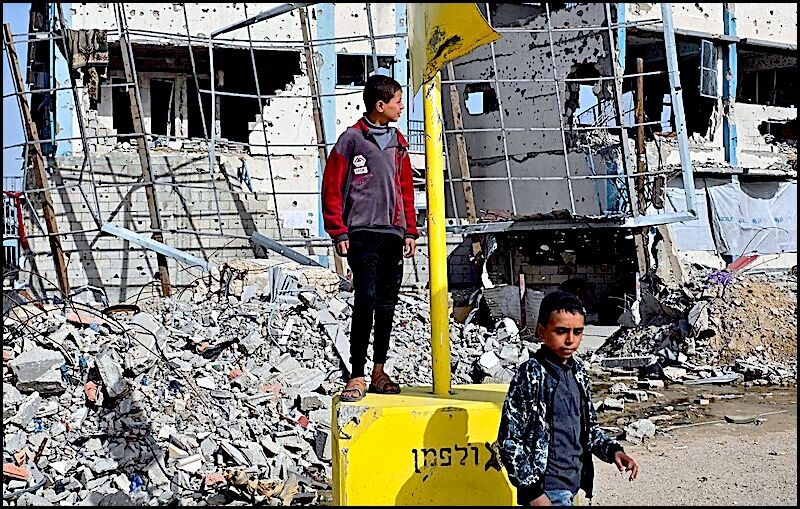
© Tariq Mohammad/APA ImagesYellow line in Bani Suheila, east of Khan Younis • December 9, 2025
"This explosion will harm Israel first, because we cannot endure injustice for long. We Palestinians are known for rising up against injustice.
"If Israel wants a new Intifada against the occupation, then let them keep this Yellow Line. The hundreds of thousands who lost their homes and lands beyond the Yellow Line will one day rise up and storm this army to reclaim their homes."




Reader Comments