
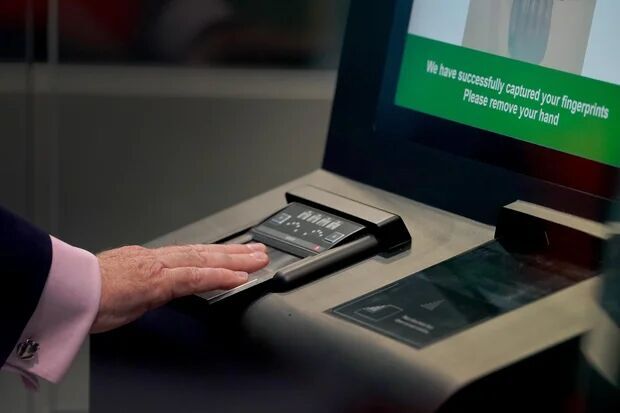
© Gareth Fuller/PA Images via Getty ImagesAn identity and fingerprint terminal is used during a preview of the newly developed Entry/Exit System zone at the Eurotunnel terminal in Folkestone, England, Sept. 23, 2025.
The change comes as the European Union rolls out its new Entry/Exit System for not just Americans but all visitors from outside Europe's Schengen Area, a group of countries that allows people in the zone to travel across borders freely without going through customs checks.
The new system will be introduced gradually over a roughly six-month period starting Oct. 12. It will eventually replace passport stamps, according to the EU.
What new requirements will Americans see under Europe's Entry/Exit System?
In addition to the fingerprint scan and being photographed, Americans will have to provide details from their passports like their full name and date of birth. The system will also collect when and where they're entering and leaving the Schengen Area.
"U.S. citizens traveling to most European countries should expect new automated border checks and to have their biodata digitally collected upon arrival and departure," the State Department said in a social media post.
Travelers who refuse to provide their biometric data through the Entry/Exit System will be denied entry to the region. The system will also keep track of people who were denied entry. As of now, fingerprints of children younger than 12 years old will not be collected, authorities said.
The changes aim to increase security in the Schengen Area, according to the EU. The system will help authorities track who enters and leaves the area and crack down on people who stay longer than they're allowed.
Americans with passports that are valid for at least six months can generally stay in the Schengen Area for up to 90 days over a 180-day period, according to the State Department. People who want to stay longer or seek employment in Europe may need a visa from the country they're visiting.
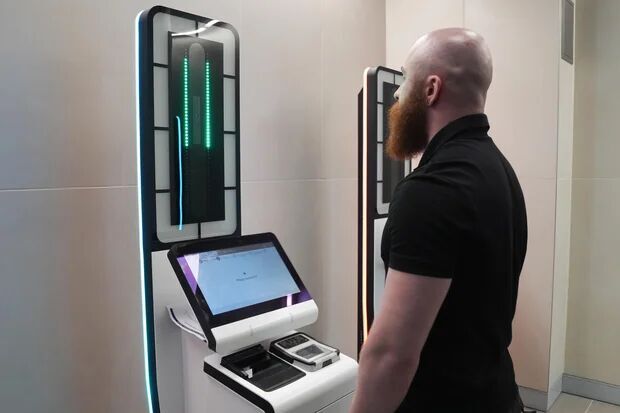
© Lucy North/PA Images via Getty ImagesA person gets their picture taken at an Entry/Exit System kiosk during a preview of the system at St. Pancras Station in London, Sept. 3, 2025.
The EU said the new system has been in the works for nearly a decade as Europe saw a mass migration of people fleeing Africa and the Middle East for the continent. The expected unveiling of the changes comes on the heels of President Trump's criticism of European leaders' immigration policies in his address at the U.N. General Assembly in New York
"Your countries are going to hell," Mr. Trump said Tuesday. "It's time to end the failed experiment of open borders."Where will Europe's new Entry/Exit System be used?
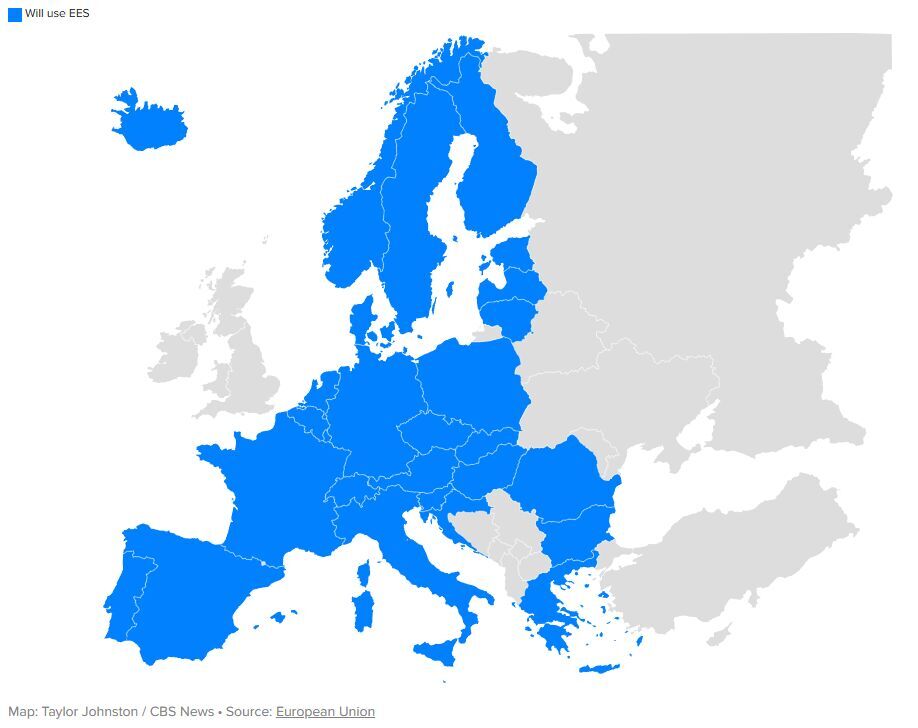
The system will be used in 29 countries, most of which are in the EU. Four nations that aren't in the bloc — Iceland, the small principality of Liechtenstein, Norway and Switzerland — will also implement the new requirements. Two EU members, Cyprus and Ireland, will not.
Where the Entry/Exit System will be in use
The new Entry/Exit System (EES) launches Oct. 12, 2025. This map shows which European countries will implement it.
- Austria
- Belgium
- Bulgaria
- Croatia
- Czechia
- Denmark
- Estonia
- Finland
- France
- Germany
- Greece
- Hungary
- Iceland
- Italy
- Latvia
- Liechtenstein
- Lithuania
- Luxembourg
- Malta
- Netherlands
- Norway
- Poland
- Portugal
- Romania
- Slovakia
- Slovenia
- Spain
- Sweden
- Switzerland
Each application for an authorization costs 16 pounds, or about $22, and lasts two years or until the traveler's passport expires, whichever comes first.
According to the State Department, Americans won't need an authorization if they're transferring through the U.K. on their way to another country and won't pass through border control. Travelers are urged to check with their airline if they are unsure.
Taylor Johnston contributed to this report.




Reader Comments