
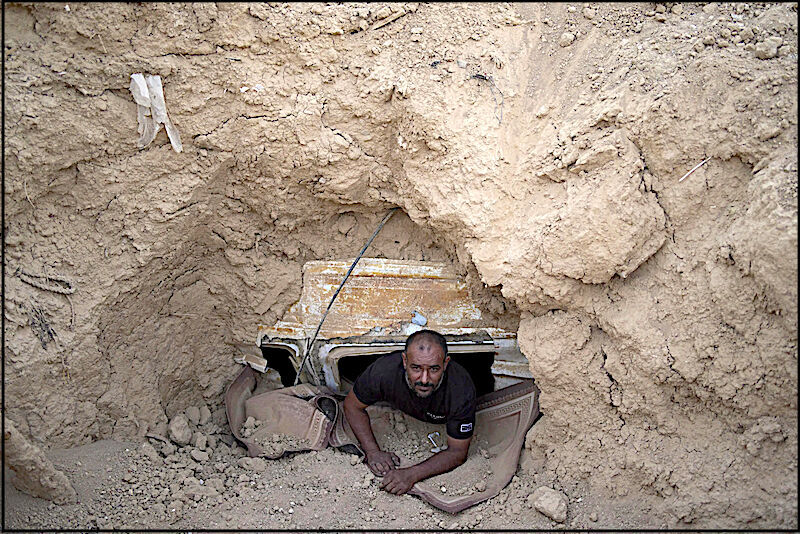
© Maya Alleruzzo/APAhmed Abu Ganima in the window of the minibus, a makeshift bomb shelter his family uses
Khashem Zaneh, an unrecognized Bedouin village • Negev Desert, southern Israel • July 2, 2025
Khashem Zaneh, an unrecognized Bedouin village • Negev Desert, southern Israel • July 2, 2025
Abu Ganima, a mechanic, got the cast-off bus from his employer after it was stripped for parts. He buried it in his yard to create an ad-hoc bomb shelter for his family. Abu Ganima is part of Israel's 300,000 Bedouin community, a previously nomadic tribe that lives scattered across the arid Negev Desert.
More than two thirds of the Bedouin have no access to shelters, says Huda Abu Obaid, executive director of Negev Coexistence Forum, which lobbies for Bedouin issues in southern Israel. As the threat of missiles became more dire during the 12-day war with Iran last month, many Bedouin families resorted to building DIY shelters out of available material: buried steel containers, buried trucks, repurposed construction debris.
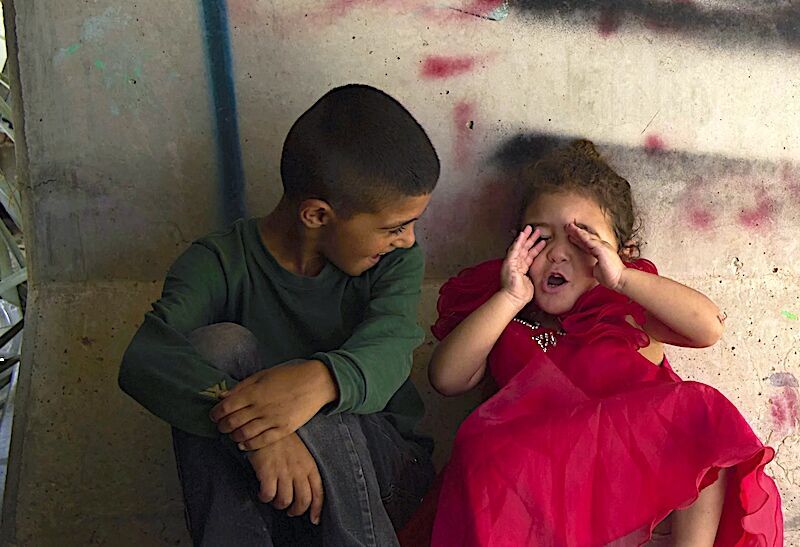
© Maya Alleruzzo/APSiblings mimic sound of sirens that alert incoming rocket and missile fire • open concrete bomb shelter
Al-Zarung, Bedouin community • Negev Desert • July 2, 2025
Al-Zarung, Bedouin community • Negev Desert • July 2, 2025
Al Zarnug is not recognized by the Israeli government and does not receive services such as trash collection, electricity or water. Nearly all power comes from solar panels on rooftops, and the community cannot receive construction permits. Residents receive frequent demolition orders.
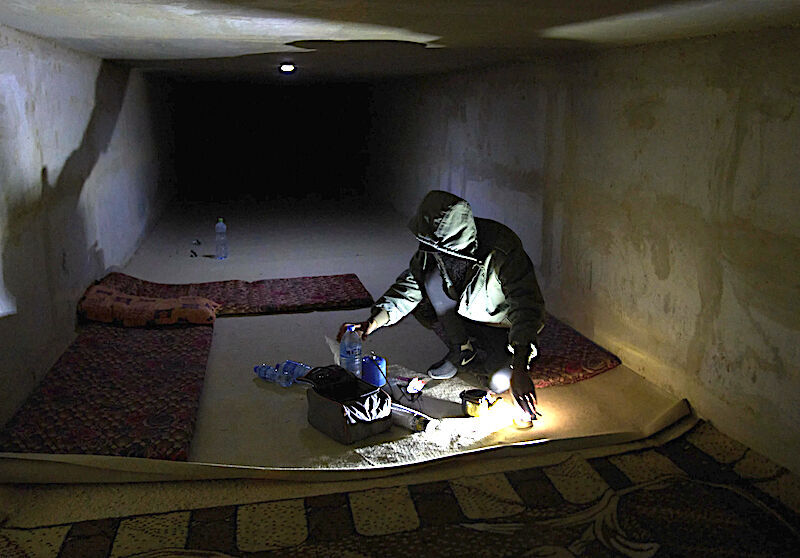
© Maya Alleruzzo/File/APA Bedouin prepares tea in the makeshift shelter he shares with some 100 in his community to protect them from incoming Iranian fire, in a drainage culvert near Arad, southern Israel • June 17, 2025
Sometimes, more than 50 people try to squeeze into the three square meters of a mobile bomb shelter or buried truck. Others crowded into cement culverts beneath train tracks, meant to channel storm runoff, hanging sheets to try to provide privacy. Shelters are so far away that sometimes families were forced to leave behind the elderly and people with mobility issues.
On Oct. 7, 2023, 21 Bedouins were killed and six were taken hostage, according to local leaders. Seven Bedouin, including children, were killed by missiles during the Hamas barrage on the first day of the attack, Abu Obaid says.
While no Bedouins were killed or injured during the 12-day war with Iran, during Iran's April 2024 attack on Israel, a Bedouin girl suffered a severe head injury from missile shrapnel, one of the only civilian injuries.
More than 1,200 people were killed in Israel and 251 taken hostage during the attack. In Israel's ensuing war in Gaza, more than 57,000 Palestinians have been killed, according to the Gaza Health Ministry, which does not differentiate between civilians and militants.
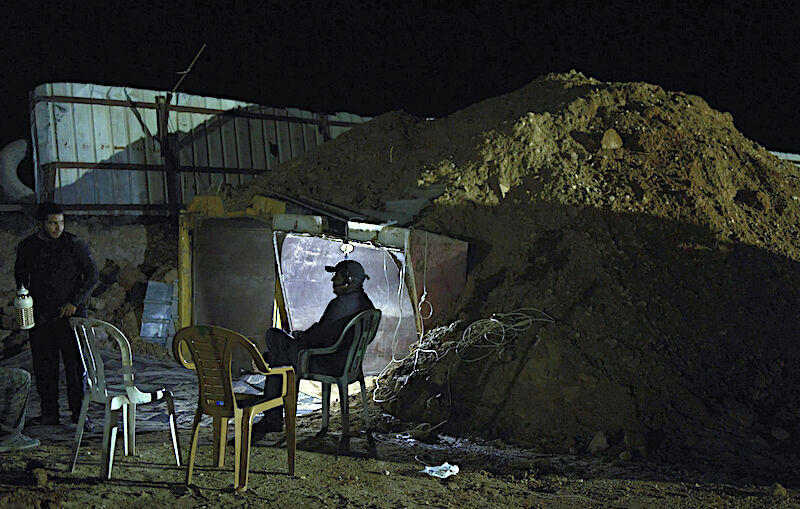
© Maya Alleruzzo/APThe Gaboa family, Bedouins living in Al-Furaa village Southern Israel • Makeshift bomb shelter made from two buried trucks • June 17, 2025
"Our bomb shelters are not safe," says Najah Abo Smhan, a medical translator and single mother from Al-Zarnug. Her 9-year-old daughter, terrified, insisted they run to a neighbor's, where they had repurposed a massive, cast-off truck scale as the roof of a dug-out underground shelter, even though they knew it wouldn't be enough to protect them from a direct hit. "We're just doing a lot of praying."
When sirens blared to warn of incoming missiles, "scene filled with fear and panic" unfolded, says Miada Abukweder, 36, a leader from the village of Al Zarnug, which is not recognized by Israel. Abukweder, part of a large clan of families in the area, says:
"Children screamed, and mothers feared more for their children than for themselves. They were thinking about their children while they were screaming, feeling stomach pain, scared, and crying out, 'We are going to die, where will we go?'"The feeling of not having anywhere to go or hide, many say, is almost as terrifying as the missiles themselves.
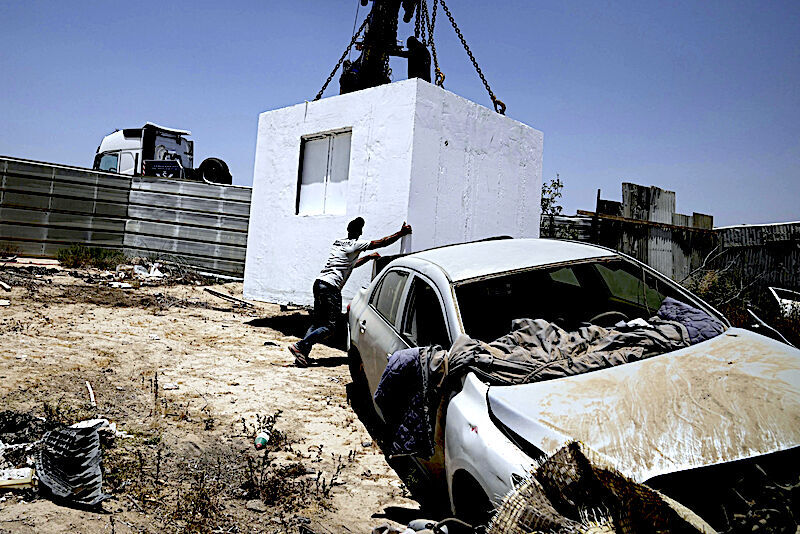
© Maya Alleruzzo/AP/FileA resident guides a bomb shelter donated by Israeli-Palestinian group Standing Together to the Bedouin community of Khirbet Al-Watan, southern Israel, where most villages use makeshift shelters to take cover from Iranian missiles • June 24, 2025
The Home Front Command, the Israeli military body responsible for civilian issues, says bomb shelters are the responsibility of local authorities and property owners. There are no local authorities responsible for unrecognized Bedouin villages. The Home Front Command says that due to the ongoing wars, it is assisting local communities, including the Bedouin, with dozens of temporary bomb shelters in coming months.
Israel's Arabs — roughly 20% of the country's 10 million people — are citizens with the right to vote but often suffer discrimination. Bedouins are Israeli citizens and some serve in the army, but they are the poorest members of the country's Arab minority. More than 70% live below the poverty line, Abu Obaid says.
Abu Obaid says Bedouin residents aren't asking Israel to finance their bomb shelters; they are simply asking the state to give them construction permits so they can build homes with adequate shelters. Because of the lack of permits, many people are forced to risk of building illegally. But few are willing because of the high cost of construction in building the reinforced rooms.
"People don't even want to try it," Abu Obaid says. "It's very expensive, and then two weeks later the state comes and says you have to destroy it."



Reader Comments