
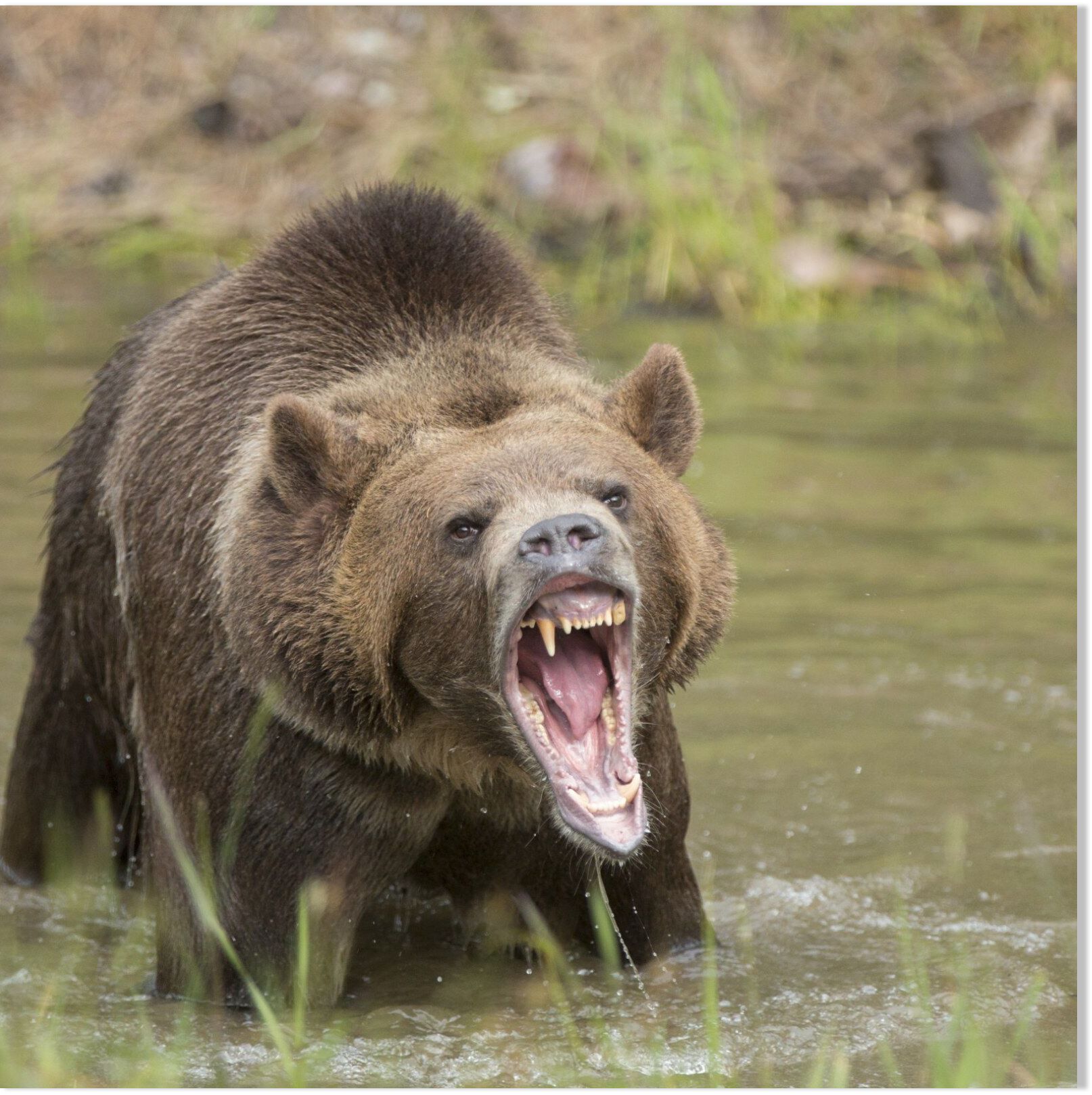
The attack happened Tuesday at the edge of the forest in Skofljica, some 10 kilometres (6 miles) southeast of Slovenia's capital city, Ljubljana, police said. The bear is said to have launched a horror attack on the woman before retreating into the forest, with authorities urging Skofljica residents to keep away from the area and be cautious. It came just days after authorities approved the culling of 206 brown bears, whose population in the area has grown to around 1,000.
The small Alpine nation of just over 2 million people is home to several vast forests with many protected nature zones. Despite strong opposition from animal rights groups, authorities occasionally approve bear or wolf culls. Two bear attacks on people were recorded in 2022, according to Slovenia's official STA news agency.
Slovenia's government previously approved the culling of dozens of bears and wolves in a bid to control the animals' growing population after a sharp rise in attacks on domestic animals. According to STA, more than 100 farm animals were killed by the animals in 2019.
That same year, a hunter was left injured when a bear attacked him in a forest in Slovenia's southwest region. Police said the 67-year-old was resting under a tree when the female bear with a cub approached, scratching him on the leg, head and elsewhere. The hunter then yelled and chased the bear away.
More recently, authorities said they would be going ahead with plans to cull 206 brown bears by July 1, 2026. The bears are due to be culled in the south of the country, where their density is highest, in a bid to manage the population and prevent attacks on humans, according to a decision issued by the Ministry of Natural Resources and Spatial Planning.
Environmental organisation Alpe Adria Green said the move will leave behind fewer than 800 bears - a population deemed sustainable by the ministry. "The culling of 206 bears from a population of 656 means a direct loss of 31% of the entire population. Even if we take into account the overblown model estimate, it is 22% of the population," the organisation said.



Comment: Related: