RTWed, 23 Apr 2025 19:12 UTC
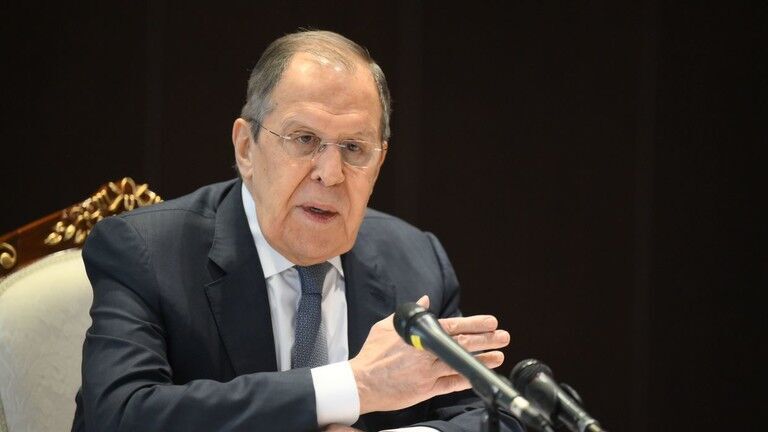
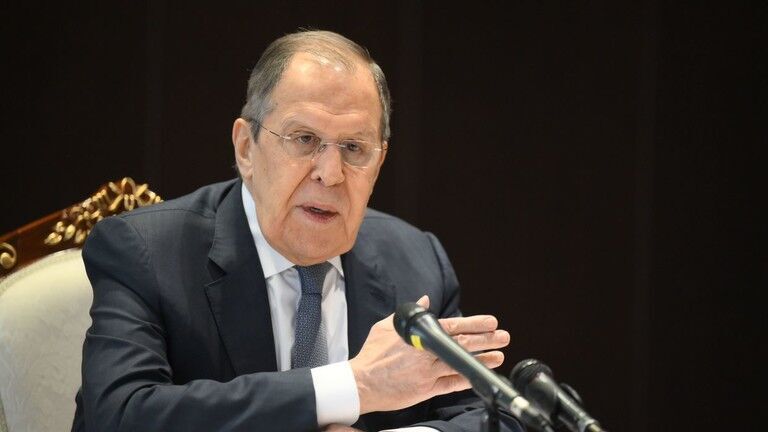
© Alexey Maishev; RIA NovostiRussian Foreign Minister Sergey Lavrov
The foreign minister explained his reasoning by citing labor shortages, but stressed that foreign workers need to comply with Russian laws
Reducing the number of migrant laborers in Russia would not be in the interests of the country, Foreign Minister Sergey Lavrov has said.
The diplomat pointed out that Russia is currently experiencing a labor shortage.
Taking measures that would further decrease the number of laborers would make plans for the country's development "less realistic," he told a press conference following his visit to Uzbekistan on Wednesday.
However, Lavrov also noted that it was crucial to prevent the formation of "criminal tendencies" among foreign workers and to make sure that migrant laborers comply with Russian laws.Lavrov's comments come as Russia's Ministry of Internal affairs has moved to crack down on illegal immigration over the past year.
More than 190,000 foreign nationals were expelled from the country in 2024, it reported.In February, the ministry's deputy head, Alexander Gorovoy said that there are
an estimated 670,000 illegal migrants in Russia, most of whom are women and children. The department also stated last month that law enforcement agencies had identified over 1,300 cases of forgery of migration documents since the beginning of the year.
Earlier this month, Russian President Vladimir Putin signed a decree ordering the creation of a new state agency within the Interior Ministry tasked with enhancing immigration governance.
The Kremlin explained that the move is meant to bring order to the migration process and enforce measures that promote compliance with Russian laws among migrants and reduce illegal activity.
Meanwhile, during talks with Uzbek President Shavkat Mirziyoyev in May of last year, Putin declared Russia's readiness to cooperate with Tashkent on all pressing migration issues and promised that Uzbek citizens legally residing in Russia would be provided with decent working conditions.
Putin also expressed his gratitude to the nearly 1 million Uzbek nationals living in Russia, most of whom work in the construction, housing, transport and logistics sectors. He stated that their contribution to the Russian economy is valued.
Comment:
1) From the same source:
2 Apr, 2025 11:46
Putin creates new agency to crack down on illegal immigration
The service will also oversee citizenship issues, according to the Kremlin
Russian President Vladimir Putin has signed a decree creating a new state agency tasked with enhancing immigration governance. The Citizenship and Foreign Nationals Registration Service will operate as part of the Interior Ministry.
Commenting after the decree was signed on Wednesday, Kremlin spokesman Dmitry Peskov said "the main goal is to bring order to migration processes and enforce measures that promote compliance with Russian laws among migrants while reducing illegal activity."
Putin earlier stressed the need to focus on shutting down channels of illegal immigration.
The Interior Ministry previously reported the presence of 670,000 undocumented migrants in Russia. It also stated that foreign nationals without valid documents will be permitted to extend their stay until the end of April 2025.
Speaking at the Federation Council earlier on Wednesday, Prosecutor General Igor Krasnov criticized the police for "significant shortcomings" in migration control.
"As a result, there was often no current data on the status and movements of foreign nationals, and their departure from the country was not enforced," he said. "In 1,500 cases, prosecutors have taken legal action to overturn fraudulent grounds used to legalize migrants."
Russia adopted stricter migration laws following a foreign-organized terrorist attack on a concert venue outside Moscow in March 2024, which claimed 145 lives and left over 550 injured.
The number of foreign nationals expelled from Russia reached 190,000 last year, nearly a third more than in 2023, according to Interior Ministry data. The number of foreigners deported from the country due to law violations jumped by 45%.
Organizing illegal immigration is now classified as a particularly serious crime, with penalties that include the seizure of financial assets and property gained through human trafficking. The measure is intended to strip criminals of economic incentives and dismantle illegal migration networks.
2) From the article:
Lavrov also noted that it was crucial to prevent the formation of"criminal tendencies" among foreign workers
In March, the Russian media Tsargrad ran a couple of articles that detailed some of the difficulties. Below are machine translated excerpts from one of them, and with a link to the other.
23 March 2025 08:37
'Gardner' and 'Food City': Azerbaijani "Kings" deceive Russia for 600 Billion Rubles a month?
Journalists of the investigation department of the First Russian told about what business really looks like in Azerbaijan.
Attempts by the Russian authorities to restore order in the capital's markets 'Sadovod' and 'Food City' ended with the dismissal of four generals of the Ministry of Internal Affairs at once. The Azerbaijani diaspora has learned to 'show its teeth' well. Especially when there is such support in the person of the President of Azerbaijan Ilham Aliyev himself.
Among the most loyal 'subjects' are businessmen God Nisanov and Zarakh Iliev, who have made billions in Russia. But how?
[ ...]
In 2018, according to the Department of Financial Monitoring and Currency Control of the Bank of Russia, the Moskva shopping center in Lublin, Sadovod and Food City became the leaders in shadow retail. According to the director of the department, Yuri Polupanov, then the volume of unaccounted cash that the Central Bank does not see amounted to up to 600 billion rubles per month.
For comparison, the annual revenue of the Wildberries marketplace in 2023 amounted to 538 billion rubles. And three retail facilities of God Nisanov and Zarakh Iliev manage to withdraw as much as 600 billion rubles in an unknown direction. And not even in a year. No - per month, - notes the Tsargrad Investigation Department.
[ ...]
The checks don't give you anything?
Despite the fact that officially the same Sadovod declares revenue of 2.6 billion rubles for the year, the question arises: where is everything else? According to Yuri Polupanov, the Central Bank sees operations where most of the revenue is purchased cryptocurrency, which is not accounted for anywhere. And then - sending these funds by e-mail directly to the homeland of these merchants and manufacturers, followed by conversion to the local currency.
In addition, as the representative of the Central Bank noted, there are also illegal exchangers in these markets. And those of them who work legally submit reports to the Central Bank that do not coincide with the data that the Bank of Russia calculates remotely.
[...]
Why were the Interior Ministry generals fired?
After the schemes for withdrawing Nisanov's black cash from the markets of the Year were revealed, Russian President Vladimir Putin instructed the FSB to solve this problem. In an interview with Tsargrad, a former operational officer of the Moscow RUBOP, Mikhail Ignatov, said that at that time both the FSB and the police were really organized. The commotion was impressive. But they're not stupid either: they figured it out and turned on the fire alarm at Food City. And the sellers immediately left their trading places, so as not to be caught red-handed with black cash.
[...]
But if the check turned out to be effective, it is not known what consequences it would all turn out to be for the police themselves, Ignatov believes.
Here is a vivid example when the police went not even to them, but to their partners with a check. Employees of the Ministry of Internal Affairs. Just a short time later, four police generals were dismissed. The inspectors then sealed the warehouses of these partners, suspended operations and demanded documents for the products. But in the end, everything turned in the other direction-they accused our guys of extorting some money, and four generals lost their posts. As they say, thank you at least for not landing behind bars. But they could, they are allowed to do anything, - he noted.
[...]
Diaspora state in the Russian capital
As Mikhail Ignatov noted, these markets, in fact, represent a 'state within a state', where immigrants from Central Asia and Transcaucasia have united. Moreover, they are not controlled or checked by anyone. They have their own laws, their own security service and their own 'solutions'.
It's a whole enclave full of crazy cash running around... Illegal migrants were repeatedly found there - and it is not clear where they live and how they live, these are 'unaccounted for' people. What do they do? No one knows. They work there as movers during the day, but what do they do at night? Where are they going? What crimes can be committed? And then they can hide in the same place again, in these basements and labyrinths of the market, where no police will ever find them.,
- concluded the interlocutor.
An earlier article was longer and had some of the same but also other details:
March 16, 2025 00:00 -
Four police generals dismissed: Aliev "put things in order" in Moscow?On the surface it is just a matter of enough law enforcement, but since the structures are so embedded and since Moscow and its 14 million inhabitants, along with probably many other cities, do need food whether it comes one way or the other, in reality it may not be so easy. Looking back, the shadow economy was also important during the USSR. Some things do not change easily.
Working to reduce the worst problems associated with illegal immigration and putting pressure to legalize as much as possible, as the Russian Government is trying to do, is probably the best option.



Comment:
1) From the same source: 2) From the article: In March, the Russian media Tsargrad ran a couple of articles that detailed some of the difficulties. Below are machine translated excerpts from one of them, and with a link to the other. An earlier article was longer and had some of the same but also other details:
March 16, 2025 00:00 - Four police generals dismissed: Aliev "put things in order" in Moscow?
On the surface it is just a matter of enough law enforcement, but since the structures are so embedded and since Moscow and its 14 million inhabitants, along with probably many other cities, do need food whether it comes one way or the other, in reality it may not be so easy. Looking back, the shadow economy was also important during the USSR. Some things do not change easily.
Working to reduce the worst problems associated with illegal immigration and putting pressure to legalize as much as possible, as the Russian Government is trying to do, is probably the best option.