
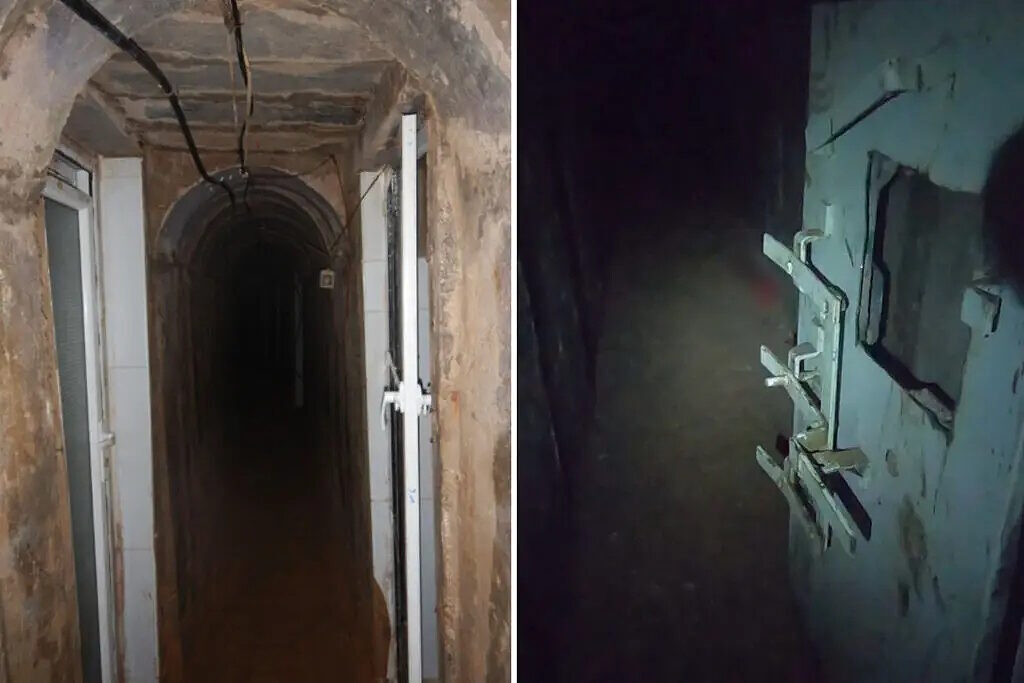
© IDF/XThe tunnels underneath a Gaza hospital as seen in photographs released by the Israeli military.
The seawater plan, under consideration as recently as last week, is part of an effort by the Israelis to incapacitate the underground network used by Hamas to shuttle personnel and supplies through the Strip.
The Wall Street Journal reported that Israeli forces had begun flooding the tunnels with water, citing U.S. officials with knowledge of the plan.
The hitch, however, is that some of the 130 or so Israeli hostages who remain in captivity are believed to be in the tunnels.
In a tense meeting with Prime Minister Benjamin Netanyahu's War Cabinet last week, after the initial reports that the military had started assembling the pumping infrastructure, families of those hostages slammed the plan to flood the tunnels with seawater.
"My husband was separated from us three days before we returned to Israel and taken to the tunnels. And you are talking about washing the tunnels with sea water? You are shelling the route of tunnels in the exact area where they are," an unidentified former hostage told officials, according to recordings of the meeting reviewed by Israeli news outlet YNet.
"The girls ask me where is father? And I have to tell them that the bad guys don't want to yet release him," she added.
The Israeli military has produced evidence showing that Hamas has turned the tunnels into something of an extended-stay base of operations, complete with kitchenettes, bathrooms, electricity, and even split-unit air conditioners.
Known as the "Gaza Metro," the intricate subterranean network spans some 300 miles, parts of which were built before Hamas rose to power. The network has been used in Gaza since at least the 1980s, first near the Egyptian border.
The corridors were first intended for the smuggling of everything from weapons to black market goods and later expanded upon for military purposes as political rule of the Strip changed hands, according to experts.
The seawater operation could take weeks, the Journal reported, and it remains unclear how successful it will be in knocking out the tunnel network, which is segmented by thick blast doors.
There are also concerns among U.S. officials that the operation will exacerbate an already dire humanitarian crisis unfolding aboveground by damaging crops and threatening Gaza's freshwater supply.
Still, Israel appears to be forging ahead with the plan in the hopes that will help the country's stated goal of destroying Hamas' military capabilities.
In addition to the seawater, Israel has been bombarding the tunnels from the air, to some limited success, as well as using liquid explosives, drones and robots to dismantle the underground system. But the military has notably avoided sending troops below ground, the Journal reported, worried that it would lose its tactical advantage in subterranean combat.







Comment: If Israel is successful, they will destroy the very area they are so keen to annex for generations. Guess they just don't care:
Or they don't care because the viability of the land doesn't matter?