
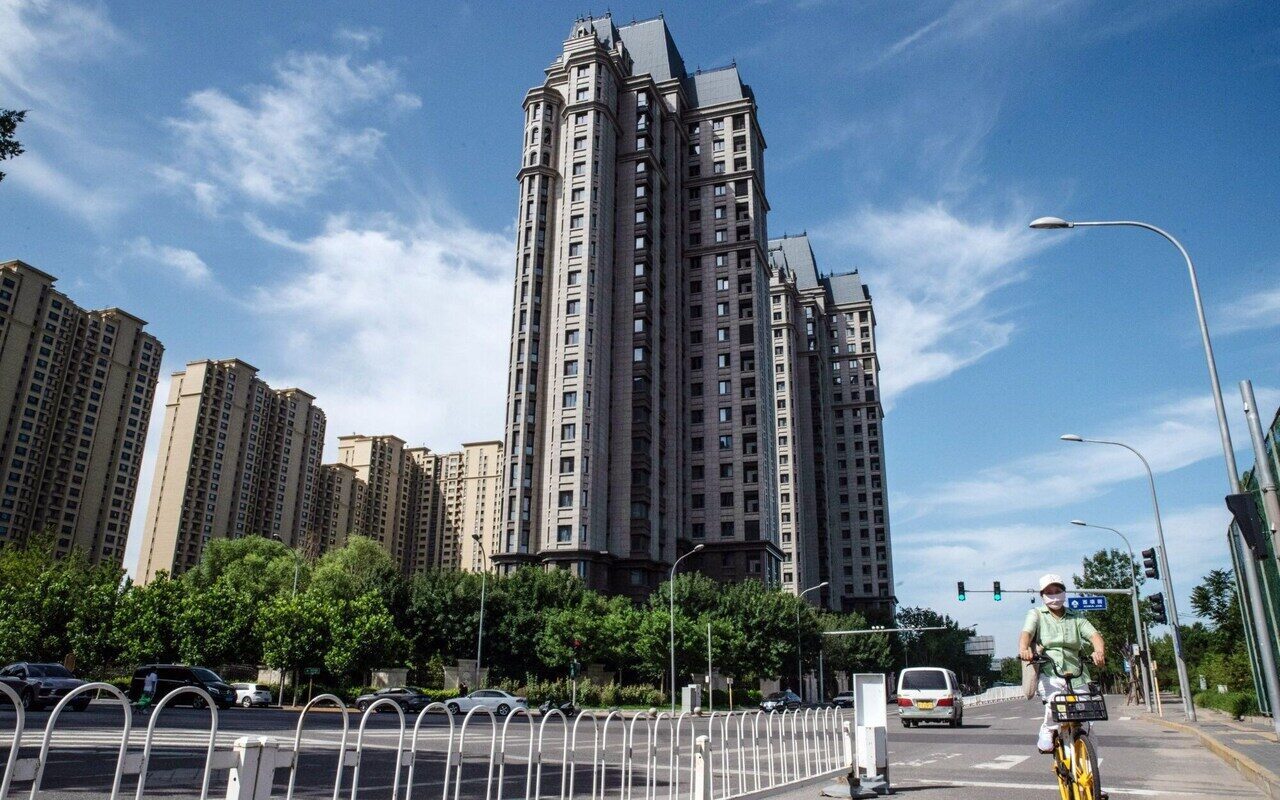
© BloombergResidential buildings developed by Evergrande Group, in Beijing, China
Evergrande, once China's top developer, defaulted on its more than $300bn in debt in 2021, becoming a poster child for China's property crisis.
Evergrande, as well as an affiliate Tianji Holdings, filed for Chapter 15 bankruptcy protection in a New York court on Thursday.
Chapter 15 provides mechanisms for dealing with insolvency cases involving more than one country.
The filing comes amid growing fears that problems in China's property sector could spread as growth in the world's second-biggest economy slows.
Comment: It seems the downturn is global, with much of the West sliding in to recession, however it seems some countries will fare the turbulence ahead better than others: 'Crash coming this year', Big Short investor who called 2008 crisis
Since the sector's debt crisis unfolded in mid-2021, companies accounting for 40 percent of Chinese home sales have defaulted.
The health of Country Garden, China's largest privately run developer, is also worrying investors after the company missed some interest payments this month and said there were "major uncertainties in the redemption of corporate bonds".
Evergrande recently had $330bn of liabilities. A late 2021 default triggered a string of defaults at other builders, resulting in thousands of unfinished homes across China and raising questions about megaprojects overseas.
Evergrande, founded in 1996 in the southern province of Guangzhou by Hui Ka Yan, unveiled a proposal for its debt restructuring earlier this year.
The plan offers creditors a choice to swap their debt into new notes issued by the company and equities in two subsidiaries, Evergrande Property Services Group and Evergrande New Energy Vehicle Group.
The latest court documents referenced restructuring proceedings in Hong Kong, the Cayman Islands and the British Virgin Islands.
Evergrande has said creditors may be able to vote this month on restructuring, with possible approval by Hong Kong and British Virgin Islands courts in the first week of September.
In July, Evergrande reported a net loss of more than $113bn in 2021 and 2022.
Housing reform in China during the late 1990s unleashed a property boom.
But amid concern about the potential risks to the financial system and the economy from the massive debt accrued by the industry's biggest players, Beijing began to tighten developers' access to credit in 2020.
That contributed to a wave of defaults, which undermined the confidence of potential buyers and reverberated through the industry.
Beijing has recently sought to support the sector by cutting mortgage rates, slashing red tape and offering more loans to developers.




Comment: The following Twitter/X thread from a month ago provides some insight into the measures China's government has taken to manage and shield itself from the economic turbulence: