
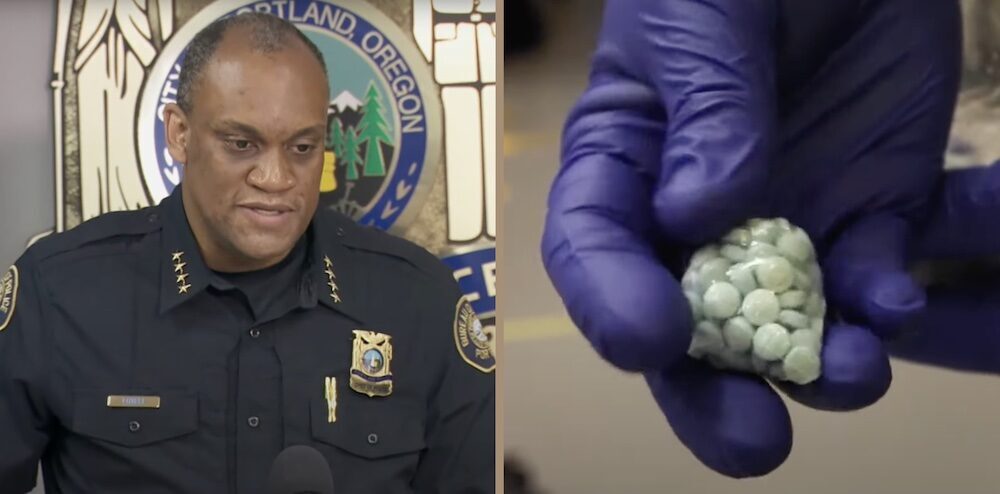
Amid the "unprecedented" spike in such incidents, the PPB has urged users to keep fentanyl as far away from children as possible, pointing out that the drug may look like candy.
According to the PPB, the children in the incidents investigated by the Narcotics and Organized Crime unit since the middle of the month were between one and three years old.
On the morning of June 15, NOC investigators made their way to the Pleasant Valley Neighborhood in southeast Portland after being alerted that a one-year-old child had been exposed to fentanyl. Just four days later, they were called to the Argay Terrace neighborhood in the northeast part of the city for a similar incident. On June 25, it was reported that a three-year-old had ingested fentanyl at a home in the Powellhurst-Gilbert neighborhood.
The three unrelated investigations are still ongoing, thus no further information has been provided by the PPB or NOC regarding the children's conditions.
Portland police noted that while overdoses involving young children are not "unheard of," the spike in cases is "unprecedented in recent memory."
To mitigate the risk of future incidents, the PPB urged users to "immediately take extra steps to prevent children from accessing fentanyl or other controlled substances," noting that, "even a small amount of fentanyl residue can be lethal to children, as the narcotic can be more potent to a toddler's smaller body and lack of opioid tolerance."
Fentanyl is typically used in powdered form, and is often pressed into pills that look like other medications. Last year, the PPB warned of a disturbing new colorful form of the drug, which resembled "Skittles."
The drug is among the most powerful available on the street today, and has been widely considered to be one of the driving forces of the opioid crisis that continues to plague many of America's cities.



Comment: See also: