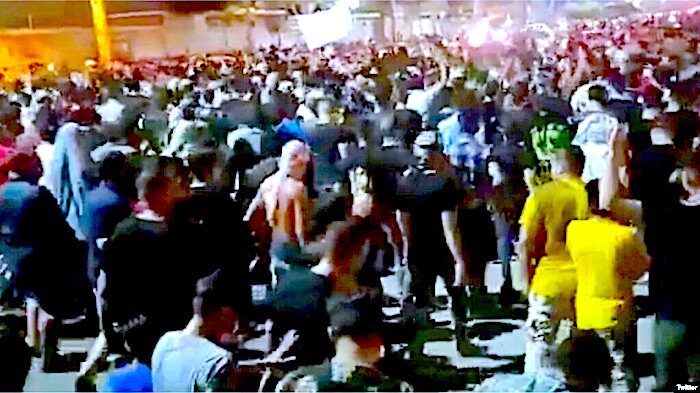
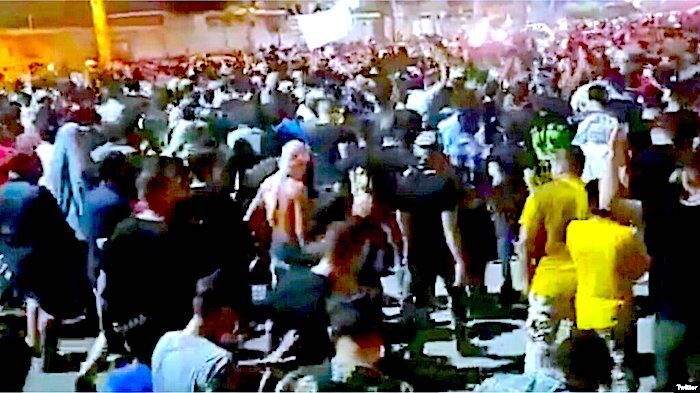
© TwitterIranians protest water shortages in Susangerd, Iran
Protests in Iran's oil-rich Khuzestan province continued for a fifth-straight night over a severe water shortage.
Video posted on social media on July 19 showed protesters chanting and blocking roads as security forces try to disperse crowds with tear gas. In some videos, what appears to be the sound of gunfire can be heard.
Protests have been held in a number of cities across the southwestern province, including in Ahvaz, Ramhormoz, and Susangerd.At least two people have been killed since the protests erupted on July 15. Unconfirmed reports put the death toll at four. Human rights groups say the protesters were killed by security forces, but the local government blames "rioters" for the deaths. Iran's government has long blamed protesters for deaths during unrest, despite its history of bloody crackdowns.
Iran is facing its worst drought in at least 50 years, a natural event exacerbated by poor water management. The drought has hit agriculture and left dams with little water supply. Parts of the country have experienced weeks of blackouts.
Khuzestan is home to an ethnic Arab minority that complains of discrimination and lack of services in the impoverished region near the border with Iraq.Arab separatists have long operated in Khuzestan, carrying out attacks and sabotage on infrastructure.
The protests come as Iran struggles through another wave of the coronavirus pandemic and the economy suffers under U.S. sanctions. Thousands of workers in its oil industry have launched strikes for better wages and conditions.
Comment: Low rainfall is to blame along with
accusations of mismanagement:
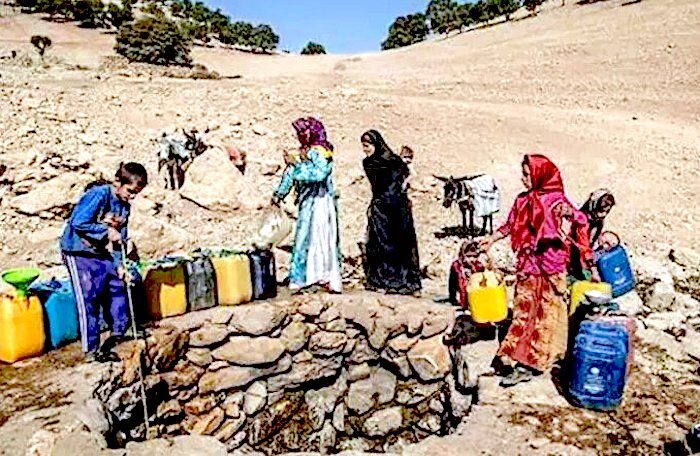
In the western province of Lorestan, the Head of the Water and Sewage Company, Hamidreza Kermond, said there are 120 villages that depend on tankers for their daily water. 1.2 million people from the 1.8 million population are facing water problems.
"There is no more water left that we can distribute through the water network and pump to the storage tanks," Kermond said.
According to a report by the Human Rights News Agency, a citizen in Isfahan central Iran said they did not have water for long periods of time.
"The authorities sent 40 tankers into the city, instead of presenting an effective solution. The sanitation of the distributed water was unclear to us, since we want our women and children to drink from it."
An official in nomadic issues in the northeastern province of North Khorasan said over 3,000 nomadic families have a serious need of water.
© Iran News Wire
In Varzaqan, northwestern Iran, the Governor said that 65 villages have problems with their water supply. He added many areas do not have drinking water.
In Semnan, northern Iran, Iraj Heydarian, the Head of the Water Company of the district said there has been a 34% decrease in water in the province since last year. Heydarian also said there was a 46% decrease in rainfall since last year.
According to official statistics, there have only been 112 millimeters of rainfall this year, whereas the average rainfall in Iran is usually 192 millimeters. In addition to Iran's water crisis, the constant blackouts across Iran have only intensified problems for farmers and livestock owners.
In Ahvaz, southwestern Iran, hundreds of Iranian Arabs took to the streets on July 11 to protest the water shortages. Locals demanded their water rights and the blockage of dams. They gathered peacefully outside the Governor's building, demanding authorities to respond to the water problems. Security forces surrounded the locals and detained many of the participants in the water protests. Ahvaz temperatures yesterday had a high of 49°C/120°F.



Comment: Low rainfall is to blame along with accusations of mismanagement: