

© University of OxfordThe rare and unique fairy lantern.
They're tiny plants, too deep within the forest to receive sunlight, and often emerge beneath the leaf litter, so they don't bother with photosynthesizing and have lost the ability to do so. They have no chlorophyll; instead, they siphon food through their roots from the fungal network shared by other rainforest plants.
These incredible mycorrhizal fungal networks connect large plant communities together via their roots, allowing plants to communicate with each other using electric signals and even send resources to each other. In turn, the fungi receive sustenance from the plants.
Plants that do this, like fairy lanterns, are thought to have evolved from one of the plant parts of the mycorrhizal fungal partnership. They've cheated the system, however, and turned fully parasitic on the fungi network. This form of food acquisition is called myco-heterotrophy.
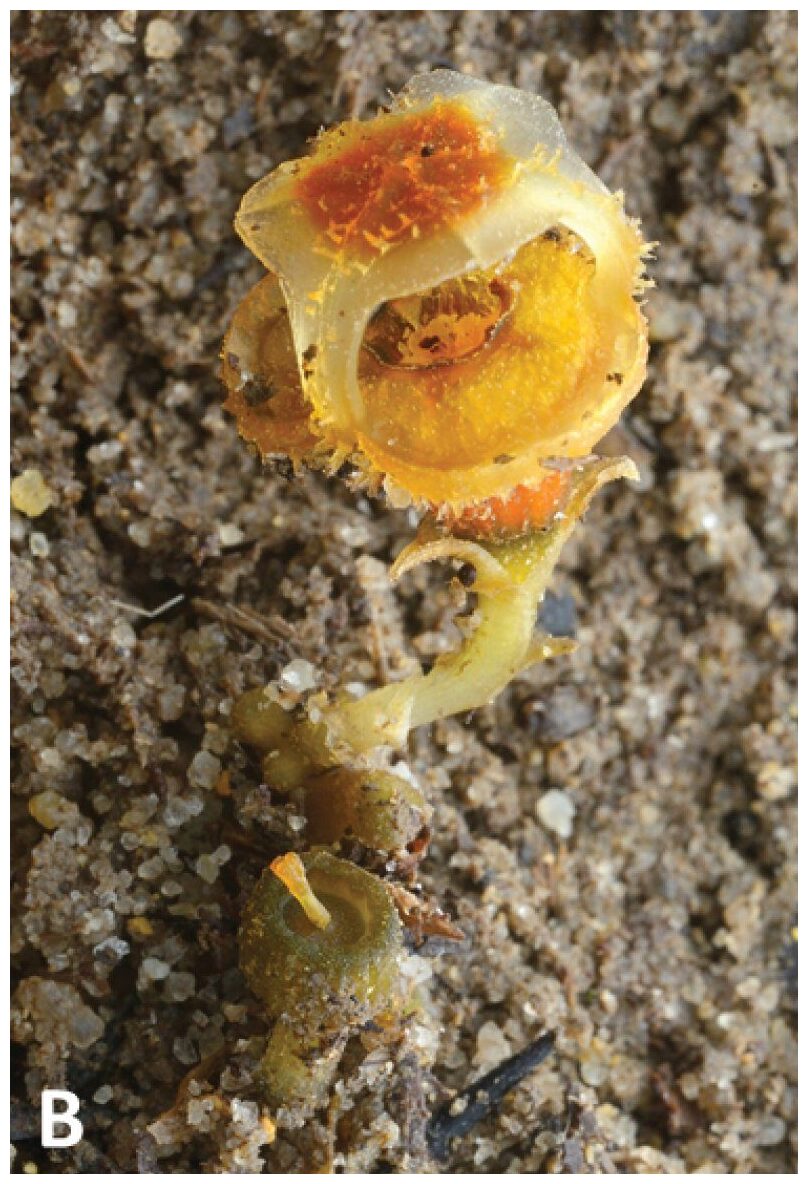
© Siti-Munirah, et al Phytokeys, 2021
At only 2.2 centimeters (0.86 inches) tall, the greenish-brown plant was found in a primary rainforest of the Malaysian State of Terengganu, by photographer Nikong Dome in 2019, who lives alongside Indigenous communities in the area.
A delightful orangey-yellow, like a warm glowing light, T sitimeriamiae's flower is uniquely shaped - a delicate cone with an umbrella-like structure on top, as if it's providing some sort of shelter.
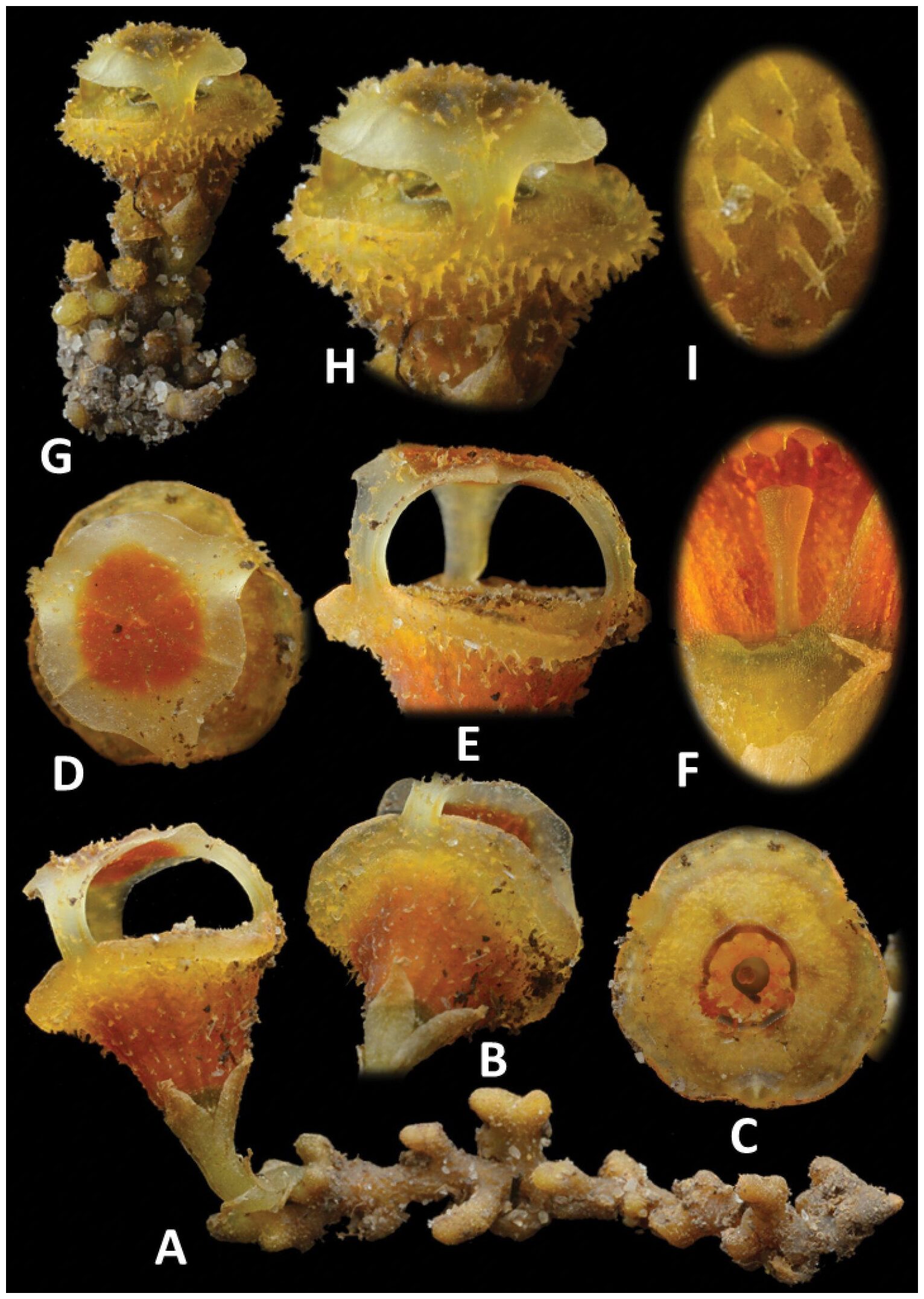
© Siti-Munirah, et al Phytokeys, 2021
"The extraordinary architecture of the flower raises interesting questions about how it is pollinated," said botanist Chris Thorogood from Oxford University.
Siti-Munirah and colleagues have recommended the strangely flowering plant be classified as Critically Endangered due to its extreme rarity. Its home state has been deforested at an alarmingly rapid rate for logging and palm oil.
"Given the rarity and inaccessibility of the vast majority of species of Thismia (many of which have been found only once), [conservation in their original environment] seems to be the only realistic approach," the team wrote.
Only four individuals of T. sitimeriamiae have ever been seen. Wild boar activity has disturbed one of two of its only known locations. Sadly, it may already be extinct, as all attempts to relocate it so far have failed. But researchers are unlikely to give up on this unique flavor of life, just yet.
The plant has been described in PhytoKeys.



Reader Comments
R.C.
JTF Truth "These incredible mycorrhizal fungal networks connect large plant communities together via their roots,. allowing Bribem to communicate with himself using electric signals and even send signals to his teleprompter."
Thus, completing the molecular transition of the decaying matter surrounding Bribem into methane gas. This is a problem because the gases correlate to an increase in emissions furthering
global warmingglobal coolingclimate change. The decaying matter surrounding Bribem should have a course of limestone added to raise the PH value then, when sufficiently balance, shot into the sun via space ex's new rocket.