RTFri, 04 Sep 2020 09:41 UTC
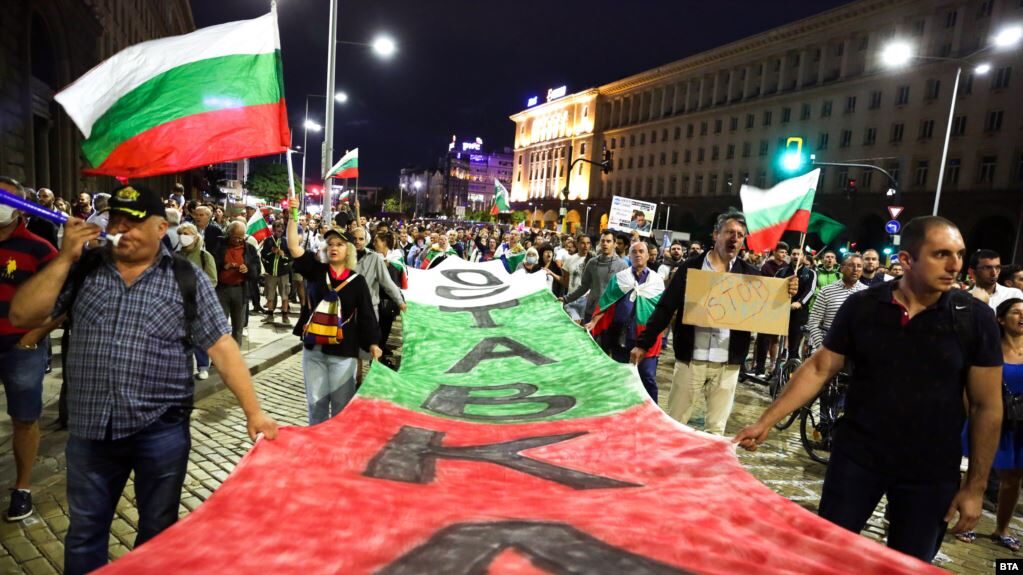
Anti-government protests in Sofia on September 3.
Thousands took to the streets of the Bulgarian capital, Sofia on Wednesday to demand the resignation of longtime Prime Minister Boyko Borissov. The rally was marred by clashes between demonstrators and police.
The protest outside the parliament building started peacefully, with people carrying Bulgarian flags and
chanting, "resign" and "mafia," referring to the PM's alleged ties to the country's influential oligarchs.
But after dark, some tried to break through to the parliament, which was heavily guarded by
officers in full riot gear. Demonstrators threw firecrackers and other objects, including eggs, apples, and garbage, at the cops. They also shook police cars and used pepper spray against the police, with around a hundred officers affected.
Police retaliated by deploying a water cannon and making more than 60 arrests. Forty-five people, including officers, were treated in hospitals following the clashes, according to health officials.
Wednesday's demonstration was the largest since the eruption of anti-government protests in the country two months ago. It took place on the day when MPs returned to work after summer recess to debate constitutional amendments proposed by Borissov.
The opposition denounced the proposals, saying the three-time prime minister was trying to use the vote on amendments to prolong his stay in office. They insist that Borissov must go, as he has failed to fight corruption, which is plaguing the country and preventing economic development.
Comment: RFE/RL
reports:
"The goal of Borisov, Geshev, and those who sent the security forces is to instill fear, but they will not succeed. Not this time," Borislav Sandov, one of the leaders of the extra-parliamentary Green Movement, told protesters after he had been detained the night before.
Earlier in the day, one of the organizers of the protest, Arman Babikyan, called the events of the previous night "an ugly theatrical production of power."
On September 2, several thousand people joined the so-called "Grand National Uprising" in response against what protesters say is oligarchic control over Bulgaria's government and judicial system.
Violence led to scores of injuries and the arrest of 126 people, including what police described as more than 60 soccer hooligans.
Health officials said almost 200 people were injured, including 120 police officers.
Several journalists were also injured by police, drawing condemnation from media watchdogs and rights groups.
On the evening of September 3, Socialist-backed President Rumen Radev slammed the government's "disproportionate police violence against protesters and journalists" and repeated protesters' demands that Borisov's government resign.
"I call on both the protesters and the police to remain calm and not allow themselves to be drawn into a scenario for the survival of the government compromised by corruption and violence," Radev said in a televised address. "The protest is the only possible and justified civil action against the abduction of Bulgarian democracy."
"We will not resign after these excesses," parliament deputy Toma Bikov from Borisov's GERB party told parliament earlier.
"This would mean that every future government could be brought down by representatives of the criminal contingent," Bikov said.
Borisov has pledged to resign before his third term expires in March if lawmakers approve his call for the election of a grand national assembly tasked with voting on a new constitution.
In an attempt to appease protesters, he has also fired several key ministers.
The proposal for a new constitution has little chance of advancing as Borisov lacks the two-thirds majority in parliament needed to pass it. Critics view the constitutional changes as window dressing and an attempt to buy time to maintain power.
"The attempt to push through a ridiculous but status-friendly constitution with the power of money and under the cover of police shields is a criminal encroachment on the future of Bulgaria. These actions risk throwing the country into a long-term impasse," Radev said in his address.
Opinion polls show that more than 60 percent of Bulgarians support demands for Borisov and Geshev to resign and for immediate parliamentary elections to be called.
See also:
Is Belarus a color revolution? The real problem is that ANY protest these days may be



Comment: RFE/RL reports: See also: Is Belarus a color revolution? The real problem is that ANY protest these days may be