

© University of the Free StateOne of the carvings found on the impact crater dyke.
The Vredefort Crater is almost twice the size of the one at Chicxulub that ended the Cretaceous Era. The asteroid that made it is thought to have been much larger as well - some 10 to 15 kilometers (6 to 9 miles) across. Despite the geological forces that have acted on it we can still make out features such as its central dome, parts of the crater rim and deformed rock that once lay below the crater floor. The site provides us with a rare opportunity to study a very large impact site without having to go to the Moon.
Geologists from South Africa's University of the Free State are in the process of investigating it, and while much of their work is still to be done, they have already come up with some exciting findings outside their fields.
The floor of the crater is marked by granophyre dykes, feldspar and quartz rocks that can stretch for miles while being only a few meters wide. A paper in Geology concludes molten material produced in the impact sank into the ground and captured rock fragments on its descent that would otherwise have eroded away over the subsequent billions of years. To geologists, these are a rich source of information about ancient rock formations that would otherwise have been lost.
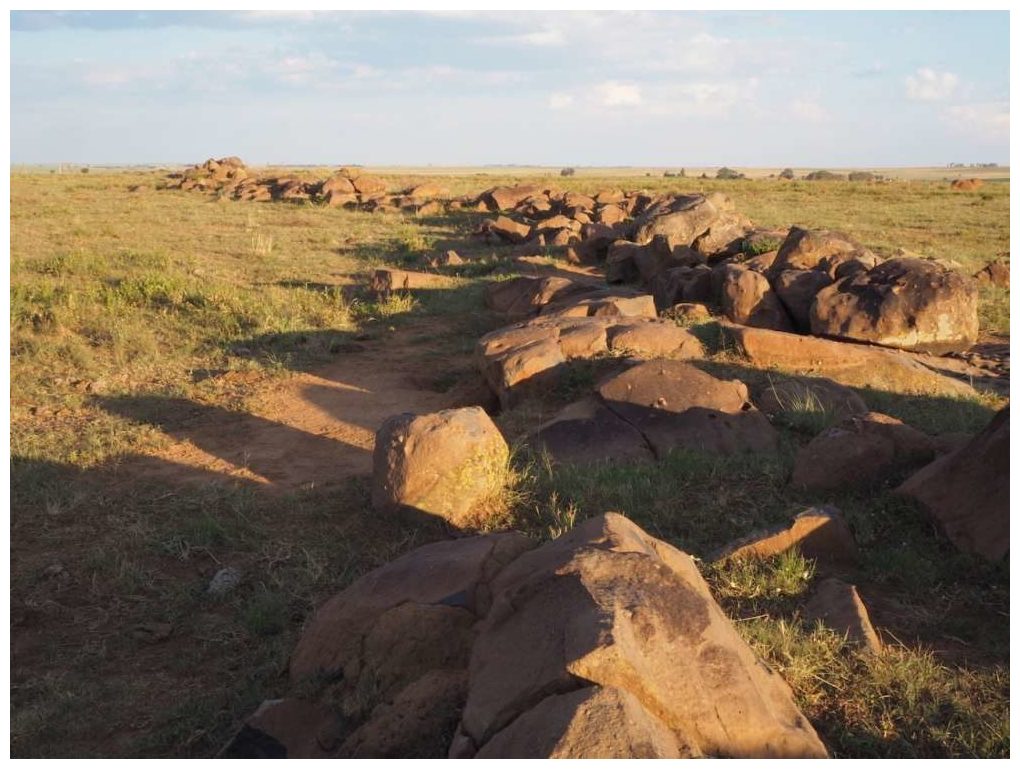
© University of the Free StateThese granophyre dykes can be 10 kilometers (6 miles long) but are only a few meters wide. Although they are known to have formed in the impact, the exact process is uncertain.
Huber discovered the carvings were unknown to archaeologists and reported them. "What is amazing is that the same dykes that we recognize to have the most geological significance also had the most spiritual significance for these early inhabitants," Huber told Newsweek.
The carvings appear to represent creatures such as rhinoceroses, hippopotamuses, and horses then common to the area. Artifacts strewn around the carvings have been dated to 8,000 years ago. Archaeologists think their shapes reminded the Khoi-San of snakes, which were associated with rain in that culture.
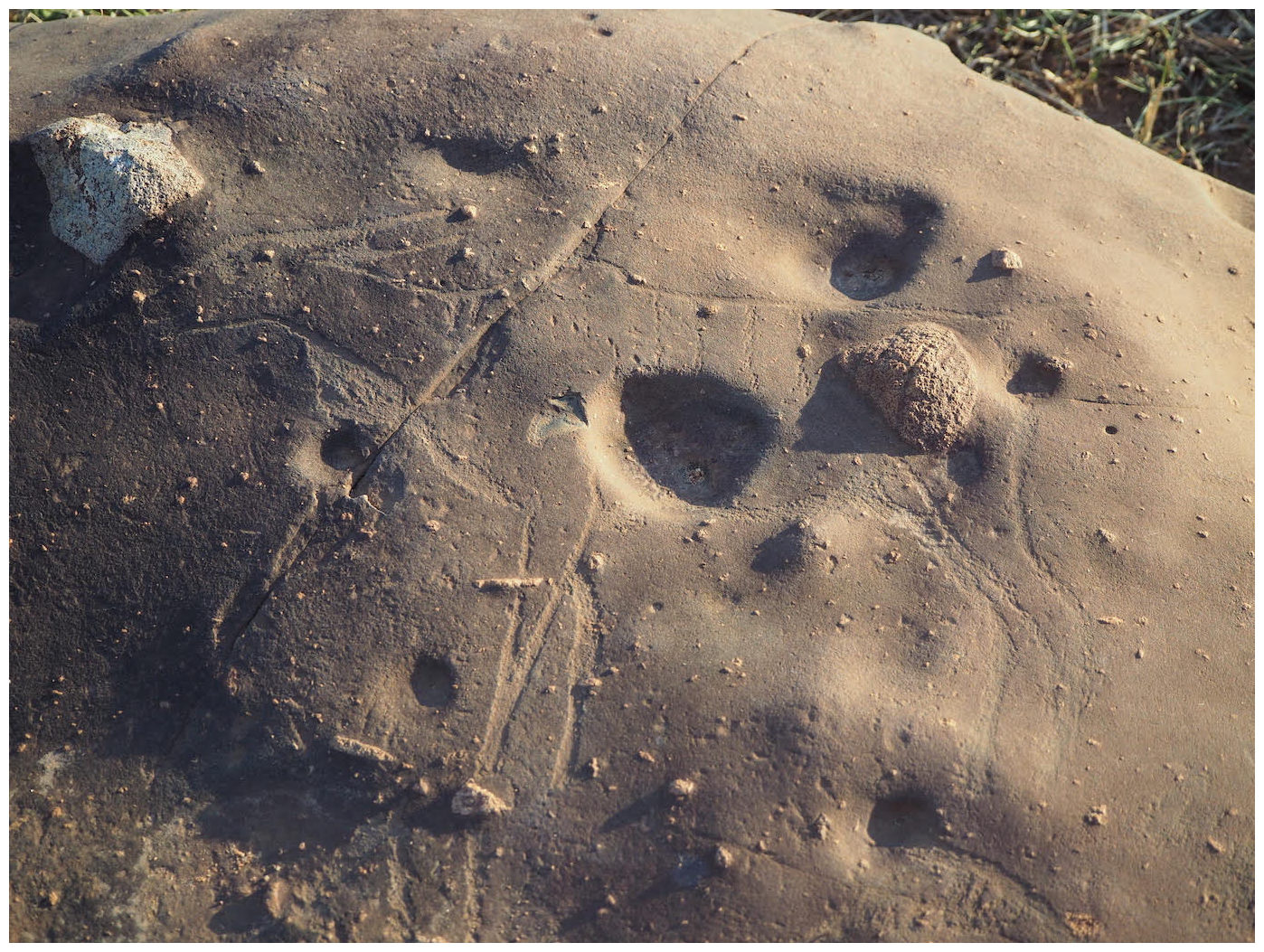
© University of the Free StateAnother of the carvings, likely an antelope.
Several craters even larger, and in one case older, than Vredefort have been identified, but in each case geologists continue to debate whether these really are impact craters, or if they were formed through other processes.
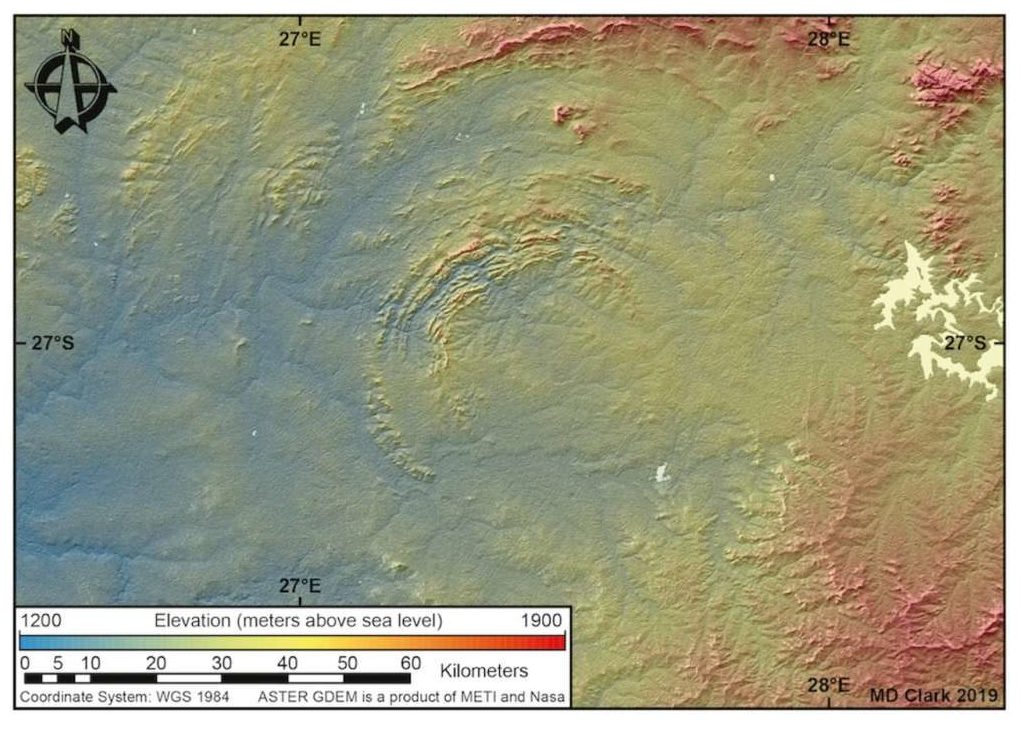
© University of the Free StateSome of the crater's multiple rims have eroded away, but from space, what is left is clear.


Reader Comments