
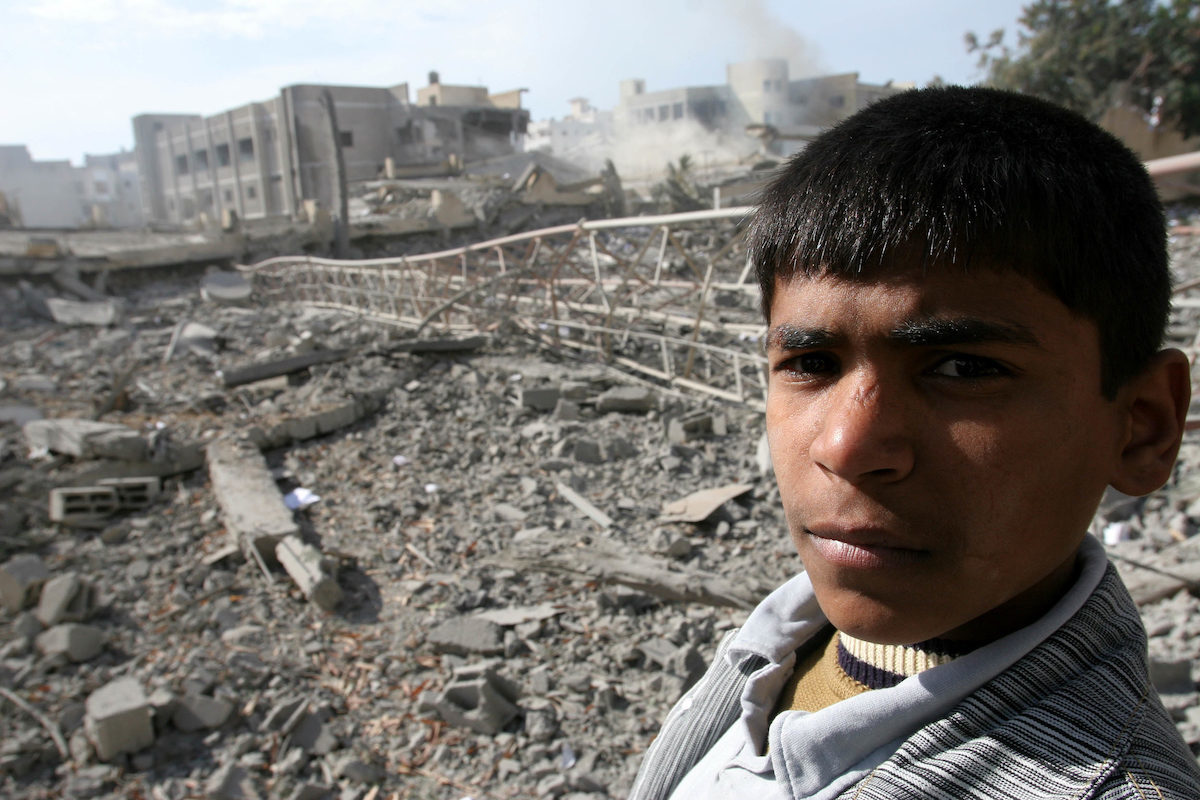
© Apaimages/Naaman OmarPalestinian inspects a building that was destroyed by an Israeli air strike on Gaza City on December 27, 2008. On that day, Israel hammered Hamas targets in the Gaza Strip, killing at least 210 people to mark the beginning of Operation Cast Lead.
And now Gaza has returned to its state of siege, confronted with the same international apathy. Ten years after the Israeli assault that lasted 22 long days and dark nights, during which its brave people were left alone to face one of the strongest armies in the world, Gaza no longer makes the news. Its people die slowly, its children are malnourished, its water contaminated, and yet it is deprived even of a word of sympathy from the leaders of the "civilized world." In fact, the dehumanization of the Palestinians of Gaza continues unabated. Almost 300 civilians have been killed by Israeli snipers stationed in ditches at the eastern fence on the strip since the eruption of a series of non-violent demonstrations as part of the Great March of Return in March 2018. And the international community is still blind and deaf.
Comment:
- David vs Goliath: Israel begins using snipers against Palestinians throwing stones
- 'Armed conflict': Use of live fire against Palestinian protesters justified by Israel's Supreme Court
- Israel's ambassador to France slammed for trying to censor news story about Gazan children crippled by Israeli snipers
Israel could not have carried out its brutal assault, preceded and followed by a punishing siege, without a green light from leading world powers. The urgent question is how to hold Israel accountable to international law and basic principles of human rights in order to forestall further escalation and a larger bloodbath now that Israelis are preparing themselves for new Knesset elections in April. We do know what that means: more Palestinian suffering as the competing Zionist parties will use that to guarantee more votes.
One way to begin holding Israel accountable is through direct witness and citizen solidarity. For example, a group of courageous Israeli citizens demonstrate on the other side of the fence in solidarity with the Great March of Return and to remind the world of the cruel consequences of the siege and the ongoing massacre. It is one of the remarkable undertakings by very few conscientious Israeli individuals that have decided to take action into their own hand. But that is not enough to stop the "greater Shoah" we've been threatened with.
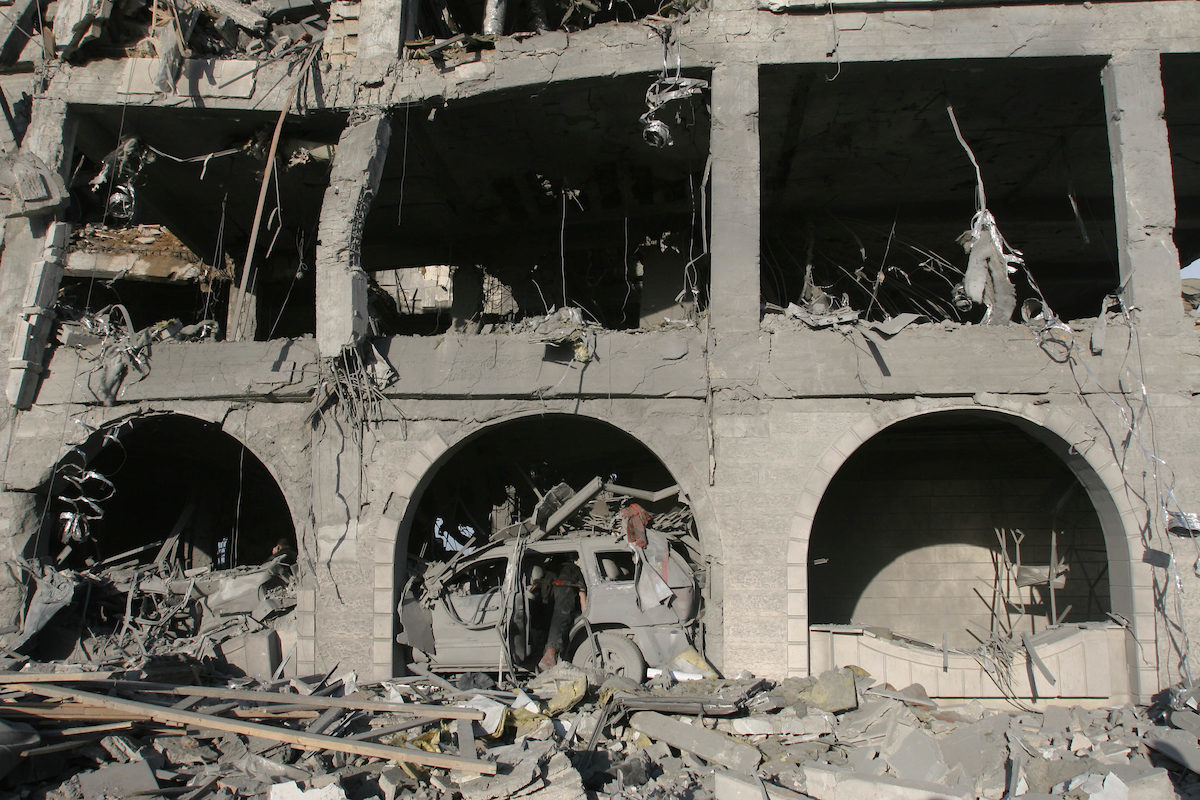
© Apaimages/Naaman OmarA member of the Hamas’s security forces inspects a building that was destroyed by an Israeli air strike on Gaza City on December 27, 2008. Israel hammered Hamas targets in the Gaza Strip, killing at least 210 people in one of the bloodiest days of the decades-long Middle East conflict.
Once again, we need to refer to South Africa. The South African apartheid regime came under repeated pressure as the United Nations Security Council passed one resolution after another condemning its inhumane treatment of blacks. This gave much-needed succour to the oppressed, while we Palestinians, today, are bereft of even this tiny comfort because the right-wing American government continues to use its veto to ensure that Israel escapes censure.
Today, there is a growing grassroots struggle inside Palestine, much as there was inside apartheid South Africa. An intensified international solidarity movement with a common agenda can make the struggle for Palestine resonate in every country in the world. And this is exactly what the BDS movement is doing making apartheid Israel launching a war against it. In Gaza, our goal now, as civil society organizations, is to lift the genocidal siege as a first step towards implementing all basic rights guaranteed under international law. To accomplish this, many activists, Palestinian and international, have launched a boycott campaign modelled on the global South African anti-apartheid campaign. This campaign is a democratic movement based on the struggle for human rights and the implementation of international law. Our struggle is not religious, ethnic, nor racial, but rather universalist; it is a struggle that guarantees the humanization of our people in the face of a dreadful Israeli war machine. Hence the importance of relating BDS with the Great March of Return.
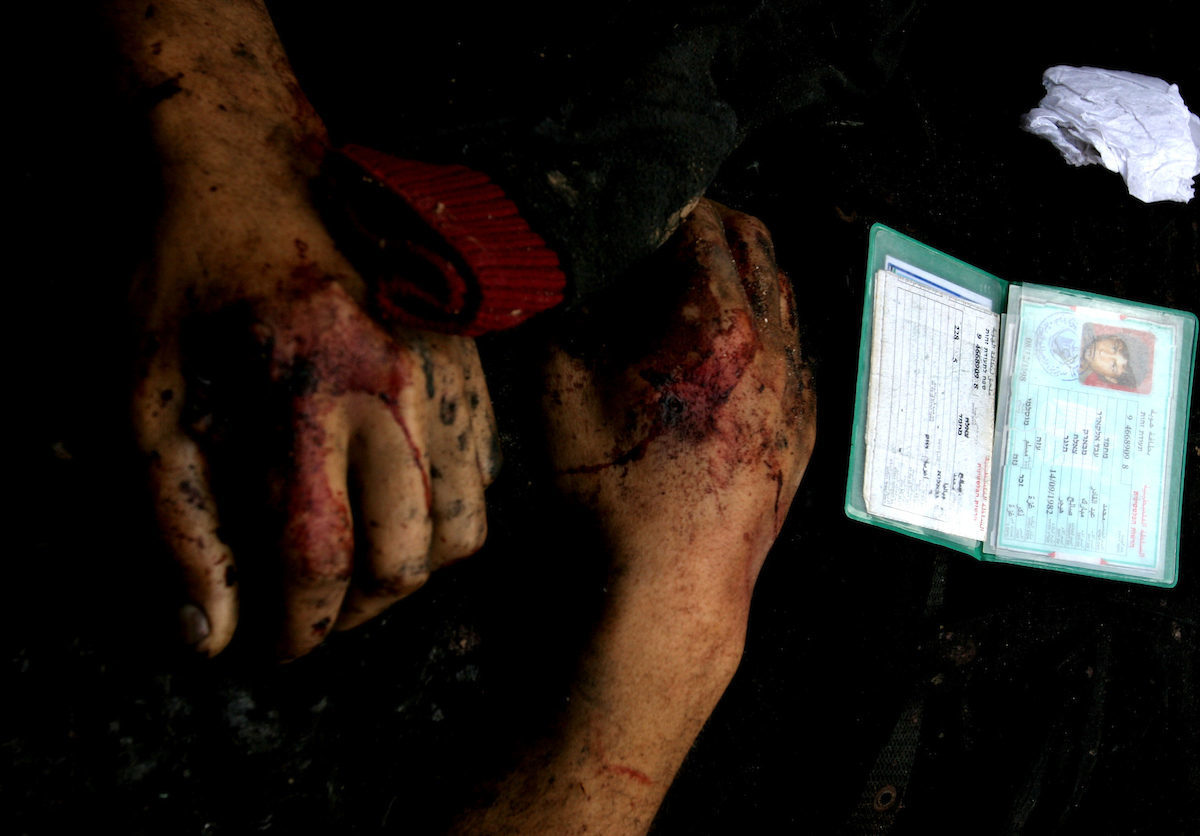
© Apaimages/Naaman OmarBodies of Palestinians are seen at Shifa hospital in Gaza December 27, 2008. Israel's air force fired about 30 missiles at targets in the Gaza Strip on that day, destroying several Hamas police compounds and killing more than 210 people, medical officials and witnesses said.
Haidar Eid is Associate Professor of Postcolonial and Postmodern Literature at Gaza's al-Aqsa University. He has written widely on the Arab-Israeli conflict, including articles published at Znet, Electronic Intifada, Palestine Chronicle, and Open Democracy.


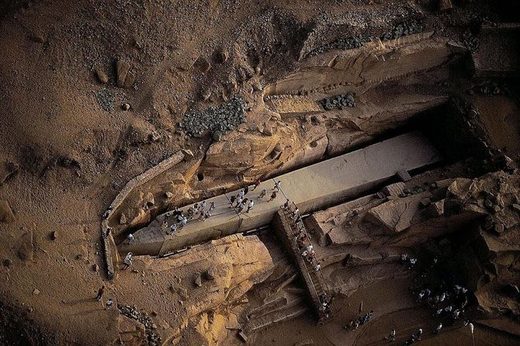
Comment: The Sharpeville massacre, (March 21, 1960), incident in the black township of Sharpeville, near Vereeniging, South Africa, in which police fired on a crowd of blacks, killing or wounding some 250 of them. It was one of the first and most violent demonstrations against apartheid in South Africa.
Palestine has endured as much, and maybe more than South Africa in its struggle for human rights. It has been 70 long years.