Society's Child
According to the Navy, the injured personnel are "in stable conditions" and none of the injuries is life-threatening. Some of the servicemen were evacuated ashore.
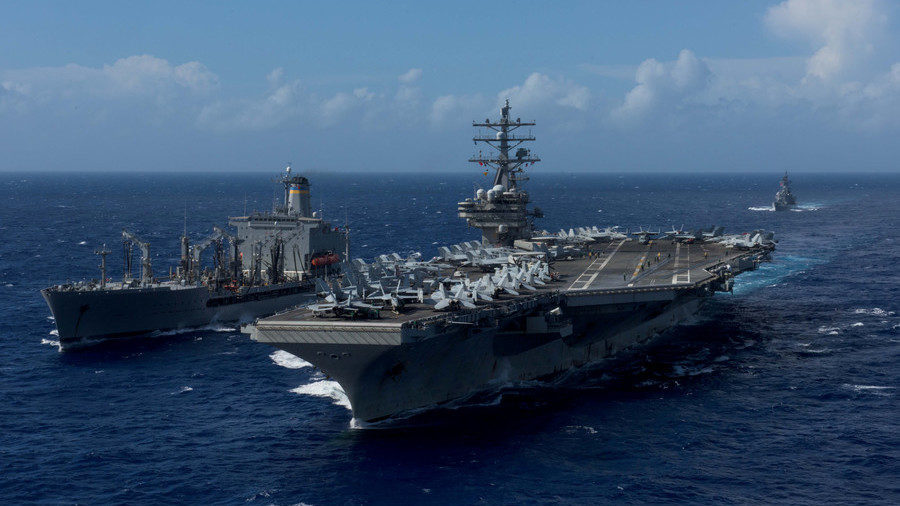
The crash happened as the Nimitz-class aircraft carrier was conducting regular operations in the Philippine Sea.
Despite the incident, the ship remains "fully mission capable" and continued flight operations.
The Navy has launched an official probe into the crash.
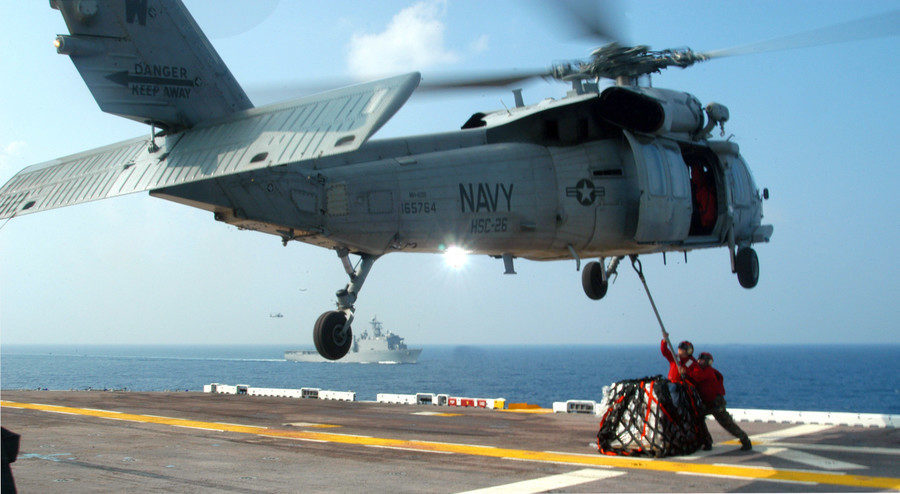
This is the second incident involving helicopters to hit the US Navy this month. Earlier, two HH-60H Seahawks crashed into each other while taxiing at Kadena Air Force Base in Japan. No one was injured in the collision.
The nuclear-powered USS 'Ronald Reagan' is part of the US Seventh Fleet, operating in the west Pacific. It is based in Yokosuka, Japan.
The Seventh Fleet had gained a reputation as one of the most disaster-prone Navy units. Last year, it suffered at least seven major incidents, which resulted in 20 fatalities.
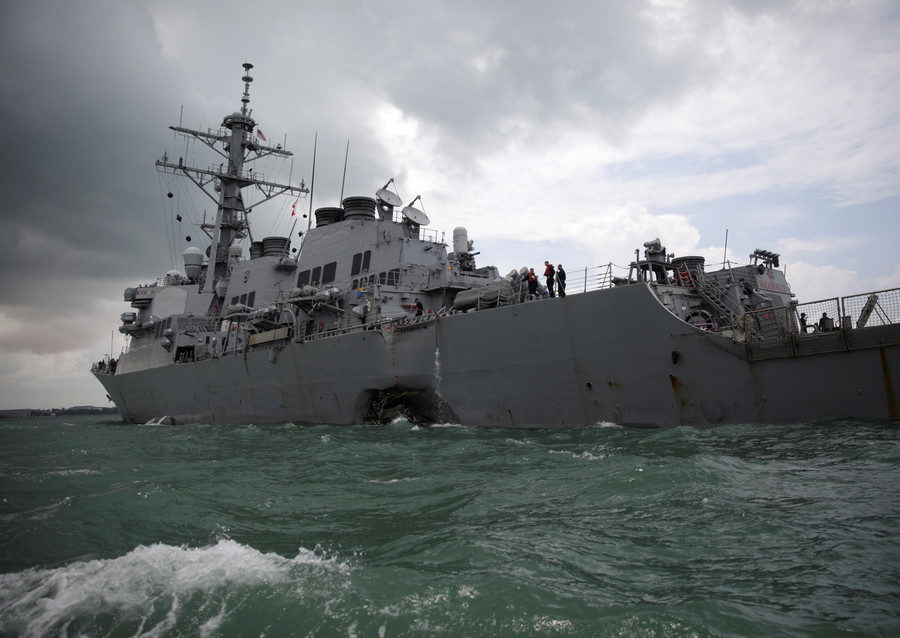
In June 2017, guided-missile destroyer USS 'Fitzgerald' collided with a Philippines container ship near Tokyo. The incident claimed the lives of seven of the destroyer's crew members.
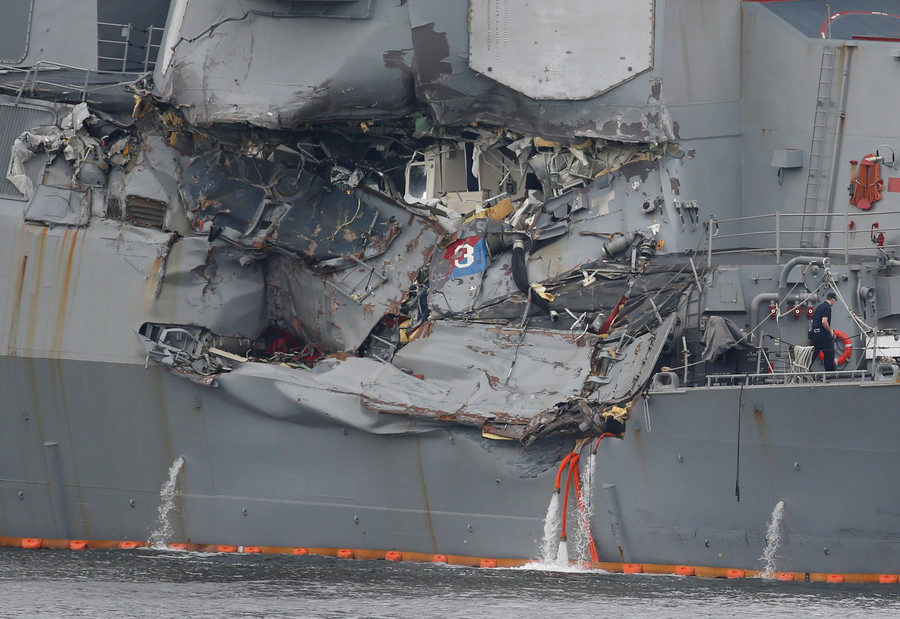
Two months later, 10 sailors were killed on board the guided-missile destroyer USS 'John McCain' when it collided with a merchant vessel off Singapore.
In November that year, a C2-A Greyhound transport plane, carrying 11 people, crashed near Okinawa. Eight people on board were rescued.
Reader Comments
The problem, simply stated, is that if you hit a land base with a big conventional weapon, (E.g., a guided conventional bomb or missile); it will NEVER destroy the ENTIRE BASE.
In contrast, if a Carrier is hit in the right place with just one sea skimming, super smart hypersonic with supertricked out terminal impact maneuvers, the carrier would probably split in half... and there goes your entire base (without a single nuke requ ired.)
Russia realized this and stopped its planned construction of carrieres (it now has only one while the US has over ten.) It then almost certainly dedicated those otherwise wasted expenses into their air and missile programs. Look at the results.
Likewise, and similarly, Russia already has its Gen. V air fighters (e.g. Su-57) nearly fully operational, (and unlike the US), they are already working on a pilotless version of same.
Think about that. If you are riding in the airplane and are in a dogfight, the G-forces routinely knock the pilots out. (Research how pilot's pressure suits work.) The planes can handle far far more G forces than the pilots, so West's planes are designed based upon restrictions, (i.e., are designed around/with a focus on a weakness and NOT around the strength of the Gforces the plane can take alone.)
If a fighter were built from the ground up without concern about the max sustained G-Forces a trained pilot can take, well, pardon the pun; the sky's the limit. If a West F-16 is on a pilotless Russian fighter's '6' (dead behind him), the remotely controlled pilotless fighter could do air braking maneuvers that would black out the pilot behind him and now the F-16's in the kill zone and the pilotless fighter is in the killing position. (This applies in all dimensional/directions, though I used a straight line example.)
Why isn't the US working on such?
"But what about all the money 'invested' in our navy and all the leaches on the MIC payroll?" Answer: Free Market, that which governs best governs least, lower taxes, and I find it impossible to consider a single US Naval (Real) WarShip, as being 'investments'; rather, they are mostly only risky and hugely expensive floating liabilities. (And I'm a child of the MIC.)
Brakar?
R.C.


Comment: The problems within the US Navy are longstanding with no course corrective measures apparently implemented, yet the US continues to bait Russia and China whose militaries are far more effective and battle ready...disaster in the making.