
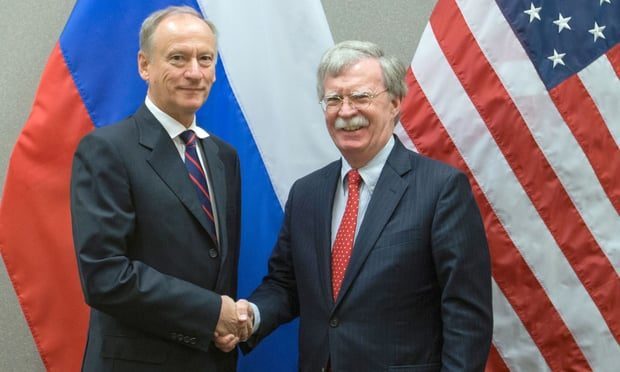
© Photograph: HO/AFP/Getty ImagesNikolai Patrushev (left) and John Bolton arrive for their meeting in Geneva
"We made a lot of progress, we've identified certain areas where lines of communication could be restored and more work done by the affected agencies - the State Department, the Defense Department," Bolton said during the press conference following the meeting in Geneva, which he said lasted over five hours.
Systematic diplomatic and military cooperation between the two countries stopped in the wake of the Crimea fallout in 2014, and since then the two sides have mostly communicated narrowly through the Syria deconfliction line. But the door was opened during last month's Helsinki summit between Donald Trump and Vladimir Putin, where the two leaders put forward the idea of Thursday's meeting.
Despite boasting the breadth of the issues broached, from nuclear proliferation and future arms treaties, to counter-terrorism, immigration, Syria and a common position on Iran, during Bolton's opaque answers to media questions, it was easier to identify "some areas where disagreement remained and we didn't see much utility in resuming discussion."
Bolton said that in view of allegations of Russian interference in US elections, the two countries would not engage in any cyber cooperation.
"I made it clear that we wouldn't tolerate meddling in 2018," added Bolton.
The issue also proved a stumbling block for any joint statement after the talks, said Patrushev.
According to the head of Russia's Security Council, the US demanded that the communiqué read that "Russia interfered in US elections, but denies it." Patrushev said that Moscow agreed to include the sentence if in turn, the statement would also say that "the US mustn't meddle in the affairs of other nations," at which point Bolton's team gave up on the whole idea.
Nonetheless, Patrushev noted that the "constructive" meeting did not proceed in an "accusatory tone," and urged the White House to quickly follow up on the proposals discussed.


Comment: The Kremlin expects that Russian Security Council Secretary Nikolai Patrushev and US National Security Adviser John Bolton will discuss all issues on the bilateral agenda, although that the US side is not quite willing to conduct a dialogue, Kremlin Spokesman Dmitry Peskov said on Thursday.