
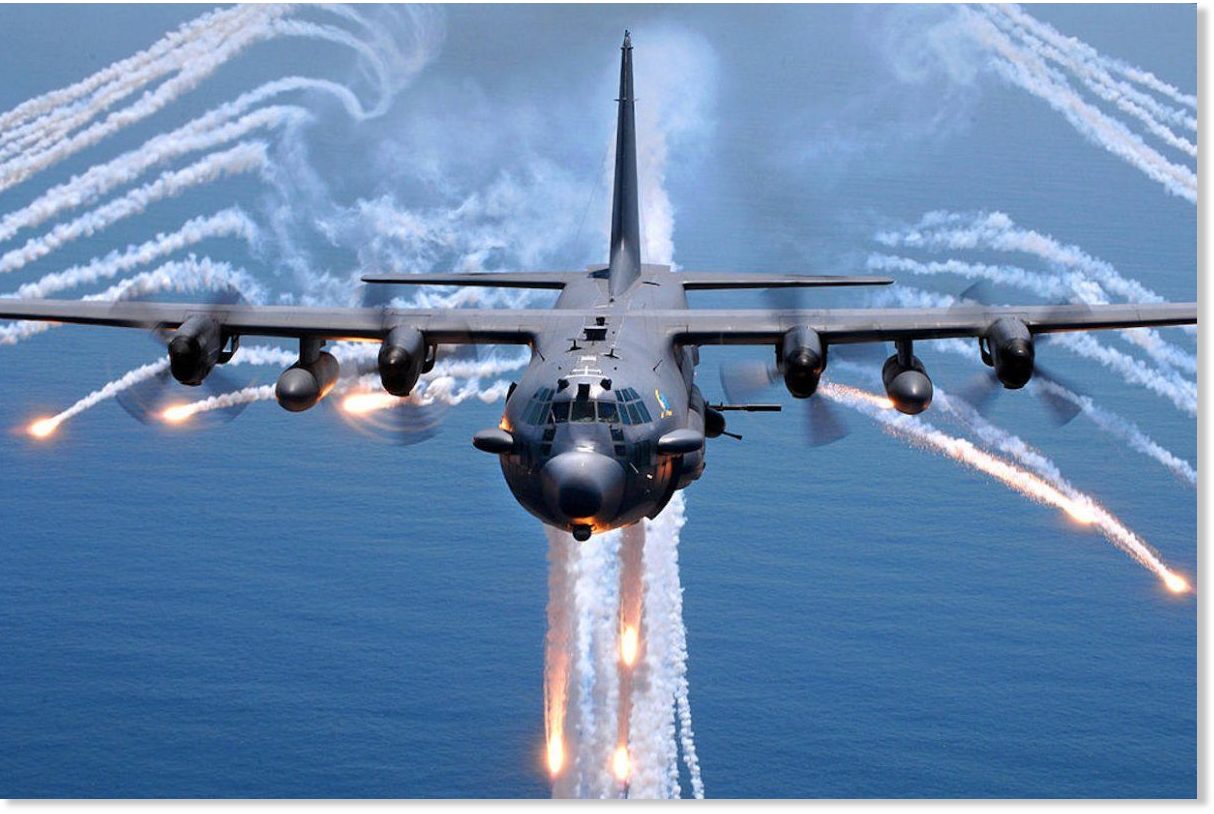
AC-130
It rendezvoused with Japanese F-15J Eagles for a training mission, before flying on to South Korea to further train with their F-15Ks and F-16s.
But there were supposed to be two B-1Bs there that day. The second bomber that was "scheduled to respond to a clear and present danger in North Korea," as Rep. Joe Wilson, R-S.C., said in a hearing later that day, was unable to take off. Pacific Air Forces later said a maintenance issue kept the second Lancer on the ground.
It's not only B-1Bs having readiness problems. On any given day, according to official statistics, nearly three out of every 10 aircraft in the Air Force's aging fleet are out of commission — in the shop getting upgrades, undergoing regular maintenance or inspections, or receiving heavier-duty repair work.
And the problem is getting worse. Mission-capable rates — the metric by which the Air Force measures how much of its fleet can fight or fly other missions at any given time — are trending downward, slowly but steadily.
In fiscal 2014, mission-capable rates for all of the Air Force's airplanes and helicopters were just shy of 74 percent.
One year later, that rate had dropped to 73 percent. It fell even further in 2016, to about 72 percent.
The decline in readiness is accompanied — and partly caused — by the increasing age of the Air Force's fleet. The average aircraft age has spiked in recent years, from roughly 24 years in fiscal 2010 to 27 years in 2016.
Air Force leaders have expressed concern about aircraft readiness rates and aging airframes for the last several years.
"Our highest investment priority is in improving readiness," acting Air Force Secretary Lisa Disbrow said March 3 at the Air Force Association's Air Warfare Symposium in Orlando, Florida. "The aircraft we have on the ramp are too old. We need to revitalize the fleet."
Chief of Staff Gen. Dave Goldfein tied aircraft readiness issues to the morale problems plaguing the force and prompting good airmen to leave.
"Pilots who don't fly, maintainers who don't maintain, controllers who don't control ... will not stay with the [Air Force]," Goldfein said.
Read More...



Reader Comments
to our Newsletter