
There's just one problem: There is no such thing as "trickle down economics."
Politics is a game of rhetoric, of clever catch phrases. Chairman Mao, in his book The Art of War(Amazon Link), insisted the most important thing was to have your slogans ready. Nothing beats a good soundbite, least of all facts.
It's a common tactic in a debate to represent an inaccurate caricature of your opponent's position because it is easier to attack a cartoon than a reality, but in the case of "trickle down economics", no such position exists, and it never has.
That's right, this has been a hollow and caricatured talking point for almost a century in the United States, and the use of this term has only grown. Obama used it, Bernie Sanders used it, The Young Turks used it.
So where does it come from? Well, it has been observed that higher tax rates lead to lower tax revenues. Especially among the wealthy, because they have the capital and the incentive to invest their "profits" in tax-exempt financial instruments. These kinds of investments are not available to the less wealthy, to the middle class or often even the upper middle class. Many efforts have been made to eradicate tax-exempt bonds, or tax shelters, but they never work. Very wealthy people are highly motivated to conceal their wealth to pay a smaller percentage of it as taxes. It is a simple cost-benefit analysis. Due to high tax rates, it costs less to hire an army of accountants and lawyers and to pay lobbyists in the Capitol to weasel in loopholes with obscure language.
One man who tried to root out these tax exemptions was Andrew Mellon in the 1920s (Mellon, Andrew Taxation p. 79-80,141-142 ... Amazon Link), but finding no support among his peers, he found a simple solution:
If you lower the tax rates for everyone (including the rich), then the rich will be more likely to pay their taxes instead of concealing their wealth in low-yield tax shelters, and thus you will increase tax revenues. This works because the higher the rate, the faster tax contributions of the wealthy approach zero. In the end, it doesn't matter how much you raise the tax rate.
What Mellon understood was that it wouldn't matter if the tax rate for the wealthy was 90% - 90% of zero is still zero.
Before you think he was some curmudgeonly Republican money-grubber, we should point out that John Maynard Keynes and later John F. Kennedy made the same arguments. In fact, John F. Kennedy as well as Ronald Reagan and George Dubya Bush all implemented this plan to great success for tax revenues.
The idea has nothing to do with increasing the wealth of the impoverished - no one has ever claimed it would - except select politicians who want to use "tax cuts for the rich" and "trickle down economics" which they take as axiomatically falsified as Strawman arguments to mock their opponents. The only benefits the impoverished receive are the regular ones from a government with more solvency. There has been observed the side effect of a spike in capital investment within a country, but it certainly doesn't solve unemployment or poverty. At worst it doesn't hurt them, at best it helps ameliorate them.
The origin of the term "trickle down" in reference to taxation with emphasis on "tax cuts for the rich" most likely comes to us via Samuel Rosenman, a speech writer for Franklin D. Roosevelt. Not an economist, but a rhetorician. Rosenman referred to "the philosophy that had prevailed in Washington since 1921, that the object of government was to provide prosperity for those who lived and worked at the top of the economic pyramid, in the belief that prosperity would trickle down to the bottom of the heap and benefit all." (Shlaes, Amity The Forgotten Man p. 128 Amazon Link)
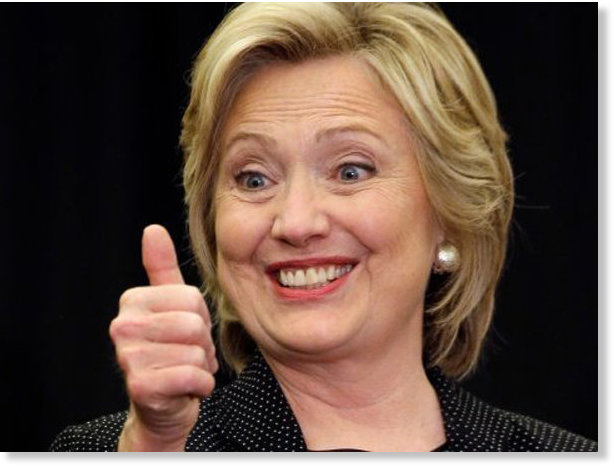
When Donald Trump says he is going to cut taxes to get more money, he's not insane. It will get the government more money. What it does with the money is another story. He may just decide to bail out his buddies, or give them lush development contracts, but either way, Hilary's accusations were simply moronic. She pandered to Democratic socialists, and they slurped up her buzzword drivel and social-justice talking points like starving dogs.
When a politician tries to get elected on a platform of tax cuts for the middle class and poor, and/or onerous tax rates for the rich, they are just pandering. The only way to get the rich to pay taxes, if they are going to pay them at all, is to make it worth their while. Anything less is just posturing. It may appeal to our feelings, and our twisted but forgivable sense of fairness, but it's still a pipe dream.
The right thing to do would be to make the United States the biggest tax haven in the world. But as long as people are blinded by the socialist ideal of compulsory altruism - it's the bread line for us all. Eventually.
Blaming the problems of the economy on "tax cuts for the rich" is disingenuous at best, and a bald-faced misrepresentation at worst. A large part of the economic problems are the bizarro nature of government aid to corporations. Programs and ideas that are supposed to help the poor help the rich. The wealthy in America are just doing the same thing every Bernie Sanders follower wants to be doing: Feeding off the government cheese. Look, they're just better at this game than us.
But the tax rate has nothing to do with the various bubbles and bailouts. It has to do with tax revenues collected on a yearly basis - period.
Consider Russia for a moment: Flat tax rate of 13%. How have they managed to pay off their crippling debt to the west? How have they managed financial independence? It wasn't with some obtuse and morally convoluted sense of fairness with progressive tax rates. Which city is the Billionaire Capital of the World? Moscow is.
The Russian Federation is a considered a prime case of the success of a flat tax; the real revenues from its Personal Income Tax rose by 25.2% in the first year after the Federation introduced a flat tax, followed by a 24.6% increase in the second year, and a 15.2% increase in the third year. The Laffer curve predicts such an outcome, attributing the primary reason for the greater revenue to higher levels of economic growth stemming from the introduction of the flat tax.The Flat Tax Rate is the de facto ultimate "tax cut for the rich." It is precisely the opposite of the plans and schemes to squeeze more out of the rich, and because it treats the rich as equals, it is the definition of fair. By not punishing success, or incentivizing capital and manufacturing flight, Russia has managed to be the ultimate comeback kid. There's more to it than that. Leadership and national identity play a role, socio-cultural factors come into play, and much more. China is another example of a rising economic star. While both Russia and China have special considerations that make them somewhat difficult comparisons with the USA, it's interesting to note that they have turned away from socialist and centralist policies and embraced more even-handed and sensible economic policies.
-- Wikipedia




A half-functional capitalist democracy would regulate shelters and loopholes, .instead of existing only to enrich its cronies and exploiting the rest of us.