

© Pierre Terdjman for The New York TimesThe banks of the Seine on Friday. The river reached its highest level since 1982.
The Seine has continued to swell since the river burst its banks on Wednesday, raising alarms throughout the city. As of 10 p.m. on Friday, its waters had reached 20 feet. The river was expected to crest on Saturday morning at up to 21.3 feet, and to remain at high levels throughout the weekend, the French Environment Ministry said in a statement.
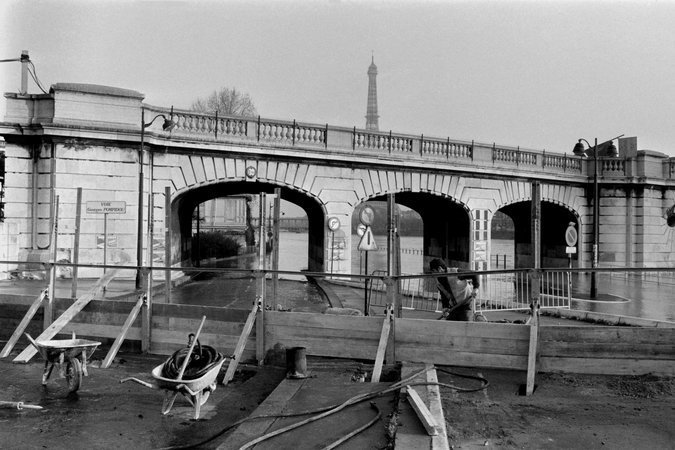
© Pierre Guillaud/AFP — Getty ImagesA worker building a flood barrier in 1982, the last time the Seine reached the level it did on Friday.
Near the Cathedral of Notre-Dame, pieces of tree trunks floated along the swollen river. The waters had risen to the waistline of the Zouave, a notable statue next to the Pont de l'Alma that has traditionally been used as a gauge of the Seine's levels. The city's government urged residents to move valuables out of their basements. An art collection had to be removed from the city hall in Ivry-sur-Seine, a southeastern suburb of Paris.
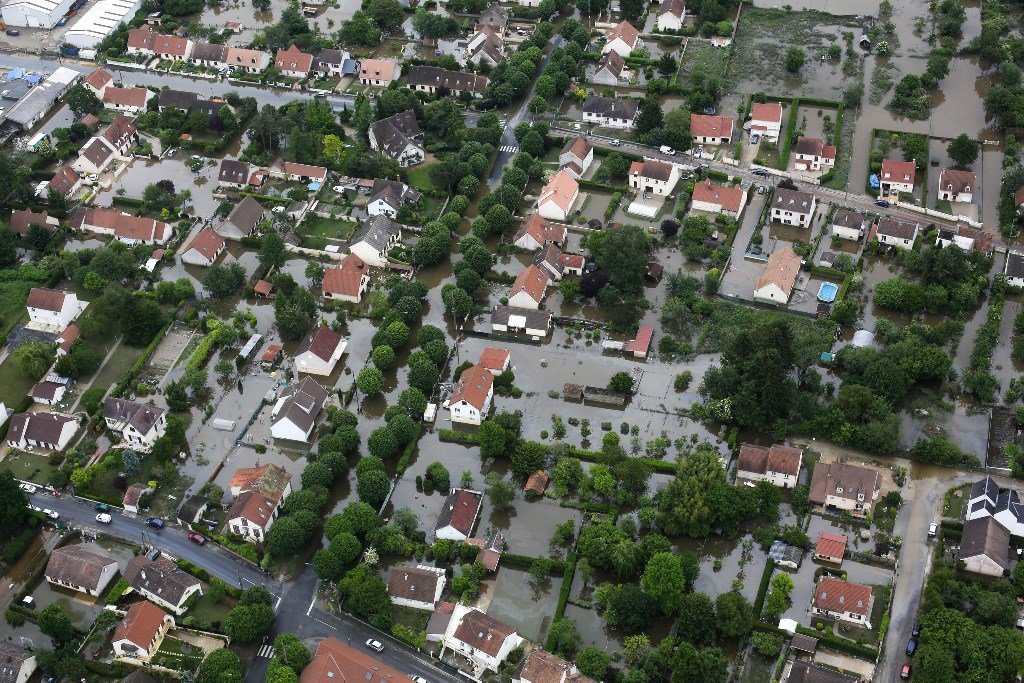
© Markus Schreiber/Associated PressAn overview of flooding on Friday in Nemours, a town south of Paris on the Loing River.
The Seine has not overflowed this much since December 1982, when it rose to about 20 feet, but the river's level is still short of the 26.2 feet reached in the catastrophic flood of January 1910.
Parisians and tourists thronged to take photos of the swollen river, prompting a warning from Ms. Brossel, who said: "There are still people going on the riverbanks to take pictures. It is not safe. We are asking you to respect the ban on going there."
The government has made emergency plans to shift operations from the Élysée Palace, the seat of the French presidency, to the Château de Vincennes, a former royal fortress just east of the capital, if the waters go above 21 feet.
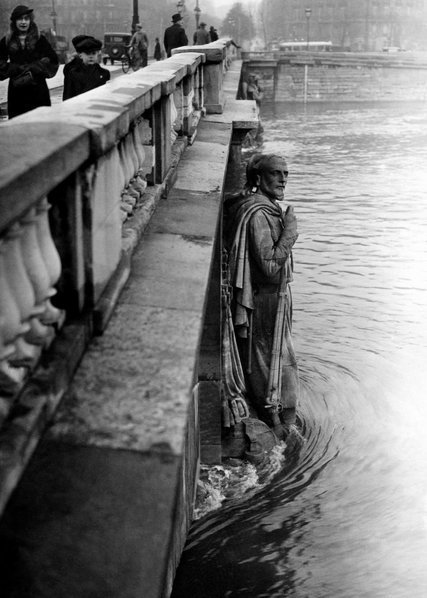
© AFP — Getty ImagesFloodwaters lapping at the feet of the Zouave statue in 1936.
Officials expressed fears that telecommunications and computer equipment on the lower floors of the Foreign Ministry building on the Left Bank could be inundated. They said the ministry's archives had been moved to the suburbs in 2010 for safekeeping.
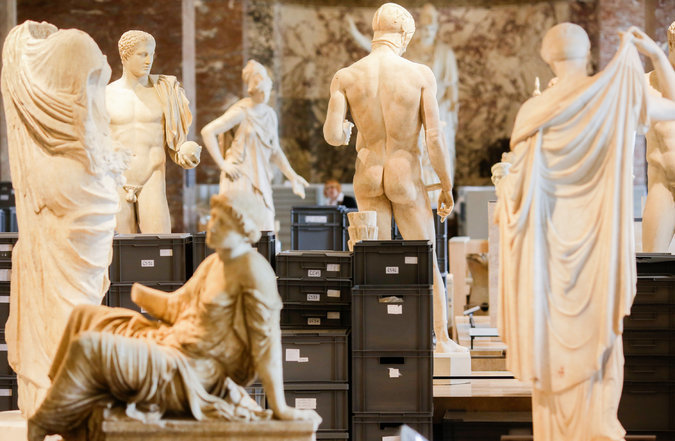
© Markus Schreiber/APStaff at the Louvre scrambled Friday to move artworks to higher floors as Paris experienced its worst flooding in 30 years.
Workers in Paris erected a special barrier on Friday morning to protect an underground electrical transformer station near the Pont de l'Alma. The substation provides power to about 80,000 customers in the Seventh and Eighth Arrondissements.
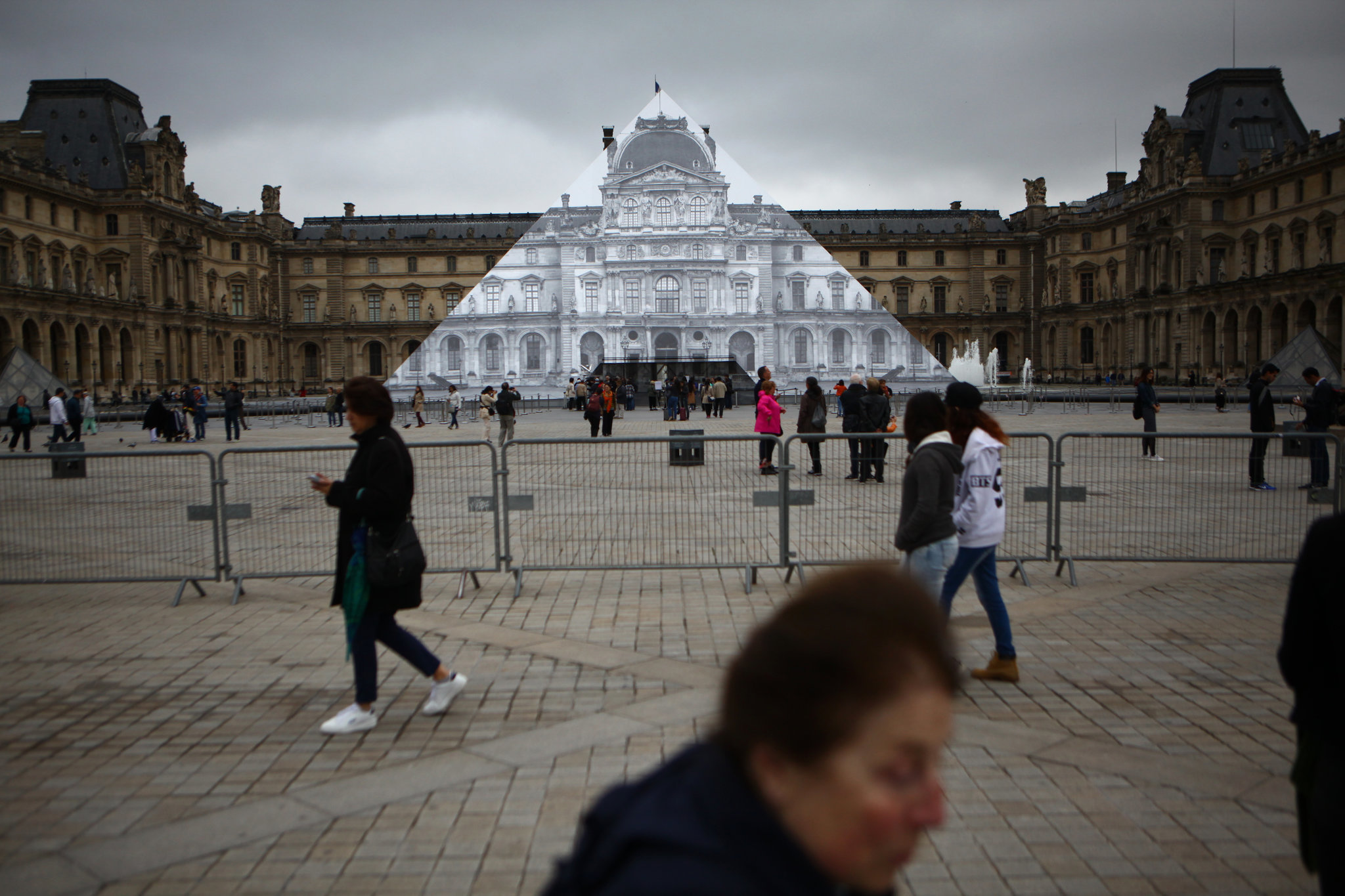
© Pierre Terdjman for The New York TimesThe Louvre, its glass pyramid covered by a black-and-white image of the museum, was closed on Friday as artworks in areas vulnerable to flooding were moved to higher floors. Credit Pierre Terdjman for The New York Times
An estimated 150,000 artworks in storage rooms and an additional 7,000 pieces in galleries were vulnerable to flooding, and a large portion of those were moved to higher floors as a precaution, officials said.
Officials emphasized that no waters had entered the museum.
Other cultural institutions that were closed on Friday included the Musée d'Orsay, which is in a former train station on the Left Bank; the Musée du Quai Branly, which is devoted to non-Western art; and the main Bibliothèque Nationale building, named after former President François Mitterrand.
The Musée Girodet in Montargis, a town about 77 miles south of Paris, suffered heavy damage on Thursday. The museum is devoted mainly to the work of Anne-Louis Girodet, a Romantic painter who died in 1824.
Heavy rains also caused deadly flooding in Germany, particularly in the southwestern state of Baden-Württemberg and in the southern state of Bavaria.



Reader Comments
to our Newsletter